
You’ve just landed in Dubai. The skyline is dazzling, the air smells like saffron and sunscreen, and your wallet is still full. But here’s the real question: what’s cheap to buy in Dubai? Not the overpriced camel milk chocolate bars at the airport. Not the $200 Arabic coffee sets that look nice on Instagram but collect dust in your cupboard. We’re talking real deals-stuff locals actually buy, stuff that’s genuinely cheaper here than back home, and stuff you won’t regret packing in your suitcase.
Let’s cut to the chase: Dubai isn’t just about luxury yachts and gold souks. It’s also a shopper’s paradise for budget-savvy travelers who know where to look. From spices that cost less than your morning coffee to gold that’s cheaper than in Australia, here’s what actually delivers value.
Spices and Arabic Coffee
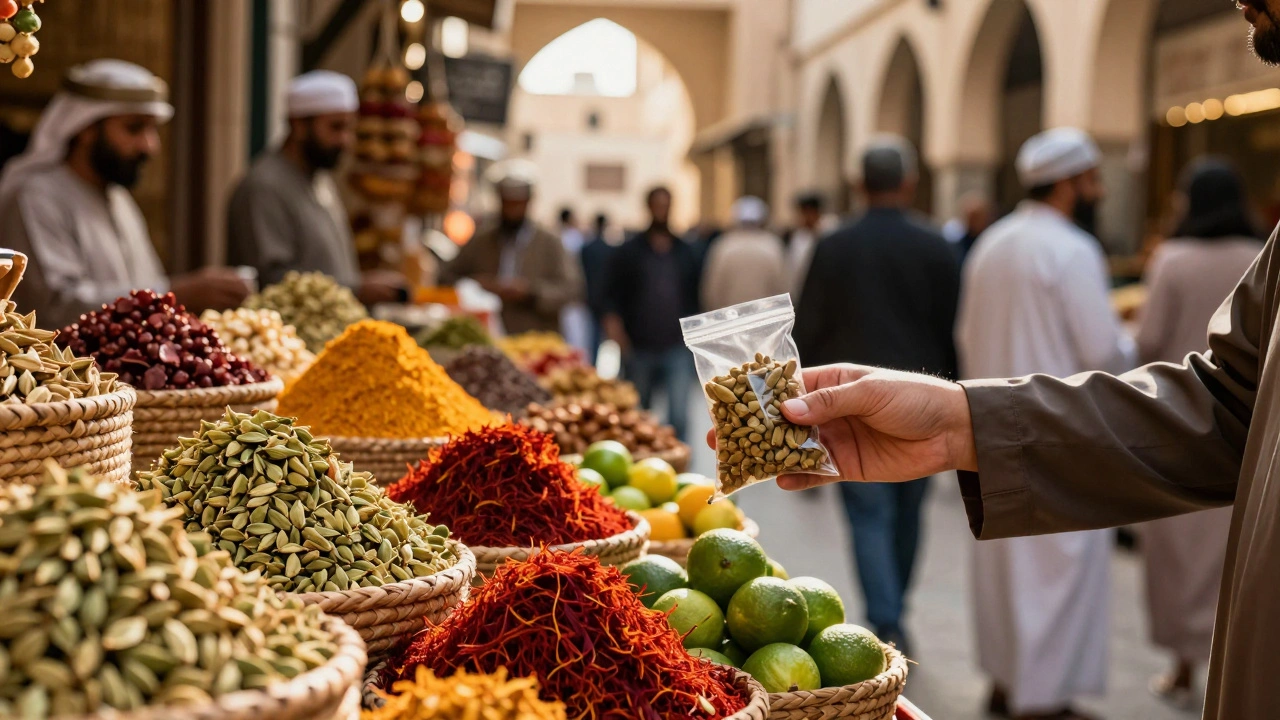
Walk into any spice market in Deira or Bur Dubai, and you’ll be hit with a wall of color and scent-cinnamon, cardamom, saffron, sumac, and dried limes. These aren’t just for show. A 100g bag of premium cardamom pods costs around 15 AED ($4). In Sydney? You’d pay $12-$15 for the same amount, if you can even find it fresh. Saffron? A tiny 5g jar runs 40 AED ($11). In the U.S. or Europe, that same amount could set you back $30-$50. And it’s not just the price-it’s the quality. These spices are shipped straight from farms in Iran, India, and Yemen, not sitting in a warehouse for six months.
Don’t forget Arabic coffee. The traditional gahwa blend-cardamom-infused, lightly roasted-is sold in small tins for 20-30 AED. It’s stronger, fresher, and cheaper than any instant version you’ll find back home. Bring a tin back, and you’ll be the hero at your next brunch.
Gold-Yes, Really
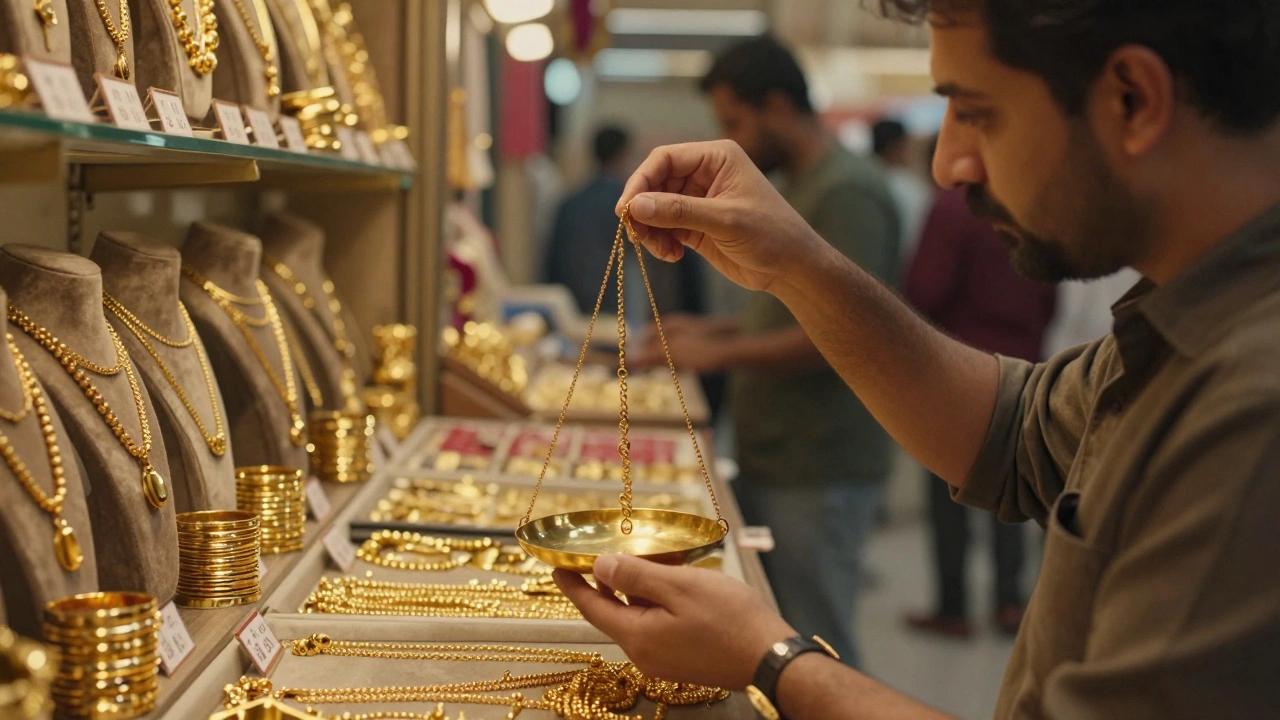
Gold in Dubai isn’t just famous-it’s a steal. The city has no VAT on gold, and the markup is razor-thin compared to most Western countries. A 1-gram gold chain in the Gold Souk might cost 210 AED ($57). In Australia? You’d pay at least $75 for the same. And you’re not buying from a mall store. You’re walking into family-run shops with decades of experience, where prices are marked clearly per gram, and you can haggle if you’re buying more than 10 grams.
Pro tip: Look for 21-karat gold. It’s the standard in the Gulf, and it’s softer than 24-karat, so it holds up better in jewelry. Avoid the flashy 24-karat pieces unless you want something purely decorative-they dent too easily. Also, ask for a certificate. Most reputable shops give you one for free.
Dates and Arabic Sweets
Dates are the unsung hero of Dubai’s food scene. You’ll see them everywhere-on hotel breakfast buffets, in gift boxes, and stacked in plastic bins at roadside stalls. But here’s the secret: buying them in bulk from a local market saves you 70% compared to fancy gift shops.
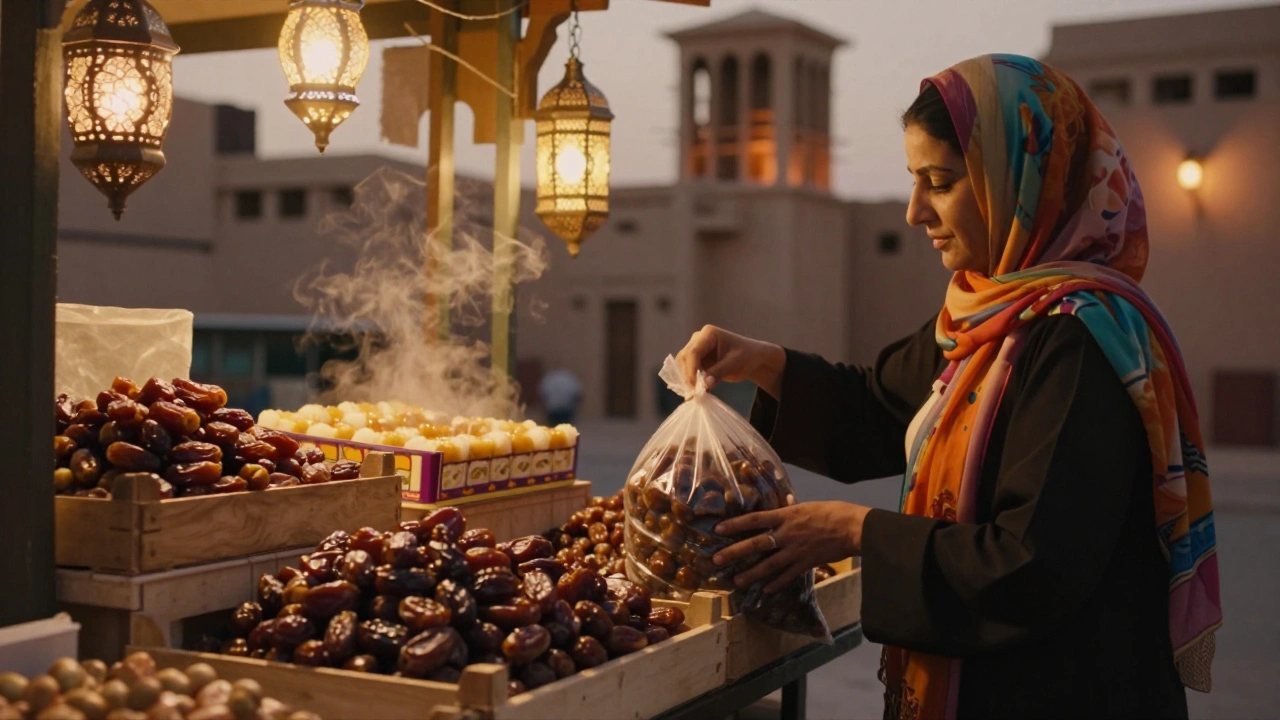
A 1kg bag of Medjool dates? 25 AED ($7). That’s less than $1.50 per pound. In the U.S., the same bag costs $20-$30. And the variety? You’ve got Khadrawy, Barhi, Safawi, and more. Try the stuffed ones-almonds, walnuts, or even chocolate inside. They’re sweet, chewy, and make perfect gifts.
Pair them with baklava or luqaimat (those little fried dough balls drizzled in syrup). A box of 12 luqaimat? 10 AED. That’s about $2.70. You’ll find them hot and fresh at street stalls near the Dubai Creek. Eat one while you walk. It’s a local ritual.
Perfumes and Oud
Dubai is the perfume capital of the Middle East. And unlike in Western countries, where designer scents are marked up 300%, here, you’re paying for the oil-not the bottle.
Visit a perfume shop in the Gold Souk or the Dubai Mall’s Perfume Street. A 10ml bottle of pure oud oil? 80-150 AED ($22-$41). That’s a fraction of what you’d pay for a luxury brand like Tom Ford or Byredo. Oud is the most expensive natural perfume ingredient in the world, and Dubai is one of the few places where you can buy it straight from the source.
Want something lighter? Try attar-natural floral oils like rose, jasmine, or amber. A 5ml bottle costs 40 AED. You can spray it on your skin, clothes, or even your pillow. No alcohol, no chemicals, just pure scent. And you’ll smell like someone who knows their way around the Middle East.
Duty-Free Alcohol and Tobacco
Here’s a fact: alcohol and tobacco are cheaper in Dubai than in most Western countries-even though you need a license to buy them. If you’re a tourist, you can still buy them at the airport’s duty-free shops. No license needed.
A bottle of Johnnie Walker Black Label? 170 AED ($46). In Sydney? $80-$100. Same for wine: a decent bottle of red from Chile or Spain? 60-80 AED. Compare that to $30-$40 in the U.S. or $50+ in Australia. And if you’re a smoker? A pack of Marlboro Lights? 25 AED. That’s half the price of a pack in Sydney.
Just remember: you can only carry two bottles of alcohol or 400 cigarettes out of the country. Don’t try to smuggle more. The rules are strict.
Camel Milk Chocolate and Local Snacks
Camel milk chocolate sounds weird. But trust me-it’s not. It’s creamy, slightly salty, and surprisingly delicious. Brands like Al Nassma and Camelicious sell it in most supermarkets and duty-free shops. A 100g bar? 15 AED. In the U.S. or Europe? $10-$15 for the same size, if you can find it at all.
Other local snacks? Try khubz (Arabic flatbread), balaleet (sweet vermicelli with eggs), or hibiscus tea bags. A box of 20 hibiscus tea bags? 12 AED. It’s tart, refreshing, and naturally caffeine-free. Perfect for hot days.
Traditional Clothing and Scarves
You don’t need to buy a full abaya or kandura to get a taste of Emirati culture. Head to the Textile Souk in Bur Dubai and you’ll find piles of silk, cotton, and chiffon scarves-called shaylas-for as little as 20 AED. They’re lightweight, colorful, and perfect for beach cover-ups or as a gift.
For men, a plain white kandura (traditional robe) can be bought for 80-120 AED at local tailors. Not the fancy ones with embroidery, but the everyday kind. You’ll see Emirati men wearing them every day. And yes, they’re cooler than cotton shirts in the desert heat.
Where to Shop for the Best Deals
Forget the Dubai Mall for these deals. The real bargains are in the older districts.
- Gold Souk (Deira) - Best for gold, spices, and perfumes. Go early, before 10 a.m., to avoid crowds.
- Textile Souk (Bur Dubai) - Scarves, fabrics, and tailoring. Bargain hard-they expect it.
- Deira Spice Souk - The most authentic spices. Ask for samples. Smell before you buy.
- Al Fahidi Historical Neighborhood - Small boutiques selling handmade dates, oud, and ceramics. Quieter, less touristy.
- Duty-Free at Dubai Airport - Best for alcohol, tobacco, and chocolate. Buy on your way out.
Pro tip: Always ask for a receipt. Even if you’re haggling. It protects you if something breaks or doesn’t match the description.
What NOT to Buy in Dubai
Not everything that looks cheap is a deal.
- Designer knockoffs - Fake watches, bags, and sunglasses are everywhere. But if you get caught with them in your home country, you could face fines or confiscation. Not worth it.
- Camel milk soap - Sounds exotic, but it’s usually just regular soap with a camel milk label. You can buy better soap for less elsewhere.
- Artificial pearls - Some shops sell them as “real.” They’re not. Stick to gold or real pearls from certified vendors.
- Expensive souvenirs in malls - A $50 camel figurine? It’s plastic. Skip it.
Final Tip: Bring Cash (and a Small Bag)
Many small vendors in the souks don’t take cards. Bring AED cash-small bills, especially 20s and 50s. And bring a foldable tote bag. You’ll end up buying more than you planned.
Dubai’s magic isn’t just in its skyscrapers. It’s in the quiet corners where you can buy a kilo of dates for the price of a coffee, a bar of chocolate made from camel milk, or a necklace of pure gold that costs less than your flight. You don’t need to spend big to leave with something meaningful. Sometimes, the best souvenirs are the ones you didn’t even know you needed.
Is gold really cheaper in Dubai than in Australia?
Yes, gold is significantly cheaper in Dubai. There’s no VAT on gold, and prices are based on the global market rate with minimal markup. A 1-gram gold chain costs around 210 AED ($57) in Dubai. In Australia, the same item would cost at least $75-$90 due to taxes and higher retail markups. Dubai’s Gold Souk offers transparent pricing per gram, and you can often negotiate on bulk purchases.
Can tourists buy alcohol in Dubai without a license?
Yes, tourists can buy alcohol at duty-free shops in Dubai International Airport without a license. You’re allowed to carry two bottles (1 liter each) of alcohol out of the country. But you cannot buy alcohol from supermarkets or liquor stores unless you have a resident license. Stick to the airport if you’re just visiting.
Are spices in Dubai fresh and authentic?
Absolutely. The spice markets in Deira and Bur Dubai source directly from farms in India, Iran, and Yemen. You’ll find cardamom, saffron, sumac, and dried limes sold in bulk, often unpackaged. Many vendors let you smell and taste before you buy. These spices are far fresher than what you’ll find in Western supermarkets, where they may sit on shelves for months.
What’s the best way to avoid tourist traps when shopping in Dubai?
Shop in the older districts like Deira, Bur Dubai, and Al Fahidi instead of malls. Avoid anything that looks too “touristy”-like plastic camels or fake pearls. Ask locals where they buy their spices or gold. Look for shops with clear pricing per gram or per weight. Always ask for a receipt, even if you’re haggling. And if a deal seems too good to be true, it probably is.
Are dates really cheaper in Dubai than back home?
Yes, by a lot. A 1kg bag of Medjool dates costs about 25 AED ($7) in Dubai’s local markets. In Australia or the U.S., the same amount can cost $20-$30. Dubai’s dates are harvested fresh and sold in bulk, often straight from the orchards. You’ll also find more varieties here-Khudrawy, Barhi, Safawi-than you’ll see anywhere else.




Hitesh Solanki
January 7, 2026 AT 11:18Oh, please-gold is ‘cheap’ in Dubai? That’s like saying the Mona Lisa is ‘affordable’ because it’s not hanging in your living room. I bought a 21-karat chain last year-210 AED? Ha! The shop had a ‘special’ for tourists: 210 AED per gram… for a 5-gram chain. I paid 1,050 AED. And the certificate? Printed on napkin paper. The ‘transparency’ is a performance. I’ve seen more honesty in a Vegas blackjack dealer.
Kirsten Miller
January 8, 2026 AT 15:04It’s fascinating how economic geography shapes perception. Dubai’s lack of VAT on gold isn’t just a tax policy-it’s a cultural artifact of trade history. The Gold Souk operates on trust, not markup. Compare that to Western retail, where branding, logistics, and shareholder expectations inflate prices. The real value isn’t the metal-it’s the system. And yet, we still treat it like a bargain hunt. We miss the point. The gold isn’t cheap-it’s honest. And that’s rarer than any alloy.
Liana Lorenzato
January 9, 2026 AT 05:17I went to the Spice Souk… and I cried. Not because of the saffron-though yes, it was intoxicating-but because I realized I’d been living in a flavorless world. Back home, I buy pre-ground cinnamon from a plastic tub labeled ‘organic.’ Here? I smelled cardamom like it was whispered by the gods. I bought five different spices. I don’t even cook. But now? I have a little altar in my kitchen. And I whisper to them. Every morning. I’m not even sorry.
Peter Hall
January 10, 2026 AT 07:51Dates are cheaper. Buy them. That’s it.
Jane Shropshire
January 10, 2026 AT 16:57I think Dubai is like a dream. You go there and you see all this gold and spice and you think wow. But then you come home and you realize you just bought a bunch of stuff that sits in a box. Like, what’s the point? You don’t need gold to be happy. You just need peace. And dates. Dates are good. They’re sweet. And cheap. So maybe that’s the real lesson. Not the gold. Not the perfume. Just the dates.
Kate Cohen
January 10, 2026 AT 19:05Okay but let’s be real-why are we even talking about Dubai like it’s some magical land? I’m American. I’ve been to Vegas. I’ve been to Miami. I’ve bought fake Gucci at a flea market in New Jersey. This is just another version of the same scam. Gold? It’s not cheaper-it’s just not taxed. Alcohol? Yeah, it’s cheaper because you’re buying it at the airport where they know you’re leaving and they’re gonna charge you extra for the privilege of being a tourist. And don’t even get me started on camel milk chocolate-it tastes like sadness and regret. 🤡🇨🇦🇺🇸
Jumoke Enato
January 11, 2026 AT 13:16Actually you all are wrong about the spices the ones in Deira are not from Iran or Yemen they are mostly from Pakistan and India but the quality control is terrible most vendors mix in sawdust and food coloring to bulk up the saffron and cardamom i bought a 5g jar of saffron that cost 40 aed and when i got back to nigeria i tested it with water and it turned yellow immediately which means it was dyed not real saffron real saffron dissolves slowly and gives a deep red hue the so called certificates are printed on thermal paper and fade within weeks you should really do your research before you fall for this tourist trap
Marc Houge
January 11, 2026 AT 18:44Hey-don’t let the haters ruin your vibe. If you bought something that made you happy, that’s what matters. That spice jar? That gold chain? That box of dates? They’re not just stuff-they’re memories. You were there. You smelled it. You tasted it. You haggled. You laughed. That’s worth more than any price tag. Next time? Bring a tote bag. And maybe a friend who’ll eat the luqaimat with you. You got this.