
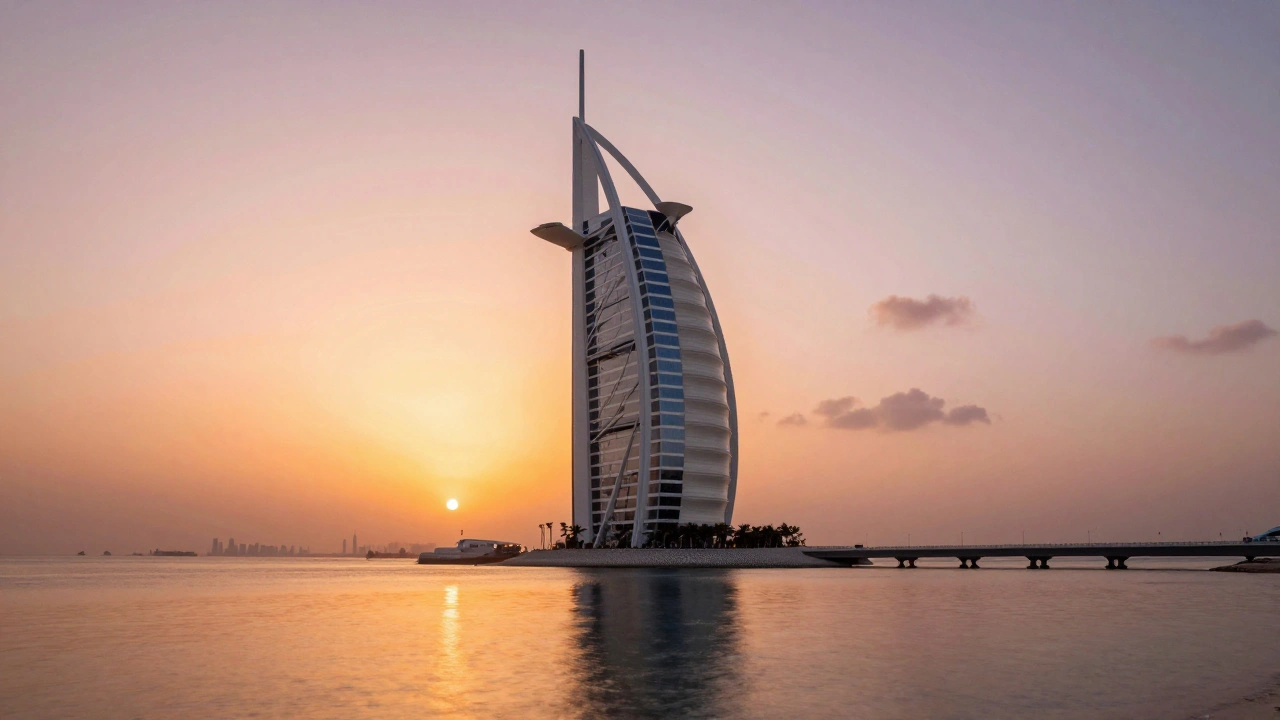
You’ve seen it in movies, on postcards, and in Instagram feeds flooded with golden sunsets. The Burj Al Arab isn’t just a hotel-it’s a statement. Rising like a sail carved from concrete and glass, it stands alone on its own island, 280 meters off the coast of Dubai, connected by a curving bridge that feels like a pathway to another world. And yes, it’s real. You don’t need to be a billionaire to see it. You just need to show up.
What Makes the Burj Al Arab So Special?
It’s not the tallest building in Dubai-that’s Burj Khalifa. It’s not the most expensive hotel ever built-that title’s debated, but it’s definitely in the top three. What makes the Burj Al Arab unforgettable is how it blends impossible design with real human experience. Built in 1999, it was the world’s first seven-star hotel, a term coined by a British journalist who was so stunned he gave it a rating beyond five stars. The hotel never officially uses the term, but the world didn’t forget it.
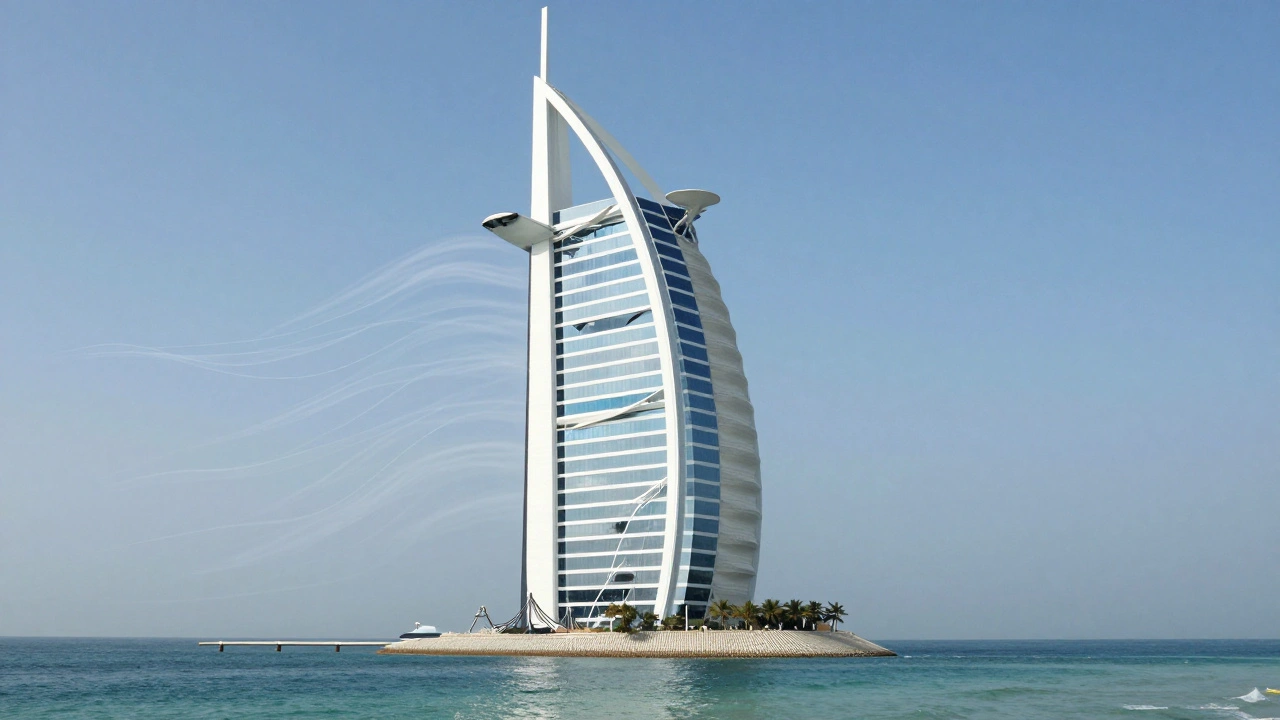
The structure looks like a giant sail, but it’s not just for show. The shape was inspired by the dhow boats that once sailed these waters, honoring Dubai’s maritime roots. The entire building is wrapped in over 25,000 square meters of Teflon-coated fiberglass, which reflects sunlight so brilliantly it glows like a beacon at night. Inside, the atrium soars 180 meters high-taller than most office towers-and is crowned by a massive glass dome that lets in natural light from dawn till dusk.
Why This Building Matters Beyond Luxury
People think the Burj Al Arab is just about gold-plated faucets and private butlers. But it’s more than that. It’s a symbol of ambition. When Dubai was still a trading port in the 1990s, few believed it could become a global destination. The Burj Al Arab was the city’s bold answer: What if we didn’t just build a hotel? What if we built a landmark that the whole world would stop and stare at?
It changed how cities think about architecture. Before this, luxury hotels were about opulence inside. The Burj Al Arab made the building itself the attraction. It proved that architecture could be tourism. Today, cities from Shanghai to Riyadh look at it and ask: Can we do something like that?
And it works. Over 400,000 people visit the hotel every year-not to stay, but just to walk through the lobby, snap a photo, or have afternoon tea at Al Muntaha, the restaurant perched 200 meters above sea level. You don’t need a reservation to enter the lobby. Just show up. The staff will greet you like you belong there.
The Engineering Behind the Illusion
Let’s talk about how this thing even stands. The Burj Al Arab sits on a man-made island, built by dumping 1.5 million cubic meters of sand into the Persian Gulf. That’s enough sand to fill 600 Olympic swimming pools. The foundation is anchored by 230 concrete piles driven 50 meters into the seabed-each one thicker than a subway train.
The building’s shape isn’t just aesthetic. It’s aerodynamic. Dubai gets strong winds, and this design cuts through them like a knife. The curved form reduces wind pressure by 30% compared to a flat-sided tower. That’s not luck-it’s advanced engineering. The entire structure is designed to sway slightly in high winds, not to break. It’s like a ship at sea, not a rigid skyscraper.
Inside, the elevators are among the fastest in the world, zipping from ground to the 28th floor in under 40 seconds. And yes, they’re lined with real gold leaf. But here’s the thing: the gold isn’t just for show. It’s a 24-karat, hand-applied finish that’s been maintained for over 25 years. Every year, a team of specialists spends weeks polishing every inch. That’s the level of detail you’re dealing with here.

What You Can Actually See and Do
You don’t have to spend $2,000 a night to experience the Burj Al Arab. Here’s what’s open to everyone:
- The Lobby: Walk in, look up. The atrium is one of the most photographed spaces in the Middle East. The central fountain, the crystal chandeliers, the marble floors-all feel like stepping into a palace made for royalty.
- Al Muntaha Restaurant: Book a table for afternoon tea. The view of the Dubai skyline and the Arabian Gulf is worth every dirham. You’ll be 200 meters up, surrounded by floor-to-ceiling glass, with the city stretching out below you.
- Jalsa Bar: A cozy lounge on the 27th floor with cocktails and live jazz. The terrace lets you sip a drink while watching the sunset paint the ocean gold.
- The Beach Club: Accessible to non-guests with a reservation. Lounge by the private beach, swim in the infinity pool, and enjoy Mediterranean bites. It’s quiet, exclusive, and feels like your own private resort.
- Photo Spots: The best shot is from the Jumeirah Beach Road overpass. Stand on the bridge, look back at the hotel, and capture the sail against the sky. Do it at golden hour-it’s magic.
How It Compares to Other Dubai Icons
It’s easy to compare the Burj Al Arab to Burj Khalifa. But they’re not rivals-they’re different kinds of icons.
| Feature | Burj Al Arab | Burj Khalifa |
|---|---|---|
| Height | 321 meters (including sail structure) | 828 meters |
| Primary Function | Luxury hotel and landmark | Office, residential, observation deck |
| Design Inspiration | Traditional dhow sail | Desert flower and Islamic architecture |
| Public Access | Lobby, restaurants, beach club | Observation decks (At the Top) |
| Best Time to Visit | Sunset | Early morning or night |
| Entry Cost (non-guest) | Free to enter lobby; $100+ for dining | $45 for observation deck |
The Burj Khalifa makes you feel small. The Burj Al Arab makes you feel like you’ve entered a dream. One is about height. The other is about presence.
What People Often Get Wrong
Many think the Burj Al Arab is only for the ultra-rich. But here’s the truth: you don’t need to book a room to feel its magic. You don’t even need to eat there. Just walking through the lobby, taking photos, or sipping tea at Jalsa gives you access to one of the most carefully designed spaces on Earth.
Another myth? That it’s cold or impersonal. The opposite is true. Staff remember names. They notice if you’re looking at a photo of the view and quietly bring you a complimentary glass of chilled juice. It’s not just service-it’s hospitality as an art form.
And no, it’s not just a hotel for celebrities. While you might spot a famous face, most guests are families, couples, and solo travelers who just wanted to see what the fuss was about. And they leave with the same thought: That was worth it.
Frequently Asked Questions
Can I visit the Burj Al Arab without staying there?
Yes, absolutely. You can walk into the lobby for free. You can also book a table at Al Muntaha, Jalsa Bar, or the Beach Club without being a guest. Just make a reservation ahead of time, especially for dinner or sunset slots.
Is the Burj Al Arab really seven-star?
The term "seven-star" was never officially used by the hotel. It was coined by a UK journalist in 1999 who felt five stars weren’t enough. The hotel accepts it as a nickname, but it officially markets itself as a "five-star deluxe" property. Still, the level of service, design, and attention to detail exceeds almost everything else on the planet.
How long does it take to tour the Burj Al Arab?
You can walk through the lobby and take photos in about 30 minutes. If you want to enjoy a drink or meal, plan for 1.5 to 2 hours. The best experience is arriving just before sunset-watch the building glow as the sun dips below the horizon.
What’s the best way to get there?
Take a taxi or ride-share from Dubai Marina or Jumeirah Beach. It’s about a 15-minute drive from either. If you’re driving, use the dedicated entrance on Jumeirah Beach Road. Parking is free for guests and visitors with restaurant reservations.
Are there any dress codes?
Yes. The lobby and restaurants require smart casual attire. No shorts, flip-flops, or tank tops. Men should wear long pants and closed shoes. Women should avoid overly revealing clothing. It’s not about being fancy-it’s about respecting the space.
Final Thought: Why It Still Captivates Us
Twenty-five years after it opened, the Burj Al Arab still stops people in their tracks. It doesn’t shout. It doesn’t need to. It simply exists-perfectly shaped, perfectly placed, perfectly maintained. It’s not just a building. It’s a promise: that human creativity, when given enough vision and resources, can turn imagination into something real, something lasting, something beautiful.
You don’t need to stay here to understand why it matters. You just need to see it. And once you do, you’ll understand why Dubai didn’t just build a hotel. It built a symbol.
Gerald White
December 3, 2025 AT 04:38okay but what if the entire building is a government surveillance hub disguised as a hotel? i’ve seen the drones hovering at night-those aren’t for tourism, they’re scanning the guests. the gold leaf? it’s not for shine, it’s for signal reflection. they’re mapping our biometrics through the elevator mirrors. you think you’re just taking a photo? you’re being cataloged.
Kevin Puls
December 5, 2025 AT 01:48For what it’s worth, the engineering behind the Burj Al Arab is genuinely impressive. The aerodynamic sail design reduces wind load by 30%-that’s not marketing, that’s fluid dynamics in action. The 230 concrete piles driven 50 meters into the seabed? That’s not just ambition, that’s precision. And the Teflon-coated fiberglass? It’s maintained to reflect sunlight without degrading, which is rare for coastal structures. It’s a triumph of structural engineering disguised as luxury.
Oskar Banaszek
December 6, 2025 AT 14:20Let’s be real-this isn’t architecture, it’s a billionaire’s flex. You call it a symbol of ambition? It’s a monument to excess. The gold leaf? Hand-polished annually? Please. That’s the kind of waste that could’ve funded schools in three countries. And don’t get me started on the ‘seven-star’ nonsense-it’s a PR gimmick invented by a journalist who couldn’t handle his own privilege. Real luxury doesn’t need to scream.
jasper watervoort
December 7, 2025 AT 23:59i went last year just to see the lobby and honestly it felt like walking into a dream
no one rushed me
staff smiled
the fountain was glowing
and i didn’t spend a dime
just stood there looking up
and that was enough
desiree marin parraga
December 8, 2025 AT 22:26Okay, but I have to correct something-this article says "the term seven-star was coined by a British journalist"-it was actually a *British travel writer* for The Sunday Times, not just "a journalist." And please, stop saying "dhow boats" without italics. It’s a foreign term, you’re not in high school anymore. Also, "Teflon-coated fiberglass" should be hyphenated. And the part about the elevators? They’re not just fast-they’re the fastest in the Middle East. Fix your grammar, people. This isn’t a tweet.