
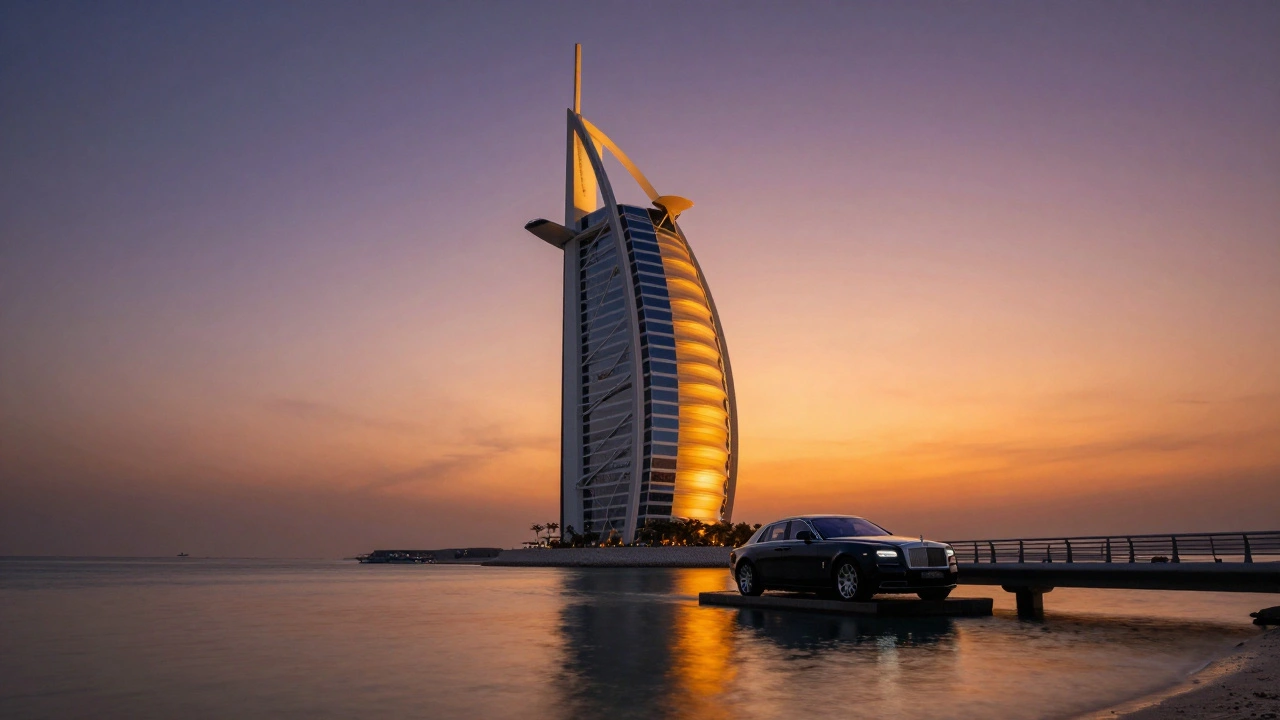
You’ve seen the photos. The sail-shaped silhouette rising from the Arabian Gulf, lit up like a jewel at night. The private butlers. The gold leaf ceilings. The helipad where celebrities land for dinner. The Burj Al Arab isn’t just a hotel-it’s a statement. And if you’re wondering why people spend thousands just to sip champagne in a room that costs more than a month’s rent, here’s the truth: it’s not about the bed. It’s about the feeling.
What Makes the Burj Al Arab So Different?
Let’s cut through the hype. The Burj Al Arab isn’t a five-star hotel. It’s not even officially six-star. It’s a self-proclaimed seven-star experience-and honestly? It earns it. Opened in 1999, this island-based tower was built to put Dubai on the map as a global luxury destination. It sits on its own artificial island, connected to the mainland by a private bridge. No taxis. No crowds. Just a 24/7 chauffeur-driven Rolls-Royce waiting to take you to your suite.
Inside, everything is custom. The atrium? 180 meters tall-the tallest in the world. The chandeliers? Hand-blown crystal from Austria. The carpets? Wool and silk, woven in India, each one unique. Even the elevators have scent diffusers that release a signature fragrance when you step in. This isn’t luxury as an add-on. This is luxury as the baseline.
Why Do the Elite Choose Burj Al Arab?
It’s not just about money. It’s about exclusivity. You don’t book a room here-you request an experience. The hotel doesn’t publish room rates online. You call. You talk to a concierge who already knows your name, your preferred pillow type, and whether you like your champagne chilled at 8°C or 9°C.
Celebrities like Beyoncé, Tom Cruise, and Prince William have stayed here. But so have billionaires who never post a single photo. Why? Because privacy is engineered into every corner. Private entrances. Dedicated elevators. Floor-to-ceiling windows that can be frosted at the touch of a button. Even the beach is private-no public access, no sunscreen-smeared tourists. Just you, the ocean, and a butler bringing chilled towels and fresh fruit.
What’s Inside the Suites?
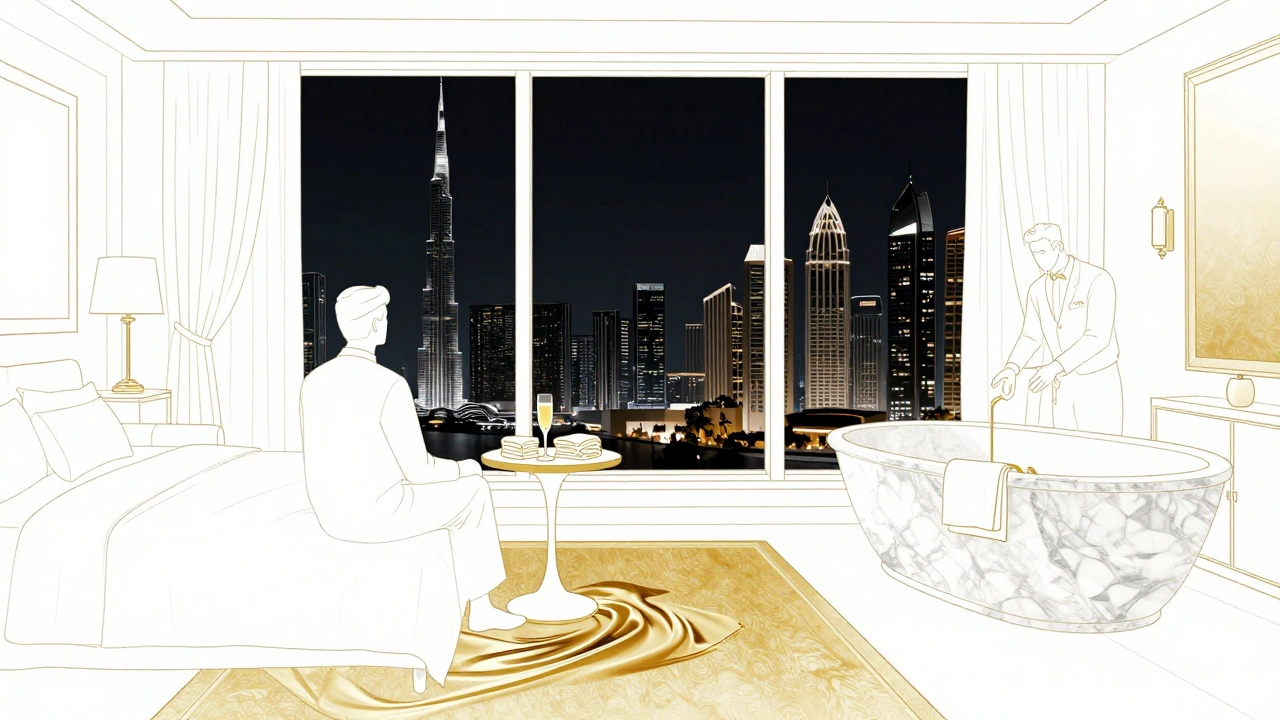
There are no standard rooms here. Every space is a suite. The smallest is 170 square meters-bigger than most Manhattan apartments. The Royal Suite? 780 square meters, with a private cinema, a 24-hour butler on call, and a terrace that overlooks the entire Dubai skyline. The bathrooms? Marble-lined, with gold-plated fixtures, heated floors, and a standalone tub big enough for two. And yes, the towels are heated too.
Each suite comes with a personal butler-yes, one for you, alone. They don’t just unpack your bags. They anticipate your needs. They know if you like your coffee at 7:15 a.m. or 7:20. They’ll arrange a private dhow cruise at sunset, book a table at a Michelin-starred restaurant across town, or organize a falconry lesson in the desert-all before you’ve finished your first glass of water.
The Dining Experience: More Than Just a Meal
Food here isn’t served-it’s performed. Al Muntaha, on the 27th floor, offers panoramic views of the Gulf while you eat. Chef Sven Elverfeld’s tasting menu changes monthly. One night, you might get truffle-infused caviar served on edible gold leaf. Another, a slow-cooked lamb with saffron foam that dissolves on your tongue. The wine list? Over 400 bottles, including rare vintages from Bordeaux and Burgundy.
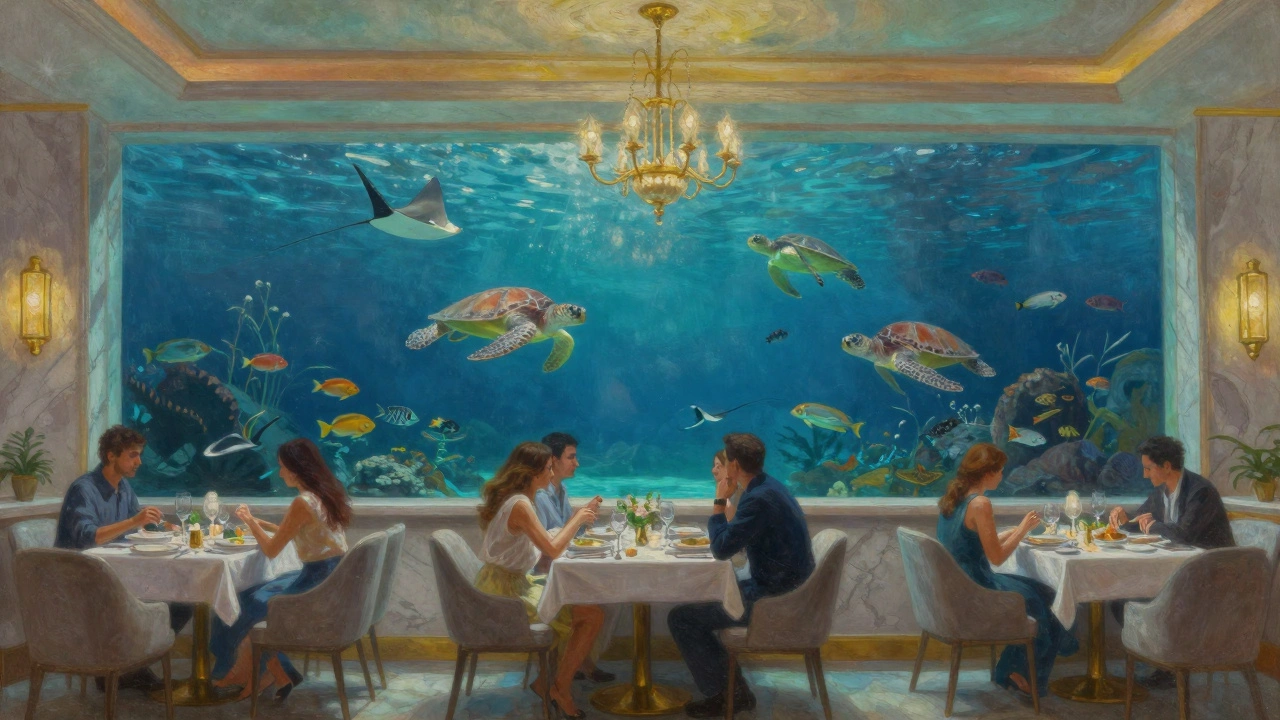
Then there’s Skyview Bar, where you sip cocktails 200 meters above the sea, surrounded by floor-to-ceiling glass. Or Al Mahara, the underwater restaurant where you dine surrounded by live marine life-turtles, rays, and schools of fish swimming past your table. The ceiling is a 2,200-ton acrylic aquarium. You don’t just eat here. You’re immersed.
What You Can’t Do at Burj Al Arab
Here’s the reality check: you can’t just walk in. No public access. No day passes. No casual tourists snapping selfies at the lobby. This isn’t the Burj Khalifa. You need a reservation-either to stay, dine, or attend a private event. Even the famous helipad isn’t open for photo ops. It’s strictly for arrivals and departures.
And if you’re hoping to get a glimpse without spending a fortune? You won’t. The hotel’s security is tight. Even locals with VIP status need prior approval to enter. That’s part of the appeal. It’s not for everyone. And that’s exactly why it’s so magnetic.
Is It Worth the Price?
Let’s talk numbers. A standard suite starts at around $2,000 a night. The Royal Suite? Up to $28,000. That’s more than most people spend on a year’s worth of vacations. But here’s what you’re paying for: time. Time without stress. Time without crowds. Time where every detail is handled before you even ask.
Think of it this way: you’re not buying a hotel room. You’re buying a pause. A break from the noise. A chance to feel like the most important person in the room-because, for those 48 hours, you are.
How to Book a Stay
You can’t book Burj Al Arab online like you would a Hilton. You call. You speak to a dedicated reservations team. They’ll ask you about your preferences-dietary needs, arrival time, favorite flowers, even the temperature you like in your room. They’ll suggest the best suite for your needs and confirm availability.
Pro tip: Book at least 60 days in advance, especially during peak season (November to March). If you’re planning a proposal, anniversary, or milestone celebration, mention it early. They’ll surprise you with champagne, rose petals, or a private fireworks display on the beach.
What to Pack
Even if you’re staying for just one night, dress like you mean it. The dress code is smart casual-no shorts, flip-flops, or tank tops in public areas. The lobby, restaurants, and beach are all high-end zones. You’ll see men in tailored suits and women in elegant dresses. It’s not about showing off-it’s about respecting the space.
Bring a good camera. The views are unreal. But leave your stress behind. This place doesn’t want you to worry about anything. Not parking. Not tipping. Not even where to find a towel. They’ve got it covered.
Burj Al Arab vs. Other Luxury Hotels in Dubai
| Feature | Burj Al Arab | Atlantis The Palm | Armani Hotel Dubai | Palm Jumeirah Marriott |
|---|---|---|---|---|
| Location | Artificial island, Jumeirah | Palm Jumeirah | Downtown Dubai, Burj Khalifa | Palm Jumeirah |
| Minimum Nightly Rate | $2,000 | $800 | $1,200 | $600 |
| Private Butlers | Yes, one per suite | No | Yes, for suites only | No |
| Underwater Restaurant | Yes (Al Mahara) | Yes (The House) | No | No |
| Private Beach Access | Exclusive, no public access | Public access allowed | Private, but smaller | Shared with resort guests |
| Architectural Icon | Yes-world-famous silhouette | Yes-pirate-themed | Yes-minimalist design | No |
Frequently Asked Questions
Can you visit Burj Al Arab without staying there?
Yes-but only if you have a reservation for dining, afternoon tea, or a private event. You can’t just walk in for a tour or to take photos. The hotel is private property, and security is strict. If you want to experience it, book a table at Al Muntaha or enjoy afternoon tea at Skyview Bar. That’s the only way non-guests can enter.
Is Burj Al Arab really seven-star?
There’s no official seven-star rating system. The term was created by a British journalist in 1999 and stuck. The hotel itself doesn’t advertise it as such. But the experience? It goes beyond any standard rating. From the private helipad to the 24/7 butler service, it operates on a level no other hotel in Dubai matches. So while it’s not officially seven-star, it feels like it.
How long do people usually stay at Burj Al Arab?
Most guests stay for one to three nights. It’s not a place you live in-it’s a place you experience. Many use it as a luxury stopover during a longer Dubai trip. Others book it for special occasions: proposals, honeymoons, or milestone birthdays. Staying longer than three nights is rare, simply because the cost adds up fast. But even one night leaves a lasting impression.
Is Burj Al Arab family-friendly?
Yes, but it’s not designed for kids. There’s a kids’ club, but the atmosphere is quiet and adult-focused. Most families who stay here are celebrating something-anniversaries, graduations, or milestone birthdays. If you’re traveling with young children, you might prefer Atlantis or Jumeirah Beach Hotel. Burj Al Arab is better suited for couples, solo travelers, or families seeking a quiet, ultra-luxurious escape.
What’s the best time of year to visit?
November to March is ideal. The weather is mild-around 20-25°C-with low humidity. Summer months (June to September) are extremely hot, often hitting 40°C. Plus, winter is peak season for international visitors, so the hotel feels alive with energy. Book early if you’re coming during this window. Rooms fill up fast.
Final Thought: Why It Still Matters
Dubai has more luxury hotels now than ever. New towers. New brands. New experiences. But the Burj Al Arab? It’s still the one everyone talks about. Why? Because it didn’t just build a hotel. It built a myth. A place where the rules of the ordinary world don’t apply. Where service isn’t expected-it’s anticipated. Where you don’t just stay-you remember.
It’s not for everyone. But if you’ve ever dreamed of what true luxury feels like-where every detail is perfect, and no request is too big-then this is your moment. Book it. Live it. And don’t forget to look out the window at sunset. The gold glows. The sea sparkles. And for a few hours, you’re not just a guest.
You’re part of the story.
Rhys Harley
January 19, 2026 AT 07:36The Burj Al Arab is not a hotel it is a cathedral to human excess
Every detail engineered to remind you that you are not worthy yet somehow permitted to tread its marble floors
The butlers do not serve they perform rituals of submission
The champagne is chilled to 8.5 degrees not because it tastes better but because the algorithm of luxury demands it
This is not hospitality it is hierarchy made tangible
I have seen the photographs of the Royal Suite
I have seen the gold leaf
I have seen the private helipad where billionaires land like gods
And I ask myself: what is the cost of a soul when every towel is heated and every silence is curated
Stephanie Labay
January 21, 2026 AT 00:35OMG this place is literally the pinnacle of human achievement
Like imagine being so rich you don’t even care about money anymore you just care about whether your butler knows you like your coffee at 7:17 not 7:18
And the underwater restaurant with actual TURTLES swimming by your plate
That’s not dining that’s a spiritual experience
Meanwhile I’m over here microwaving ramen wondering why my life is a glitch
Dubai didn’t build a hotel they built a fantasy that actually exists
And I’m not mad I’m inspired
Mohammed Muzammil
January 22, 2026 AT 04:51Man I read this whole thing and I’m just sitting here thinking how beautiful it is that someone can create something so extravagant just to make people feel special
You know in Nigeria we say ‘when the king walks the people kneel’ but here the king walks and the hotel bends to him
Every single detail from the scent in the elevator to the way the towels are folded
It’s not about showing off it’s about honoring the guest like they’re family
I’ve stayed in some nice places but nothing like this
And honestly I think this is what the world needs more of
Not just luxury for luxury’s sake but care so deep it becomes art
Even the security is polite like they’re guarding a temple not a building
People say it’s overpriced but what if the price isn’t for the room but for the peace
For the moment you forget your bills your problems your noise
And just breathe
That’s worth every dollar
Bonnie Cole
January 23, 2026 AT 11:55Let’s be real
The Burj Al Arab doesn’t just cater to the wealthy
It redefines what service means
And in a world where customer service is an afterthought this place treats human dignity as non-negotiable
That’s why even billionaires come back
Not because of the gold
But because they’re treated like people who matter
The fact that they remember your pillow preference
That they know your champagne temperature
That they anticipate your need for silence
That’s not marketing
That’s mastery
And it’s not about being rich
It’s about being seen
And that’s something everyone deserves
sam ly
January 23, 2026 AT 21:51This place is a joke
Gold leaf ceilings and heated towels
What a waste
People spend 28k to sit in a room with a view
Meanwhile real people are sleeping in cars
And you call this luxury
It’s not luxury it’s insanity
It’s a monument to greed
And you people eat it up
Pathetic
Jeanine Lee
January 24, 2026 AT 08:39Minor correction
The article says the atrium is 180 meters tall
According to the Burj Al Arab’s official architectural specs it’s actually 181 meters
Also the chandeliers are from Austria
But they’re not just hand-blown
They’re made by a family-run workshop in Tyrol that’s been doing it since 1789
And the carpets
They’re not just wool and silk
They’re hand-knotted using a 1200-year-old Persian technique
Each one takes 18 months
Just saying
The details matter
Timi Shodeyi
January 25, 2026 AT 14:00What’s fascinating is how the Burj Al Arab weaponizes silence
No crowds no noise no pressure
Even the elevator’s scent is designed to calm
It’s not just service it’s sensory architecture
And the fact that you can’t just walk in
That’s the genius
Exclusivity isn’t a barrier
It’s a promise
A promise that if you’re here
You’ve earned this
Not with money
But with the willingness to pause
To stop chasing
To just be
And that’s rarer than gold
F. Erich McElroy
January 26, 2026 AT 04:55Let’s be honest
This place is the only reason Dubai isn’t just a desert with a mall
Everyone else is trying to copy it
But no one gets it
It’s not about the size
It’s about the audacity
Building a hotel on an island just to say you can
And then making the butlers memorize your coffee order
That’s not hospitality
That’s a flex
And I respect it
Most hotels are just beds with Wi-Fi
This is theater
And I’m here for it
Brittany Parfait
January 27, 2026 AT 09:33I stayed here once
Just one night
Worth every penny
The butler brought me tea at 3am because I was awake
Didn’t ask why
Just smiled
And left
That’s all I need
Renee Bach
January 28, 2026 AT 10:19Just watched the sunset from the Skyview Bar
Champagne in hand
Gold everywhere
And for a second
I forgot I had rent due
✨