
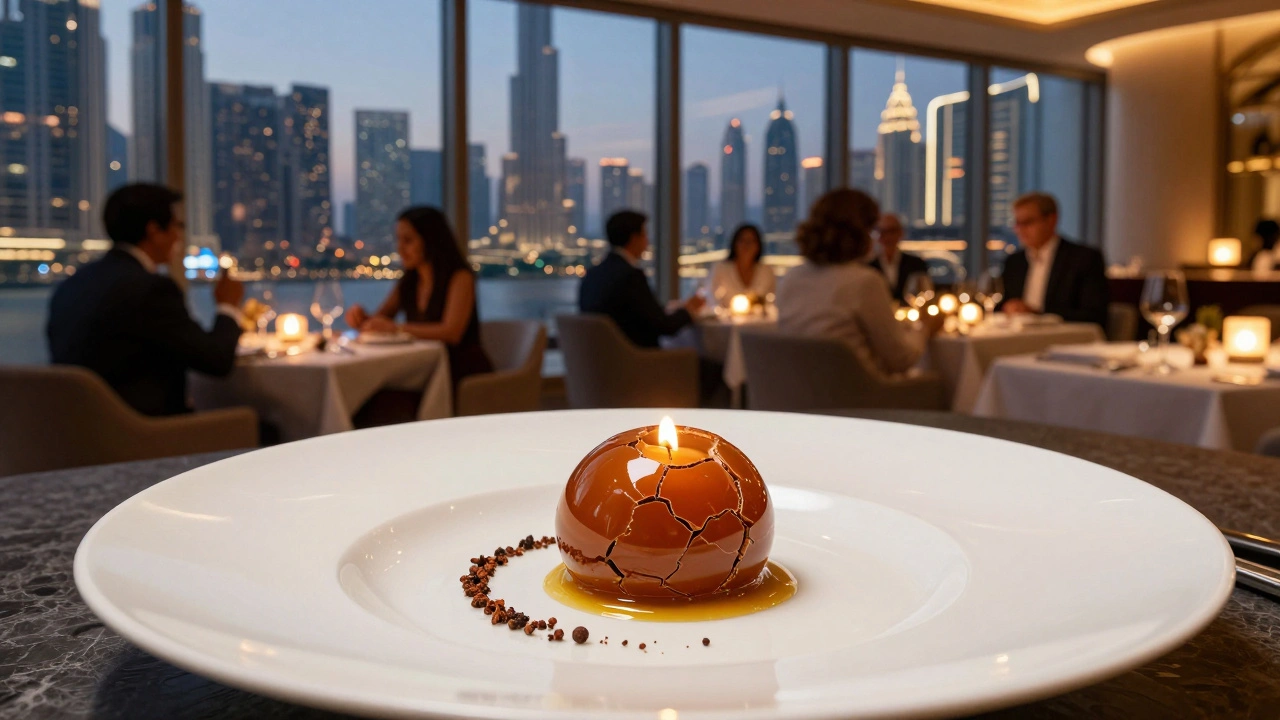
You’ve seen the photos: plated like art, served in silence, costing more than your monthly gym membership. And you’re wondering-Michelin star restaurants in Dubai-are they worth it? The answer isn’t just yes. It’s hell yes, if you know where to look.
Dubai doesn’t just have Michelin stars. It has 17 of them as of 2026, scattered across sleek towers, desert-facing villas, and hidden corners of Alserkal Avenue. These aren’t just fancy dinners. They’re experiences built on decades of culinary mastery, imported techniques, and local ingredients pushed to their limits. If you’ve ever wondered what it feels like to eat at a restaurant where every bite tells a story, this is your guide.
What Exactly Is a Michelin Star?
Let’s cut through the hype. A Michelin star isn’t a trophy. It’s a seal from a tire company that started rating restaurants in 1900 to get people driving more. Fast forward to today, and it’s the most respected food rating in the world. One star means “a very good restaurant in its category.” Two stars? “Excellent cooking, worth a detour.” Three stars? “Exceptional cuisine, worth a special journey.”
In Dubai, the Michelin Guide arrived in 2022. Since then, it’s become the unofficial Bible for food lovers. Unlike other lists, Michelin inspectors pay for their meals, stay anonymous, and return multiple times. No advertising. No paid placements. Just pure, unfiltered tasting.
Why Michelin Stars Matter in Dubai
Dubai’s dining scene is noisy. There are 12,000+ restaurants here. You could eat at a new place every day for 33 years and not repeat. So why pick a Michelin-starred spot?
Because it’s the only system that guarantees consistency. You won’t get lucky once. You’ll get perfection every time. A dish that’s flawless today will be flawless next month. The staff won’t forget your name because they’ve memorized your preferences from your last visit. The wine pairing? Thought out like a symphony.
And here’s the truth: Dubai’s Michelin stars aren’t just about French technique or Italian pasta. They’re about fusion done right. Think Emirati dates in a chocolate dessert, saffron-infused foie gras, or grilled lobster with oud-smoked butter. This is global cuisine, rooted in the Gulf.
The 17 Michelin-Starred Restaurants in Dubai (2026)
Here’s the full list, broken down by star count. Names are updated as of January 2026. All are open for reservations.
Three Stars - Worth the Flight
- Arabesque - Al Fattan Currency House, Downtown. Chef Youssef Al-Mansoori’s tasting menu blends Omani spices with French sous-vide. The 14-course journey ends with a date caramel dome that cracks like glass.
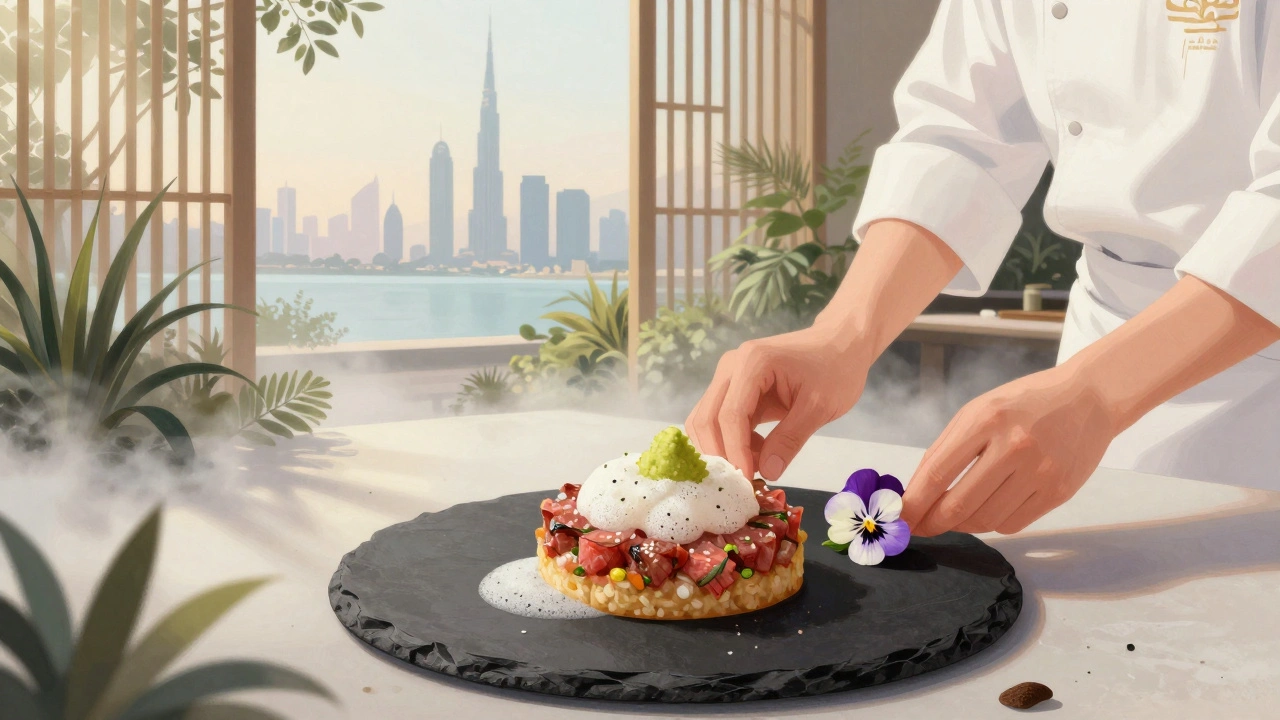
- Le Jardin - The Palm. A French-Japanese hybrid by ex-Momofuku chef Claire Moreau. Think wagyu tartare with wasabi foam and truffle dashi. The garden terrace overlooks the Dubai Marina skyline.
Two Stars - Worth the Detour
- Al Muntaha - Burj Al Arab. The original Dubai Michelin star (2022). Dine 220 meters above sea level with views of the Arabian Gulf. Their lobster thermidor with saffron risotto is legendary.
- La Petite Maison - DIFC. A slice of Monaco in Dubai. Perfect bouillabaisse, handmade pasta, and a wine list that includes rare Provençal vintages.
- Shoukouh - Alserkal Avenue. A modern Emirati tasting menu by chef Layan Al-Harbi. Uses desert herbs, camel milk, and dried limes in ways you’ve never imagined.
- Urbane - Address Downtown. Chef Marco De Luca’s Italian cuisine reimagined with Emirati ingredients. The black truffle tagliatelle with dates and saffron cream? Pure magic.
- Yuan - Dubai Opera District. A Chinese fine-dining experience with 24-hour duck confit, hand-pulled noodles, and tea pairings that change with the seasons.
One Star - Exceptional Value
- Le Petit Chef - Atlantis The Royal. A 3D projection dinner where a tiny chef “cooks” on your plate. Fun, theatrical, and surprisingly delicious.
- Al Hekma - Al Quoz. A hidden gem serving modern Levantine cuisine. The lamb kibbeh with pomegranate molasses is the best thing you’ll eat in a non-touristy part of Dubai.
- El Cielo - Dubai Hills Estate. Colombian chef Juan Manuel Barrientos turns chocolate into a 10-course experience. Yes, chocolate. And yes, it’s life-changing.
- Wabi-Sabi - Jumeirah Beach. Minimalist Japanese kaiseki with seasonal seafood flown in daily from Toyosu Market in Tokyo.
- Byblos - The Address Beach Resort. Lebanese fine dining with a twist: smoked eggplant with gold leaf and grilled octopus with za’atar foam.
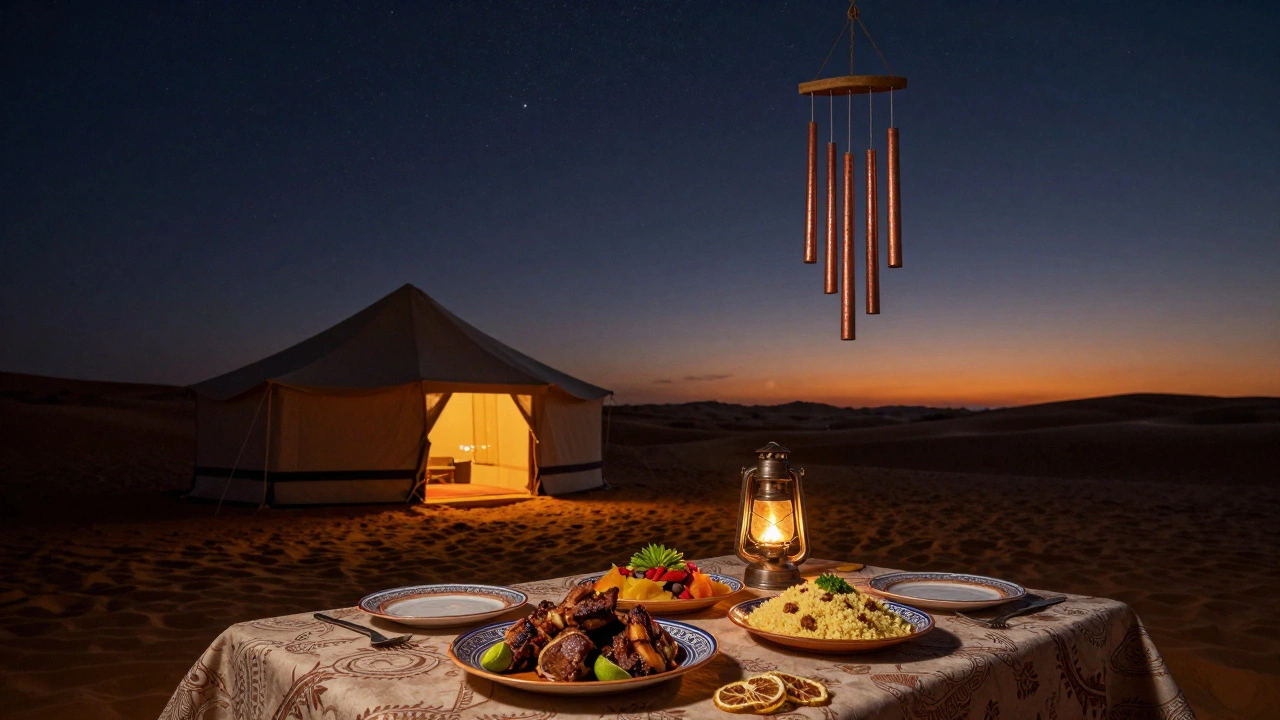
- Al Maha - Desert Conservation Area. A private desert tent dining experience with Bedouin-inspired dishes and stargazing. Book months ahead.
- La Belle Époque - Jumeirah. A 1920s Parisian bistro with duck confit, escargot, and wine by the glass from Alsace. The chocolate mousse is made with 70% Venezuelan cocoa.
- Shibui - DIFC. A modern Japanese izakaya with omakase and sake pairings. The tuna belly with yuzu kosho is addictive.
- Elia - Alserkal Avenue. Greek cuisine redefined. Think grilled octopus with pomegranate glaze and feta ice cream. Yes, feta ice cream.
What to Expect When You Dine
Walking into a Michelin-starred restaurant in Dubai isn’t like walking into a regular one. There’s no loud music. No rushed servers. No menus with 50 options.
You’ll be greeted by a maître d’ who knows your name-even if you’ve never been here before. They’ve read your reservation notes: vegan, gluten-free, celebrating an anniversary. The table is set with linen so fine it feels like silk. The bread? Baked daily with Emirati barley and sea salt from the Arabian coast.
Each course arrives like a small sculpture. You’ll be asked to taste it slowly. The chef might come out to explain the inspiration. It’s not showy. It’s respectful. You’re not just eating. You’re participating.
And the silence? It’s intentional. No clinking glasses. No shouting. Just the soft hum of a jazz playlist, the rustle of napkins, and the quiet appreciation of food that took 18 hours to prepare.
How to Book a Table
You can’t just walk in. Not even on a Tuesday.
Reservations open 90 days in advance for three-star spots. Two-star places open 60 days ahead. One-star? Usually 30 days. Use the official Michelin Guide app or the restaurant’s website. Avoid third-party platforms-they often charge extra or don’t guarantee seating.
Pro tip: Call the restaurant directly. Say you’re a local. Mention if you’re celebrating something. Many chefs will surprise you with a complimentary dessert or wine upgrade if you’re polite and genuine.
For Al Maha in the desert? Book six months ahead. It only seats 12 guests per night.
Pricing: What You’ll Pay
Michelin dining in Dubai isn’t cheap. But it’s not as outrageous as you think.
- One-star: AED 600-1,200 per person (tasting menu)
- Two-star: AED 1,500-2,800 per person
- Three-star: AED 3,500-5,000 per person (includes wine pairing)
Wine pairings add AED 800-1,800. Service is included. Tips aren’t expected, but if you’re thrilled, leaving 5-10% is appreciated.
For context: A decent meal at a popular Dubai restaurant costs AED 300-500. You’re paying for craftsmanship, not just ingredients.
Who It’s For (and Who It’s Not)
Michelin-starred dining isn’t for everyone. If you want fast, loud, cheap, or Instagrammable food-go to a food truck or a rooftop bar.
This is for people who:
- Appreciate the art behind food
- Want to experience something unforgettable
- Don’t mind spending on memory, not just a meal
- Are willing to slow down and savor
It’s not for kids under 12. Most places don’t allow them. Not because they’re rude-but because the experience is too quiet, too intense. Save it for when they’re older.
Michelin vs. Other Dubai Restaurant Lists
Dubai has dozens of “best of” lists. Time Out. Condé Nast. CNN. But none have the same weight as Michelin.
| Criteria | Michelin Guide | Other Lists (Time Out, etc.) |
|---|---|---|
| Selection Process | Anonymous inspectors, multiple visits | Editorial picks, influencer votes |
| Consistency | Guaranteed across visits | Varies by day or chef’s mood |
| Price Transparency | Clear, no hidden fees | Often includes service charges |
| Local Focus | Highlights Emirati innovation | Tends to favor Western-style dining |
| Global Recognition | Widely trusted worldwide | Primarily regional |
Michelin doesn’t care about trends. It cares about quality. That’s why it’s the only list that matters.
Frequently Asked Questions
Are Michelin star restaurants in Dubai only for tourists?
No. In fact, over 60% of diners at Michelin-starred spots in Dubai are locals. Many are expats who’ve lived here for years and treat these meals as special occasions. Some even book monthly for their anniversary. It’s not a tourist trap-it’s a cultural institution.
Can I wear jeans to a Michelin-starred restaurant?
It depends. Most places have a smart-casual dress code. Jeans without rips or stains are fine. But avoid flip-flops, shorts, or tank tops. For three-star spots like Arabesque or Le Jardin, they prefer collared shirts and closed-toe shoes. When in doubt, call ahead. They’ll tell you.
Do they have vegetarian or vegan options?
Yes. Almost every Michelin-starred restaurant in Dubai offers a vegetarian tasting menu. Some, like Shoukouh and Elia, have entirely plant-based options. When booking, mention your dietary needs. Chefs here are used to it-and they love the challenge.
Is there a kids’ menu?
Not usually. Most Michelin-starred restaurants don’t cater to children under 12. The experience is designed for quiet, focused dining. If you’re bringing kids, pick a one-star spot like Le Petit Chef-it’s playful, visual, and kid-friendly. Otherwise, arrange babysitting. You’ll thank yourself later.
Can I just order à la carte instead of a tasting menu?
At two- and three-star restaurants, no. The tasting menu is the chef’s story. It’s curated like a book. You can’t skip chapters. At one-star spots, you might have a choice. But you’ll miss out. The tasting menu is where the magic happens.
Final Thought: Is It Worth It?
Let’s be real. You could eat five meals at a regular restaurant for the price of one Michelin-starred dinner. So why do it?
Because food isn’t just fuel. It’s memory. It’s culture. It’s the moment you realize a chef spent 18 hours making a single dish just for you. It’s the silence after the last bite. The way the candlelight catches the gold leaf on your dessert. The way you walk out not full-but changed.
Dubai’s Michelin stars aren’t about showing off. They’re about proving that even in a city built on speed and spectacle, there’s still room for quiet mastery. And if you’ve never experienced that-you haven’t really tasted Dubai yet.




Sig Mund
January 10, 2026 AT 16:06This is why America still leads in food. You can’t call that ‘fusion’-it’s just expensive gimmicks with fancy names. I’ve eaten real cuisine in New York and Paris, and none of this compares. Dubai’s just throwing gold leaf on everything to look rich.
Ayush Bajpai
January 10, 2026 AT 22:14What a beautiful breakdown! 🌟 The way the article highlights Emirati ingredients woven into global techniques is truly inspiring. As someone from India, I see parallels in how our own regional spices are being reimagined with precision. This isn’t just dining-it’s storytelling on a plate. Kudos to the chefs for honoring tradition while pushing boundaries!
Christian Gerwig
January 11, 2026 AT 00:17Interesting how Michelin insists on anonymity, yet somehow always seems to favor restaurants that cater to Western palates. The fact that they gave three stars to a place serving ‘date caramel’ while ignoring actual Arabic culinary heritage is telling. This isn’t about excellence-it’s about branding.
Michelle Clark
January 12, 2026 AT 20:12OMG I JUST BOOKED A TABLE AT SHOUKOUH!! 🙌 I’ve been waiting for this for YEARS. The camel milk panna cotta? YES PLEASE. Honestly, this guide is a GAME CHANGER for foodies who want to go beyond the usual tourist traps. Pro tip: ask for the desert herb tea-it’s like drinking a breeze from the dunes. You won’t regret it!!
Jim Kwn
January 13, 2026 AT 11:26Karan Chugh
January 14, 2026 AT 11:08You misspelled ‘saffron’ in the third paragraph. And ‘oud-smoked butter’? That’s not even a real thing. Oud is for incense, not cuisine. This article reads like a PR draft from a hotel marketing team. Also, ‘feta ice cream’? No. Just no.
Mona De Krem
January 16, 2026 AT 08:51RANJAN JENA
January 18, 2026 AT 08:05There’s something profoundly poetic about the silence in these restaurants-the way the air holds its breath between bites, the rustle of linen like desert wind, the slow dance of flavors that whisper rather than shout. It’s not about price, it’s about presence. In a world that screams for attention, these chefs dare to make you listen. And isn’t that the rarest luxury of all?
Ryan Woods
January 18, 2026 AT 18:02While I appreciate the effort put into this comprehensive guide, I must point out that the grammatical structure of the section on pricing lacks parallel construction. Furthermore, the use of ‘AED’ without prior definition may alienate international readers unfamiliar with the currency. Also, the term ‘chefs here are used to it’ is colloquially imprecise and should be revised to ‘chefs in this region have developed extensive experience accommodating dietary restrictions.’
Teresa Bulhoes
January 19, 2026 AT 02:08I went to Le Petit Chef last month and I still dream about it. The little animated chef dancing on my plate, the way the chocolate melted like liquid velvet… I cried. Not because it was expensive, but because it felt like magic. I brought my 10-year-old and she didn’t stop talking about it for weeks. Maybe the ‘no kids’ rule is outdated. Some experiences are meant to be shared-especially the ones that make you believe in wonder again.