Dubai Language: What You Need to Know About Communication in the City
When you think of Dubai language, the primary spoken language in Dubai, which is Modern Standard Arabic with a local Gulf dialect, but where English is the dominant language for business, tourism, and daily life. Also known as Emirati Arabic, it’s the heartbeat of local culture, even as English runs the streets, malls, and offices. You won’t find a single language here—you’ll find a mix that works. Arabic is official, taught in schools, and used in government and religious settings. But if you land in Dubai and only speak English, you’ll be fine. Almost everyone you interact with—shopkeepers, taxi drivers, hotel staff, even your barista—will switch to English without you asking.
That’s because Dubai’s population is over 85% expats. People from India, Pakistan, the Philippines, Egypt, the UK, and beyond live and work here. So the real Dubai language, the practical, everyday way people communicate, is a blend of English with simplified grammar, borrowed words from Hindi, Urdu, and Tagalog, and the occasional Arabic phrase. Also known as Dubai slang, it’s not taught in textbooks—it’s learned on the job, at the souk, or over a cup of karak tea. You’ll hear phrases like "How many?" instead of "How much is it?" or "Can you give me a lift?" instead of "Can you drive me there?" It’s not broken English—it’s functional English shaped by millions of daily interactions.
Then there’s the Emirati dialect, the local Arabic variant spoken by Emiratis, full of unique sounds, rhythms, and words like "yalla" (let’s go) or "insha’allah" (God willing). Also known as Khaleeji Arabic, it’s the language of family, tradition, and identity. You might not speak it, but you’ll feel it. When a local says "shukran" (thank you), they mean it. When they say "ma3asalama" (goodbye), they’re hoping to see you again. Even if you don’t understand every word, the tone, the pause, the smile—they all communicate more than vocabulary ever could.
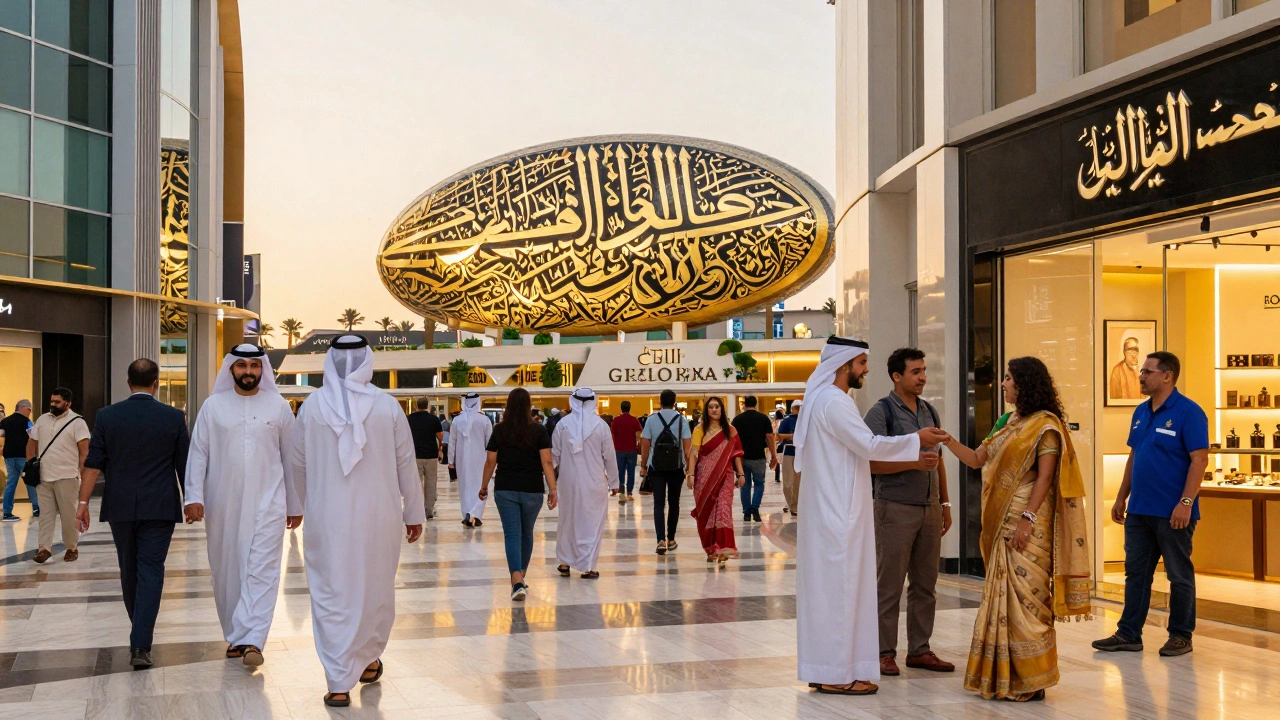
And don’t forget the signs. You’ll see Arabic first, then English. Menus, metro maps, hospital forms, even parking tickets—bilingual is the norm. That’s not just convenience. It’s respect. It’s the city saying: "You’re welcome here, no matter where you’re from."
What you won’t find? A single "Dubai language" textbook. What you will find? Real, living communication that changes with the crowd. Whether you’re haggling in the Gold Souk, ordering coffee at a rooftop lounge, or asking for directions to the Burj Khalifa, the key isn’t perfect grammar—it’s being clear, polite, and open to a little mix of cultures in every word.
Below, you’ll find real guides from locals and visitors who’ve navigated this linguistic landscape—from learning basic Arabic phrases that impress Emiratis, to understanding why English is the unspoken rule in Dubai’s business world, to the hidden meanings behind the words you’ll hear every day. No fluff. Just what you need to speak, connect, and belong.