
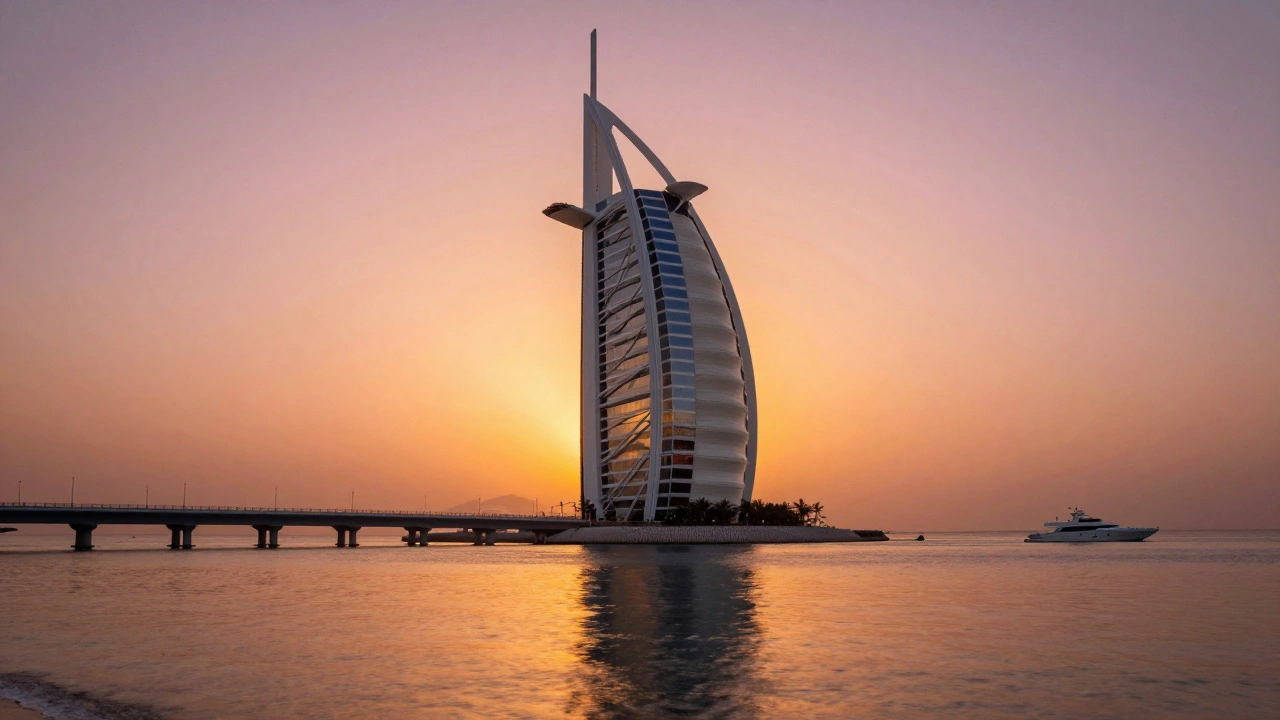
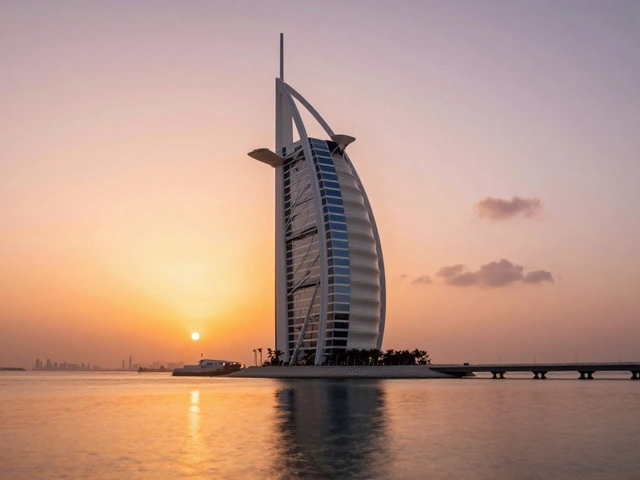
You’ve seen the photos. The sail-shaped silhouette glowing against the Dubai sunset. The private butlers, the gold leaf ceilings, the underwater restaurant. But here’s the truth most travel blogs won’t tell you: Burj Al Arab isn’t just a hotel. It’s a statement. A deliberate, over-the-top, wildly expensive declaration that luxury doesn’t follow rules-it makes them.
What Makes Burj Al Arab Different?
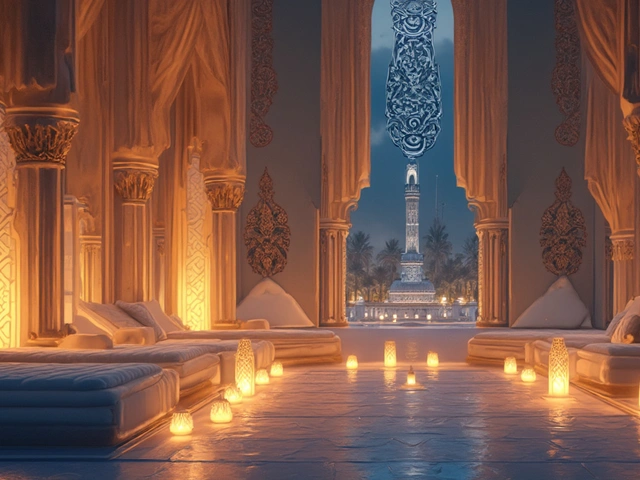
Let’s start with the basics. Burj Al Arab sits on its own island, connected to Jumeirah Beach by a private bridge. It’s not on the mainland. You don’t just check in-you arrive by private yacht or Rolls-Royce. The lobby? A 180-meter atrium that feels like stepping inside a cathedral designed by a billionaire with a taste for drama. The ceilings? Hand-laid 24-karat gold leaf. The floors? Italian marble so polished you can see your reflection-and your bank account shrinking.
Forget five stars. Burj Al Arab calls itself a seven-star hotel. That’s not an official rating. No government body gives out seven stars. But here’s the thing: you don’t need a label when your service is so extreme it redefines the word. Need a specific brand of bottled water? Done. Want your pillow fluffed with a particular scent? They’ll source it. Want your child’s favorite stuffed animal placed on the bed before you arrive? They already have it waiting.
The Experience You Can’t Buy Elsewhere
Most luxury hotels give you room service. Burj Al Arab gives you personalized service. Every guest gets a dedicated butler-yes, one for each room-who handles everything from packing your suitcase to arranging a private desert safari at 4 a.m. These aren’t staff in uniforms. They’re trained in etiquette, cultural sensitivity, and anticipating needs before you voice them. One guest asked for a specific type of tea from a remote region of Japan. The butler flew to Tokyo, bought the entire stock of that batch, and brought it back on the next flight.
Even the elevators are part of the show. You don’t press a button. You choose your destination from a touchscreen panel, and the doors open with a soft chime. The interiors? Designed by a team that spent two years studying the shapes of waves and dunes. Every curve, every texture, every light fixture was chosen to evoke the sea and desert-not just decorate them.
Rooms That Feel Like Private Penthouse Suites
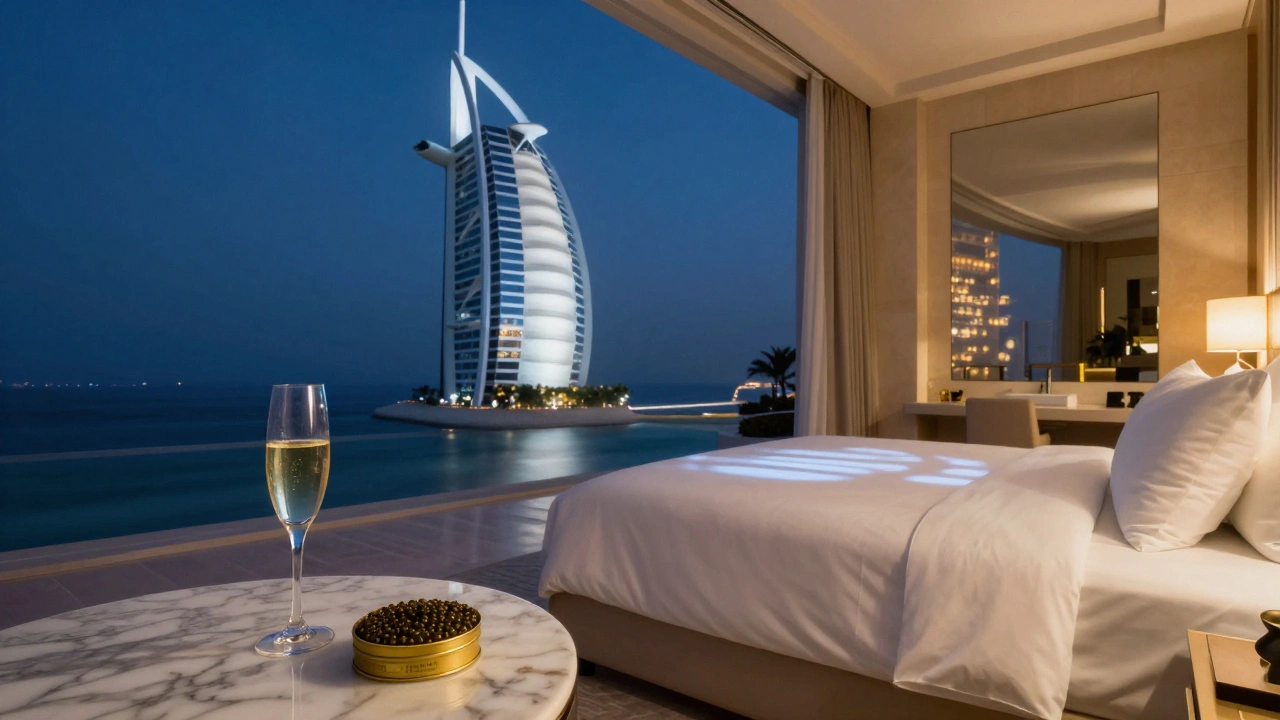
There’s no such thing as a standard room here. Even the smallest suite is 170 square meters-larger than most Manhattan apartments. Each one has a separate living area, a walk-in closet, a bathroom with a bathtub that overlooks the ocean, and a terrace with a private plunge pool. The beds? Custom-made with 300-thread-count Egyptian cotton, layered with down pillows you could nap on for hours. The minibar? Filled with free champagne, caviar, and artisan chocolates. You don’t pay extra. It’s all included.
And the views? From every window, you’re staring at the Arabian Gulf. At night, the building itself becomes a light show-projected animations that change with the seasons. During Ramadan, it glows gold. On New Year’s Eve, it explodes in fireworks visible from across the city.
Where the World’s Wealthiest Come to Be Invisible
Why do billionaires, royalty, and celebrities choose Burj Al Arab? Not because it’s the fanciest. But because it’s the quietest. There are no crowds. No long lines at check-in. No noisy pools. The private beach has only 20 loungers, reserved by appointment. The spa? A sanctuary with nine treatment rooms, each with its own steam room and private changing area. You don’t see other guests. You don’t hear them. It’s designed so you forget the world exists.
One guest-a tech founder from Silicon Valley-told his team he was taking a week off. He didn’t answer emails. Didn’t take calls. Didn’t even turn on his phone. When he returned, he said: “I didn’t relax. I reset.” That’s the magic of Burj Al Arab. It doesn’t pamper you. It reprograms you.
What You Actually Pay For
Let’s talk numbers. A night in the most basic suite starts at $2,400. That’s before taxes, before service charges, before the $1,200 for a private helicopter transfer from the airport. The Royal Suite? $28,000 a night. And yes, people book it. For weddings. For anniversaries. For when you’ve just sold your company and want to celebrate in a way that makes headlines.
But here’s the catch: you’re not paying for a bed. You’re paying for time. Time without stress. Time without decisions. Time where someone else handles every detail-so you can just breathe. The food? Michelin-starred chefs. The wine? A cellar with 1,200 labels. The staff? Over 1,000 people serving fewer than 300 guests. That’s a 3-to-1 ratio. No other hotel on earth comes close.
Is It Worth It?
Is it worth $28,000 a night? For most people? No. But here’s the thing: Burj Al Arab isn’t built for most people. It’s built for those who’ve seen everything, tried everything, and still want more. For those who believe luxury isn’t about price tags-it’s about the absence of compromise.
Think of it this way: you don’t buy a Ferrari because you need speed. You buy it because it makes you feel alive. Burj Al Arab is the same. It doesn’t just accommodate you. It elevates you. Even if only for a night.
What to Expect During Your Stay
Arrival: You’re met at the helipad or dock by your butler, who takes your bags and guides you to the lobby. No waiting. No lines. Just a glass of chilled rose and a warm towel.
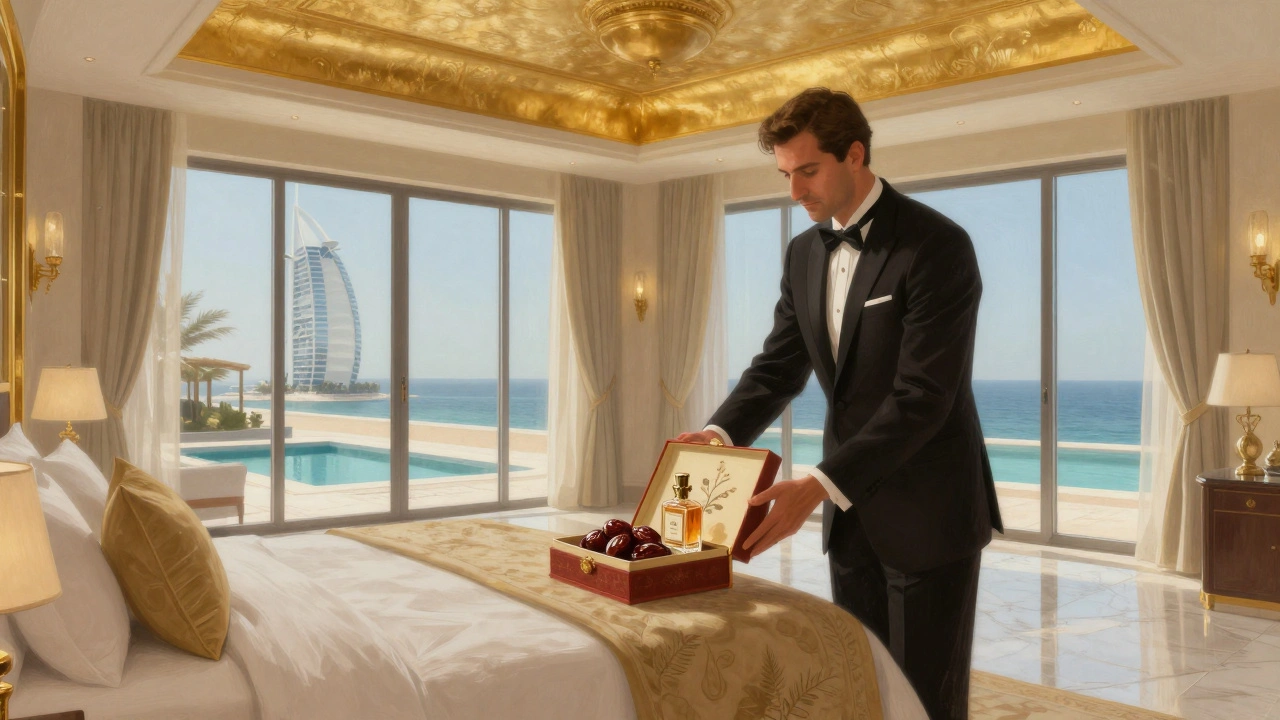
Check-in: Happens in your suite. Your butler walks you through the room, explains the touchscreen controls, and offers a personalized welcome gift-maybe a hand-painted box of dates, or a custom fragrance.
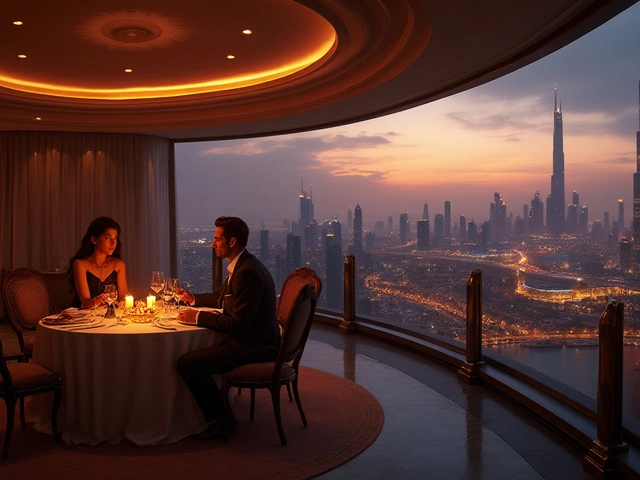
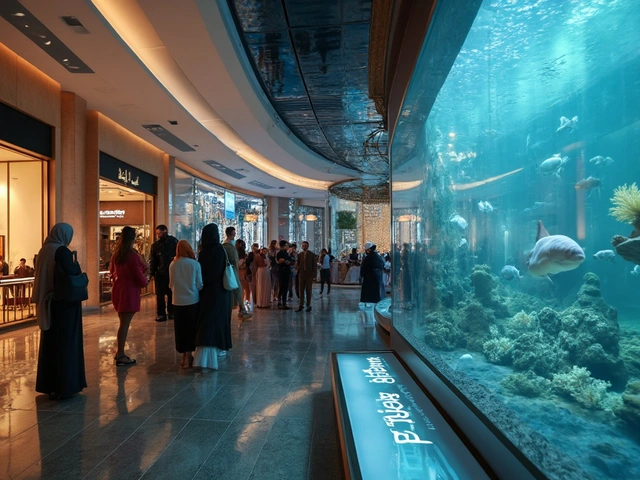
Dining: Choose from seven restaurants. Al Muntaha, perched 200 meters above sea level, serves French cuisine with views of the city skyline. Underwater, at Al Mahara, you eat surrounded by live marine life. Breakfast? Served in bed with a choice of 30 items, including truffle scrambled eggs and gold-dusted pancakes.
Evening: Watch the sunset from your terrace, then step into the spa for a 90-minute gold-infused massage. Later, sip a cocktail at Skyview Bar as the building lights up like a beacon.
Departure: Your butler packs your bags, arranges your transport, and hands you a personalized photo album of your stay. No checkout desk. No forms. Just a quiet goodbye.
Burj Al Arab vs. Other Luxury Hotels in Dubai
| Feature | Burj Al Arab | Palm Jumeirah Hotels | Downtown Dubai Luxury |
|---|---|---|---|
| Location | Private island, 300m offshore | On Palm Jumeirah | City center, near Dubai Mall |
| Room Size (Minimum) | 170 sqm | 80-120 sqm | 60-100 sqm |
| Butler Service | 24/7, dedicated to each suite | Available on request | Not standard |
| Private Beach Access | Exclusive, limited to guests | Shared with resort | Public beach nearby |
| Price Range (Per Night) | $2,400-$28,000 | $800-$4,000 | $600-$3,500 |
| Unique Feature | Seven-star experience, no compromises | Beachfront, family-friendly | Shopping, nightlife access |
Frequently Asked Questions
Is Burj Al Arab open to the public?
Yes-but not for overnight stays unless you’re a guest. The restaurants, spa, and lobby are open to the public, but you need a reservation. Many tourists book high tea at Al Muntaha or lunch at Skyview Bar just to experience the space. You can’t wander in off the street, but you don’t need to stay overnight to see the magic.
Can you visit Burj Al Arab without staying there?
Absolutely. You can book a table at any of its restaurants, schedule a spa treatment, or even take a guided tour of the lobby and atrium. The hotel encourages non-guests to experience its design and service-it’s part of what makes Dubai’s luxury scene so unique. Just book ahead. Spots fill up fast.
Is Burj Al Arab really the only seven-star hotel in the world?
Technically, no hotel system officially recognizes seven stars. The term was coined by a British journalist in 1999 after visiting the hotel and being stunned by the service. Since then, it’s stuck. No other hotel in the world has replicated the same level of personalization, privacy, and scale. So while it’s not an official rating, it’s the only hotel that truly earns the title.
What’s the best time of year to visit Burj Al Arab?
November to March. The weather is perfect-cool, dry, and sunny. Summer in Dubai hits 45°C, and while the hotel is air-conditioned, you’ll want to enjoy the beach and outdoor spaces. Winter nights are ideal for sunset cocktails on the terrace. Also, the building’s light shows are most spectacular during cooler months.
Do you need to dress up to visit Burj Al Arab?
Yes-especially for dining. The dress code is smart casual to formal. No shorts, flip-flops, or tank tops in the restaurants or lobby. Even if you’re just having coffee, you’ll be expected to look polished. It’s part of the experience. You’re not just visiting a hotel. You’re stepping into a world where elegance is expected.
Final Thought
Burj Al Arab doesn’t just offer luxury. It redefines what’s possible. It’s not about having the most expensive things. It’s about having no limits. No compromises. No waiting. In a world where convenience is king, Burj Al Arab reminds you that true luxury is about being treated like the only person who matters-because, for those few days, you are.
Dan Thornton
January 10, 2026 AT 20:34Burj Al Arab is wild to think about. You don’t need all that to be happy. Some people just need a clean bed and quiet. But I get it. For some, it’s not about comfort. It’s about feeling like you’ve made it.
Still, I wonder how many staff work behind the scenes to keep this going. It’s not magic. It’s people.
Jennifer Cacace
January 11, 2026 AT 23:48Oh please. Seven-star? That’s just marketing jargon dressed up in gold leaf. They’re charging $28K a night for a concierge who remembers your tea preference. Meanwhile, the actual staff are probably working 16-hour shifts for minimum wage with no benefits. It’s not luxury-it’s performative capitalism with a view.
And don’t get me started on the ‘private beach with 20 loungers.’ That’s not exclusivity. That’s hoarding公共资源 like a billionaire hoarding oxygen.
Cass Dixon
January 12, 2026 AT 21:45Let’s be honest-this isn’t a hotel. It’s a psychological experiment. The gold leaf? A distraction. The butlers? Trained to mimic empathy. The entire structure? Designed to induce cognitive dissonance in the ultra-wealthy so they feel justified spending $28,000 on a single night’s sleep. I’ve read the leaked internal memos-this place was built to exploit the psychological vulnerability of those who equate spending with self-worth.
And the light shows? They’re synchronized with satellite data to monitor guest behavior patterns. They’re not just watching you-they’re mapping your emotional triggers. This isn’t luxury. It’s surveillance with a spa.
Josh B
January 13, 2026 AT 22:27I’ve stayed in some fancy places. This one? It’s next level. But honestly? The real luxury isn’t the gold or the butler. It’s the silence. No noise. No crowds. Just peace. That’s rare. Most hotels feel like airports with better pillows.
And yeah, it’s expensive. But if you can afford it and it actually helps you reset? Why not? Life’s too short to be stressed out even when you’re rich.
Miriam Benovitz
January 15, 2026 AT 09:48OMG I just booked a night there for my birthday and I’m already crying. I mean-imagine waking up and your butler is holding your favorite childhood stuffed animal and a glass of champagne and the ocean is glowing and the pillows smell like vanilla and rain??? I’ve never felt so seen in my life. My ex didn’t even remember my birthday but this hotel knew I liked chamomile tea with a dash of cinnamon??? I’m not going back to reality. I’m moving in. I’ll sleep in the elevator if I have to. This is my soul’s home.