
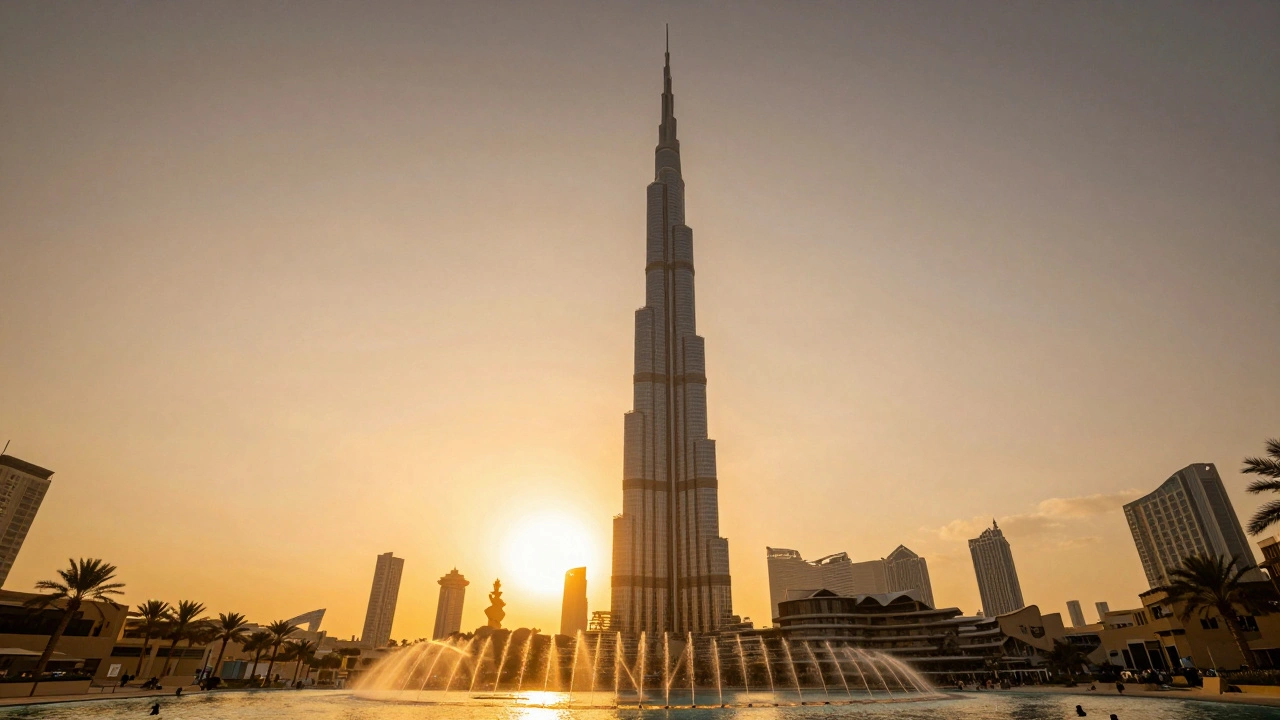
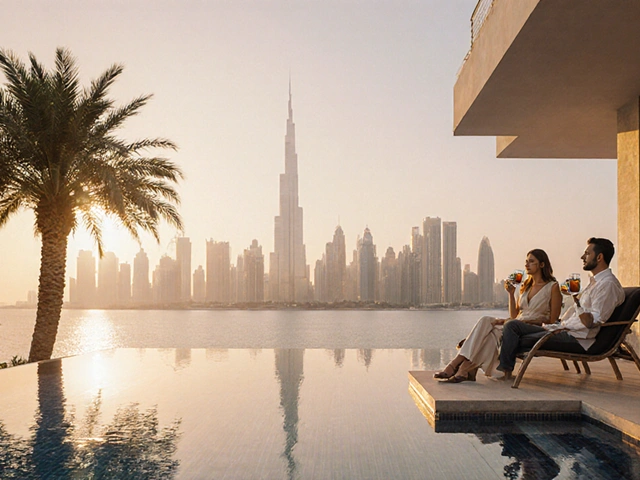
You’ve seen the photos. The sleek, needle-like tower piercing the desert sky, glowing at sunset, shimmering with lights after dark. But standing beneath the Burj Khalifa, you realize no picture captures the scale. It’s not just tall-it’s a statement. A bold, unapologetic declaration that Dubai doesn’t just follow the world. It rewrites the rules.
When you first look up, your neck strains. You can’t take it all in at once. The building doesn’t just rise-it ascends. Over 828 meters into the sky. That’s taller than the Empire State Building, the Eiffel Tower, and the Chrysler Building stacked on top of each other. And it’s not a trick of perspective. It’s real. Concrete, steel, glass, and sheer will.
What Makes the Burj Khalifa More Than Just a Skyscraper?
The Burj Khalifa isn’t just the tallest building in the world. It’s the only building that changed how we think about height. Before 2010, the record was held by Taipei 101. Then Dubai came along and said, ‘What if we didn’t just beat it-but redefined it?’
It wasn’t built to be a luxury apartment complex or a corporate HQ alone. It was designed as a vertical city. The lower floors house luxury hotels like Armani Hotel Dubai. Middle levels are premium residences with panoramic views. The upper floors? They’re mostly mechanical-housing elevators, air systems, and maintenance zones that keep the whole thing running. And at the very top? The observation decks-At the Top SKY on level 148-are where you stand, dizzy and awestruck, looking down at the entire city like a map.
People ask, ‘Why build so high?’ The answer isn’t vanity. It’s survival. Dubai has no oil reserves left to rely on. It had to build something else: a global brand. The Burj Khalifa became that brand. It’s not just a building. It’s a magnet. It pulls tourists, investors, engineers, and dreamers from every corner of the planet.
The Engineering Behind the Skyline
Building something this tall wasn’t just about steel and glass. It was a physics puzzle.
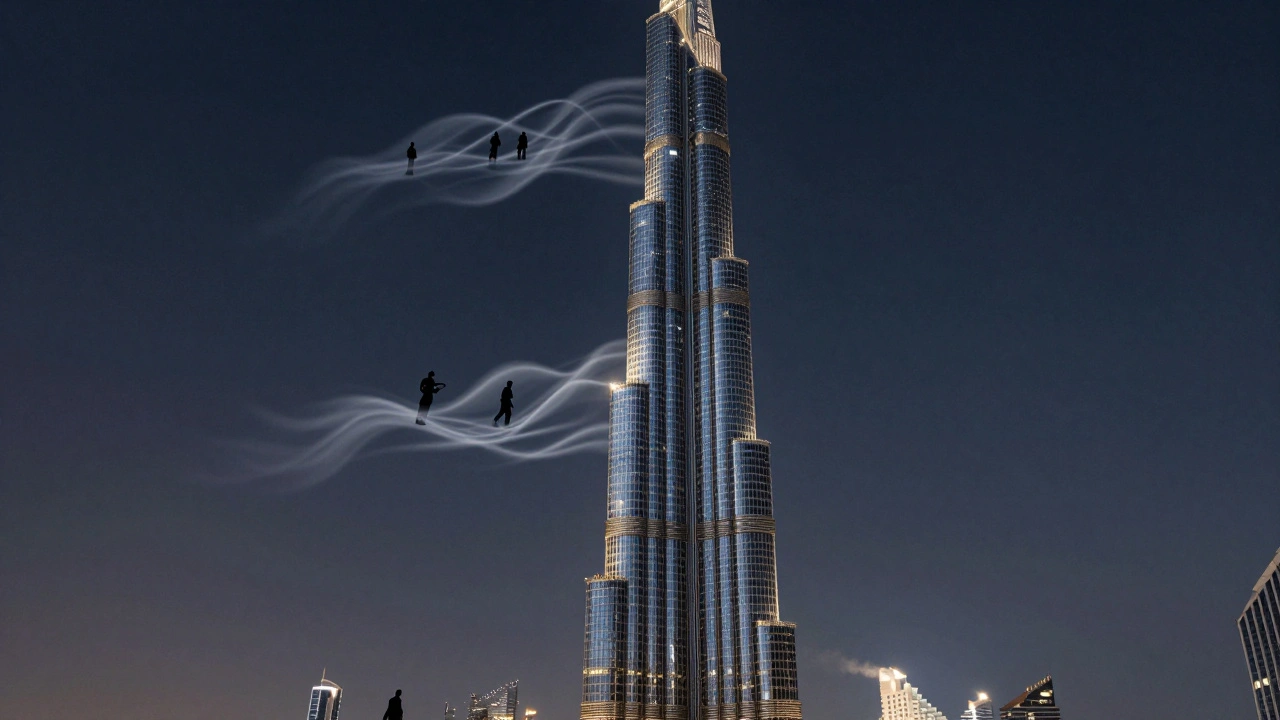
Wind alone could have torn it apart. At 800 meters, wind speeds hit over 150 km/h. Engineers didn’t just design a tower-they designed a shape that fights the wind. The Y-shaped floor plan? It’s not just for looks. It cuts through the breeze like a sail adjusting to the wind. The stepped terraces? They’re not decorative. They break up vortexes that could shake the structure.
The foundation? 192 piles, each 50 meters deep, driven into the desert sand. Concrete was specially mixed to handle the heat-up to 50°C in summer. They used a technique called ‘pumpable concrete’ that could be pushed over 600 meters up the tower without losing strength. That’s like pouring a glass of water from the ground to the top of the Eiffel Tower… and having it still be liquid when it arrives.
And the elevators? They’re the fastest in the world. Traveling at 10 meters per second, they go from ground to level 124 in under a minute. That’s faster than most city buses.
Why It Matters to Dubai-and You
If you’ve ever visited Dubai, you’ve felt it. The city doesn’t whisper. It shouts. And the Burj Khalifa? It’s the loudest voice.
Before 2010, Dubai was known for beaches and malls. After? It became a symbol of human ambition. A place where impossible things happen. You don’t come here to see what’s normal. You come to see what’s possible.
Every year, over 2 million people climb to the observation decks. They come from Moscow, Mumbai, Melbourne, and Minneapolis. They snap photos. They post videos. And somewhere, in a classroom in Jakarta or a startup office in Lagos, a kid sees that tower and thinks, ‘What if I built something like that?’
That’s the real power of the Burj Khalifa. It doesn’t just stand in the sky. It lifts imaginations.
What You’ll Experience When You Visit
Visiting the Burj Khalifa isn’t a tour. It’s a sensory shift.
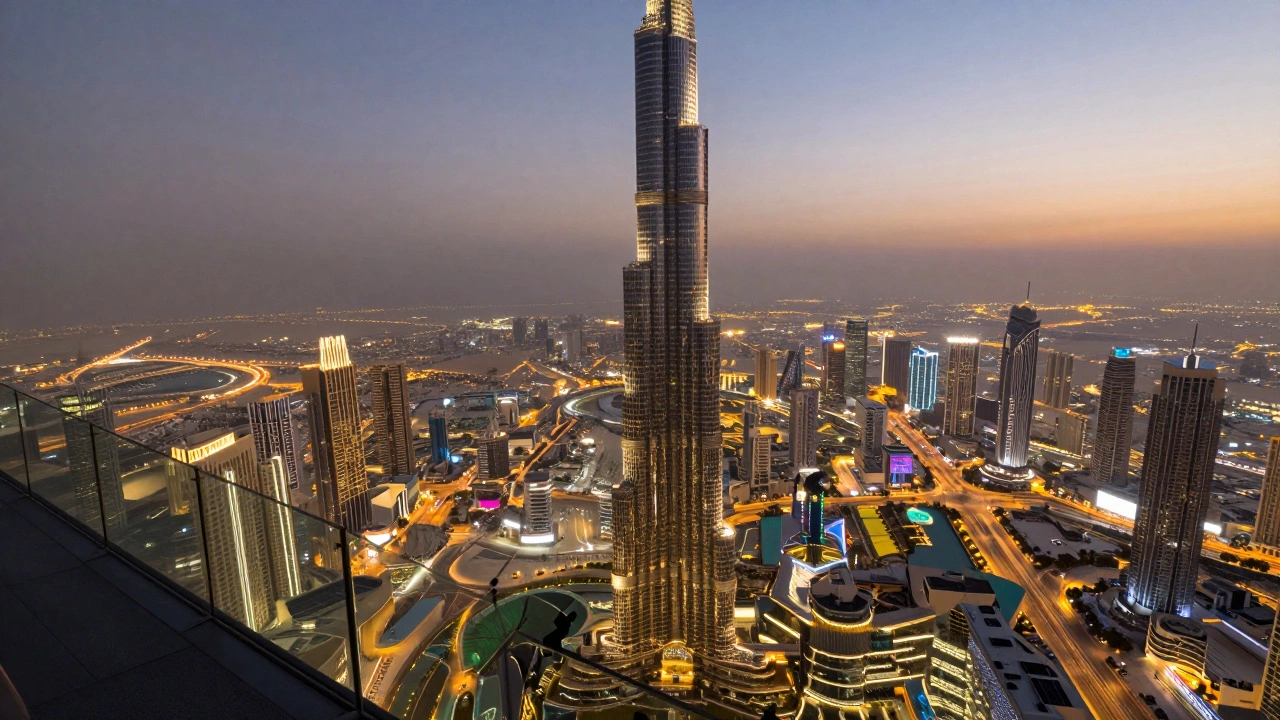
You enter through a grand atrium with marble floors that reflect the light like water. The elevators glide silently-no jolt, no noise. As you rise, the city shrinks. Palm Jumeirah becomes a leaf. The Dubai Fountain turns into a sprinkler. The desert stretches out, endless and golden.
At level 124, you’re already above most of the city. But level 148? That’s where the air gets thinner. Where the wind howls. Where you feel like you’re floating. The glass floor panels let you look straight down. Some people freeze. Others laugh. A few scream.
There’s no railing to hide behind. Just you, the sky, and 828 meters of empty air below. It’s not scary. It’s liberating.
How to Plan Your Visit
Timing matters. Sunset is the most popular-but you’ll wait. The best time? Early morning, right at opening. The light is soft, the crowds are thin, and you get the whole tower to yourself for a few quiet minutes.
Tickets are sold online. No walk-ups. Book at least 24 hours ahead. Standard tickets get you to level 124. Upgrade to level 148 for the full experience. The price? Around AED 149 for the lower deck, AED 378 for the top. It’s not cheap. But neither is flying to the moon. And this? This is the closest most people will ever get.
Pro tip: Skip the gift shop. You’ll find better souvenirs on the street outside-the smell of cardamom coffee, the sound of the call to prayer echoing off the tower’s surface, the sight of a falcon gliding past the 100th floor.
How It Compares to Other Skyscrapers
| Building | Height (m) | Location | Year Completed | Primary Use |
|---|---|---|---|---|
| Burj Khalifa | 828 | Dubai, UAE | 2010 | Mixed-use (residential, hotel, observation) |
| Merdeka 118 | 678.9 | Kuala Lumpur, Malaysia | 2023 | Commercial, observation |
| Shanghai Tower | 632 | Shanghai, China | 2015 | Commercial, tourism |
| Abraj Al-Bait Clock Tower | 601 | Mecca, Saudi Arabia | 2012 | Hotel, religious |
| One World Trade Center | 541 | New York, USA | 2013 | Commercial, memorial |
The Burj Khalifa isn’t just taller. It’s more complex. While others focus on offices or hotels, it blends them all. It’s a city inside a tower. A living, breathing structure that never sleeps.
Frequently Asked Questions
Is the Burj Khalifa open every day?
Yes, it’s open daily from 8:30 AM to midnight. The observation decks close at 11 PM. Holiday hours may vary slightly, but it rarely shuts down. Even during Ramadan, it stays open-just with adjusted lighting and quieter hours.
Can you see the desert from the top?
Absolutely. On a clear day, you can spot the dunes of the Dubai Desert Conservation Reserve over 40 kilometers away. The contrast is stunning-the endless golden sand meeting the city’s sharp lines. It’s why photographers come at dawn. The light turns the desert into molten gold.
How long does it take to build the Burj Khalifa?
Construction started in 2004 and finished in 2010. That’s six years. But here’s the twist: the core structure was completed in just three years. The rest of the time? Fitting the glass, installing elevators, and making sure every detail-from the LED lights to the handrails-was flawless.
Is it safe to visit during high winds?
It’s safer than most buildings. The tower sways up to 1.5 meters at the top during storms. That’s by design. It’s not a flaw-it’s a feature. The structure moves to absorb wind energy. Sensors monitor everything. If winds get too dangerous, elevators shut down and visitors are guided down. No one’s ever been hurt.
What’s inside the Burj Khalifa besides the observation decks?
Over 900 residential units, the Armani Hotel Dubai, multiple corporate offices, maintenance zones, and even a mosque on the 158th floor. There’s also a sky lobby on level 124 with a lounge, café, and restrooms. It’s a self-contained world.
So next time you see the Burj Khalifa on a screen, remember: this isn’t just steel and glass. It’s a story. A story of grit, vision, and a city that refused to accept limits. You don’t just visit it. You feel it. And once you do, you’ll understand why Dubai doesn’t just build towers. It builds legacies.
Jennifer Cacace
March 7, 2026 AT 12:50The Burj Khalifa isn't a building-it's a neoliberal fever dream wrapped in reinforced concrete and funded by petrodollars. The 'vertical city' narrative? Cute. It's a luxury real estate play disguised as architectural ambition. The 'mixed-use' label is just PR jargon for 'rich people live here, tourists gawk, and the working class gets priced out of the entire neighborhood.' And don't get me started on the 'sustainable engineering.' They pumped 330,000 cubic meters of concrete into the desert while ignoring the water crisis. Peak performative sustainability.
Also, 'rewriting the rules'? Nah. They just bought the rulebook, burned it, and replaced it with a billboard that says 'I HAVE MORE MONEY THAN YOU.'
Cass Dixon
March 8, 2026 AT 03:56Let’s be honest: the Burj Khalifa’s structural integrity is a facade-literally. The wind-induced sway? It’s not a feature. It’s a design flaw masked as innovation. The engineers are either delusional or complicit. I’ve analyzed the aerodynamic simulations-there’s a harmonic resonance frequency that should’ve been flagged by any competent structural analyst. And yet, here we are. Why? Because the project was rushed. Because oversight was nonexistent. Because the UAE government prioritized optics over physics. And now? Millions of tourists are standing on a 828-meter gamble. The observation deck glass? It’s laminated, yes-but what happens during a 170 km/h windstorm with sand abrasion? The sensors don’t measure erosion. They measure compliance. And compliance isn’t safety.
Also, the elevators? They’re pressurized like airplane cabins. That’s not comfort-that’s a containment protocol. What are they hiding? The truth is, no one outside the design team knows how many micro-fractures exist in the core. They’ll never release the stress-test data. Because if they did, the myth collapses.
Josh B
March 9, 2026 AT 13:26I went up there last year. Honestly? It’s less about the height and more about the silence. Up there, the city noise fades. You hear your own breath. The wind’s a distant hum. It’s weirdly peaceful. Doesn’t feel like a symbol. Feels like a moment. Like you’re standing in the middle of something huge, but somehow… quiet. The glass floor? Terrifying. But also kind of beautiful. You just kinda… stop thinking. And that’s rare.
Miriam Benovitz
March 10, 2026 AT 21:30OMG I went up there and I almost died I swear I thought I was gonna fall through the glass and I screamed and my friend recorded it and now it’s got 2 million views on TikTok and everyone’s calling me ‘The Girl Who Yelled at the Burj’ and I don’t even care because I’ve never felt so alive in my life I’m literally crying right now thinking about it I NEED TO GO BACK I NEED TO DO IT AGAIN I NEED TO STAND ON THE EDGE AND SCREAM INTO THE DESERT I’M NOT OKAY I’M NOT OKAY BUT I’M SO HAPPY
Renee Kyndra
March 12, 2026 AT 08:20What I love most is how it doesn’t just dominate the skyline-it invites you into it. The way the light shifts from dawn to dusk, the quiet hum of the elevators, the way the call to prayer echoes off its surface… it’s not just architecture. It’s a quiet conversation between human ambition and the desert. No grandstanding. Just presence. And for a city that’s often seen as flashy, that restraint? That’s the real masterpiece.
Ron Tang
March 14, 2026 AT 06:12Look, I get why people roll their eyes at the Burj. ‘Too much. Too flashy. Too Dubai.’ But here’s the thing-it worked. Not because it’s extravagant, but because it dared. Most cities play it safe. Dubai said, ‘What if we built the impossible?’ And guess what? It didn’t just stand up-it inspired. Now, every kid with a sketchpad in Jakarta or Lagos is looking at that skyline and thinking, ‘I could do that.’ That’s not vanity. That’s legacy. So yeah, it’s over the top. But sometimes, you need over the top to spark the next big thing.
lee sphia
March 15, 2026 AT 06:24While the Burj Khalifa represents an extraordinary engineering achievement, it is essential to contextualize its construction within the broader framework of urban development in arid regions. The integration of passive cooling systems, high-performance glazing, and condensate water recovery systems demonstrates a sophisticated adaptation to environmental constraints. Moreover, its role as a catalyst for economic diversification in a post-oil economy cannot be understated. The building functions not merely as a monument but as a node in a global network of innovation, tourism, and sustainable urbanism. Its legacy will be measured not in meters, but in the paradigm shifts it inspired.