
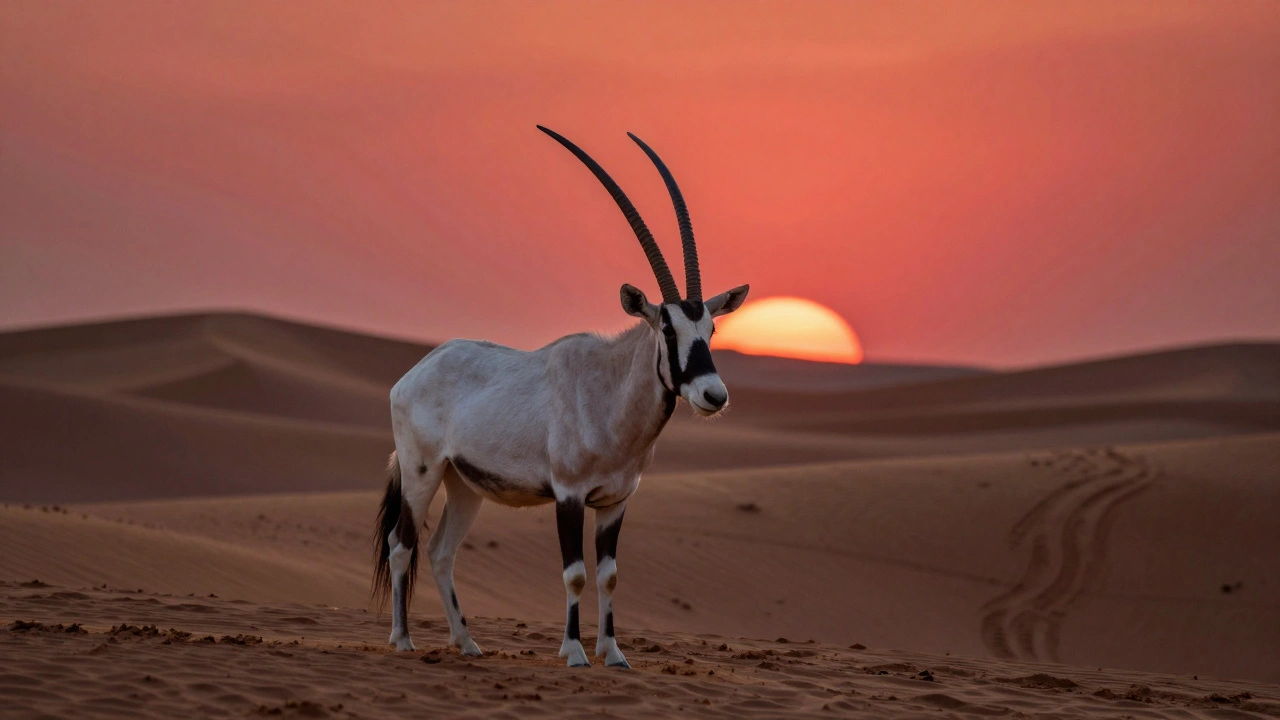
You think a desert is just sand and silence? Think again. The dunes of Dubai aren’t empty. They’re alive. At dawn, a fennec fox slips between dunes, ears twitching. At dusk, oryx stand like statues against the crimson sky. And if you’re lucky-really lucky-you’ll spot a sand gazelle sprinting like wind made flesh. This isn’t a zoo. This is the real desert. And on a desert safari, you don’t just ride through it-you witness it.
What You’ll Actually See on a Desert Safari
Most people book a desert safari for the dune bashing, the camel rides, or the sunset dinner. But the real magic? The animals. The ones that don’t show up on brochures. The ones that survive where nothing else can.
The Arabian oryx is the desert’s ghost. Once hunted to near extinction, they’ve made a comeback thanks to conservation efforts in Dubai’s Al Marmoom Desert Conservation Reserve. You won’t see them on every tour-only the ones that go deep into protected zones. But when you do, it’s unforgettable. White as bone, with long, straight horns that look like they were carved from moonlight.
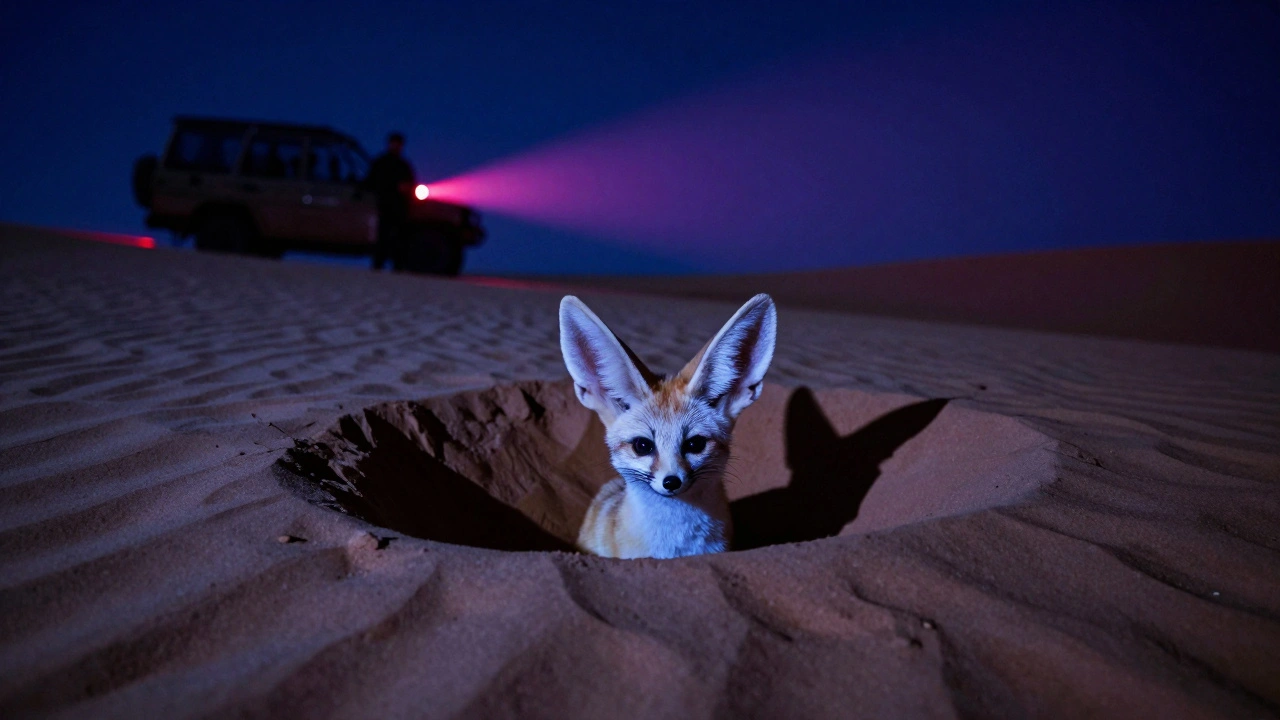
Then there’s the fennec fox. Smaller than a house cat, with ears bigger than its head. It’s nocturnal, so spotting one means you’re out late-or you’ve joined a guided night safari. These little guys dig burrows up to 10 feet deep to escape the heat. They eat insects, lizards, even desert rodents. They’re shy, but if you’re quiet and patient, you might catch one peeking out at dusk.
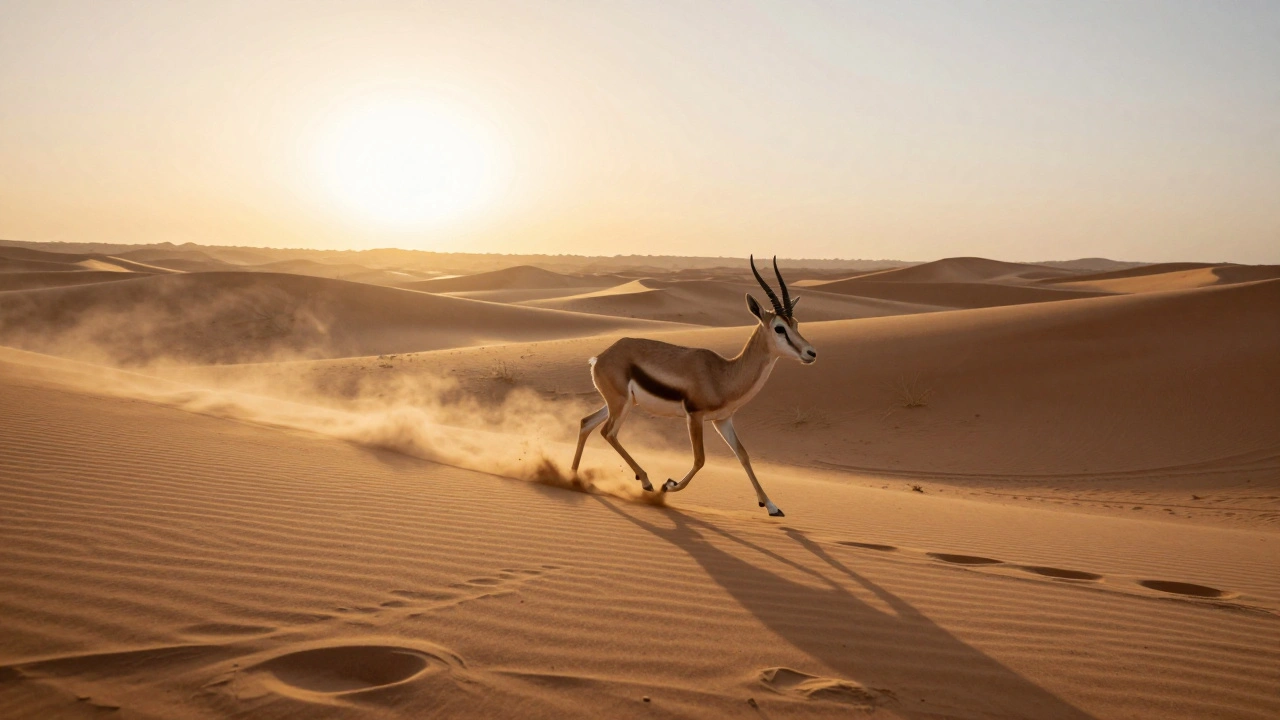
Don’t forget the sand gazelle. Faster than most cars on a highway, they vanish in a blur of tan fur. They don’t need water-they get all they need from the plants they eat. Their hooves are designed to sink just enough into the sand to keep from sliding. Nature’s perfect desert machine.
And yes, there are reptiles. The desert monitor lizard can grow over three feet long. It’s not dangerous, but it looks like something out of a fantasy movie. You’ll often see them basking on rocks at midday, tongue flicking the air. And if you’re lucky, you’ll spot the Arabian sand boa, a harmless snake that buries itself under the sand, waiting for prey.
Why Wildlife Makes a Desert Safari Different
There are hundreds of desert safari operators in Dubai. Most offer the same thing: dune bashing, quad bikes, henna tattoos, and shisha. But the ones that focus on wildlife? Those are rare. And they’re worth every dirham.
Why? Because seeing an oryx in the wild isn’t just a photo op. It’s a reminder that this desert isn’t dead. It’s resilient. It’s ancient. It’s been home to life for thousands of years-even before Dubai had skyscrapers.
One tour I took last year had a guide named Youssef. He didn’t just drive the 4x4-he talked like a desert storyteller. He pointed out tracks in the sand: “That’s a jerboa. See how the hind feet are longer? They hop like kangaroos.” He showed us where a fox had dug for beetles. He even found a nest of desert sparrow eggs-tiny, speckled, almost invisible against the sand.
That’s the difference. Most tours rush you through. The wildlife-focused ones slow you down. They teach you to look. To listen. To respect.
Types of Desert Safari Tours with Wildlife Focus in Dubai
Not all desert safaris are created equal. Here’s what’s actually out there:
- Standard Sunset Safari - Dune bashing, camel ride, BBQ dinner. Wildlife? Maybe a lizard if you’re lucky. Good for first-timers, bad for nature lovers.
- Private Night Safari - Small group, off-road, headlamps, thermal cameras. This is where you’ll see fennec foxes, owls, and maybe even a desert hedgehog. Limited to 6 people. Costs around AED 800 per person.
- Conservation-Focused Tour - Run by the Dubai Desert Conservation Reserve. Includes a ranger-led walk, educational talk, and chance to see oryx up close. Only available with advance booking. AED 1,200 per person.
- Photography Safari - For serious shooters. Guides know exactly where animals are most active. You get a 5-hour window at golden hour. Bring your own gear. Starts at AED 1,500.
- Family Eco-Safari - Designed for kids. Interactive, no dune bashing. Focuses on tracking animals, learning tracks, and spotting signs of life. AED 450 per adult, AED 250 per child.
Don’t fall for the “luxury” packages with gold-plated camels. If they don’t mention wildlife, they’re not offering it.
How to Find the Right Wildlife Safari in Dubai
Google “desert safari Dubai” and you’ll get 500 results. Most are ads. Here’s how to cut through the noise:
- Look for operators who mention Al Marmoom or Desert Conservation Reserve. These are protected zones. If they don’t go there, they’re just driving on public sand.
- Check reviews for words like “wildlife,” “animals,” “guide knew the desert.” Avoid ones that only talk about “fun” or “amazing views.”
- Ask directly: “Do you stop to observe animals? Do you have a naturalist on board?” If they hesitate, move on.
- Book through Dubai Tourism’s official partner list. They vet operators for sustainability.
- Avoid tours that promise “guaranteed animal sightings.” That’s a red flag. Wildlife is wild. No one can guarantee it.
One company that consistently gets it right: Desert Whisper Expeditions. They’ve been running conservation tours since 2019. Their guides have degrees in ecology. They don’t play music over the speakers. They let the desert speak.
What to Expect During a Wildlife Safari
It’s not like a theme park. There’s no music. No flashing lights. Just silence. And then-movement.
You’ll start at sunset. The sky turns orange, then purple. The sand cools. That’s when animals come out. Your guide will stop the vehicle. Not to take photos. To listen. You’ll hear the rustle of a lizard in the grass. The distant cry of a desert owl.
You’ll get binoculars. You’ll learn how to read tracks. You’ll see how the sand changes color near a burrow. You’ll realize that the desert isn’t empty-it’s full of secrets.
Some tours include a quiet, open-air dinner under the stars. But the real meal? The experience. The way the moon lights up the dunes. The way a gazelle pauses, looks at you, then vanishes into the dark.
Pricing and Booking Tips
Here’s what you’ll actually pay in 2026:
- Standard safari: AED 150-250 (skip this if you want wildlife)
- Night safari: AED 700-900
- Conservation tour: AED 1,100-1,300
- Photography safari: AED 1,400-1,800
- Family eco-safari: AED 400-500 for two adults and two kids
Book at least 2 weeks ahead. Wildlife tours fill up fast. And never pay cash on arrival. Always use a trusted platform-TripAdvisor, Viator, or the operator’s official website. Avoid street touts.
Safety Tips for Wildlife Viewing
Wildlife is beautiful. But it’s not tame.
- Never get out of the vehicle unless your guide says so. Even a harmless lizard can carry bacteria.
- Don’t feed animals. Not even a crumb. It changes their behavior-and can kill them.
- Wear neutral colors. Bright red or white attracts attention. Tan, beige, green? Better.
- Bring a light jacket. Desert nights drop to 10°C. Even in January.
- Use sunscreen. The sand reflects UV rays. You’ll burn faster than you think.
- Stay quiet. Loud noises scare animals away-and sometimes trigger defensive behavior.
Desert Safari vs. Wildlife Park: What’s Better?
| Feature | Desert Safari | Wildlife Park (Al Marmoom) |
|---|---|---|
| Animal Access | Wild, in natural habitat | Protected, semi-wild enclosures |
| Guides | Often drivers; some have ecology training | Always trained naturalists |
| Experience | Adventure + wildlife | Educational + immersive |
| Cost | AED 150-1,800 | AED 120 per person |
| Best For | Thrill-seekers who want animals too | Families, students, nature lovers |
| Wildlife Diversity | High (if you pick the right tour) | Medium (controlled environment) |
Here’s the truth: You can see oryx in a wildlife park. But you can’t feel the desert breathe there. The safari gives you both-the wildness and the wonder.
Frequently Asked Questions
Can you really see animals on a desert safari in Dubai?
Yes-but only on the right tour. Standard safaris focus on dune bashing and dinner. To see wildlife, choose a night safari, conservation tour, or photography safari that goes into protected areas like Al Marmoom. Guides on these tours know animal behavior and tracks. You won’t see lions or elephants, but you’ll see real desert survivors: oryx, fennec foxes, sand gazelles, and desert reptiles.
Are desert safaris ethical?
It depends. Tours that drive fast over dunes, play loud music, or feed animals aren’t ethical. But companies that work with the Dubai Desert Conservation Reserve, limit group sizes, and train guides in ecology? Those support conservation. Look for certifications. Ask if they donate to wildlife programs. Ethical safaris don’t just show you animals-they help protect them.
What’s the best time of year to see wildlife?
Winter, from November to March, is ideal. Temperatures are cooler, so animals are more active. Fennec foxes and gazelles are easiest to spot at dawn and dusk. Avoid summer-temperatures hit 45°C, and most wildlife hides underground. Even the lizards take a nap.
Do I need special gear for a wildlife safari?
No, but it helps. Wear closed-toe shoes-sand gets hot, and you might walk on rocky ground. Bring a light jacket for night tours. A small flashlight (red light is best) helps you see without disturbing animals. Binoculars are a must. Don’t bring drones-they scare wildlife and are banned in protected zones.
Can kids join wildlife safaris?
Absolutely. Many operators offer family-friendly eco-safaris with no dune bashing. These focus on tracking, storytelling, and quiet observation. Kids learn how to spot footprints, identify owl calls, and understand desert survival. It’s one of the most educational experiences you can give a child in Dubai.
Ready to See the Real Dubai?
The city’s skyline dazzles. But the desert? That’s where Dubai’s soul lives. Not in glass towers, but in the quiet tracks of a fox in the sand. Not in neon lights, but in the glow of stars over dunes that haven’t changed in millennia.
Book a safari that doesn’t just take you through the desert-but lets you see it. The animals are waiting. You just have to know where to look.




Mike Healy
January 10, 2026 AT 03:38Melissa Bracewell
January 11, 2026 AT 04:30Matt Winkeljohn
January 12, 2026 AT 04:51Jen Allchin
January 12, 2026 AT 17:35Toni Plourde
January 12, 2026 AT 23:38Lorna Jamieson
January 14, 2026 AT 08:36Chad Johnson
January 15, 2026 AT 01:16Krunal Ronak
January 15, 2026 AT 18:20Dale Loflin
January 17, 2026 AT 11:59