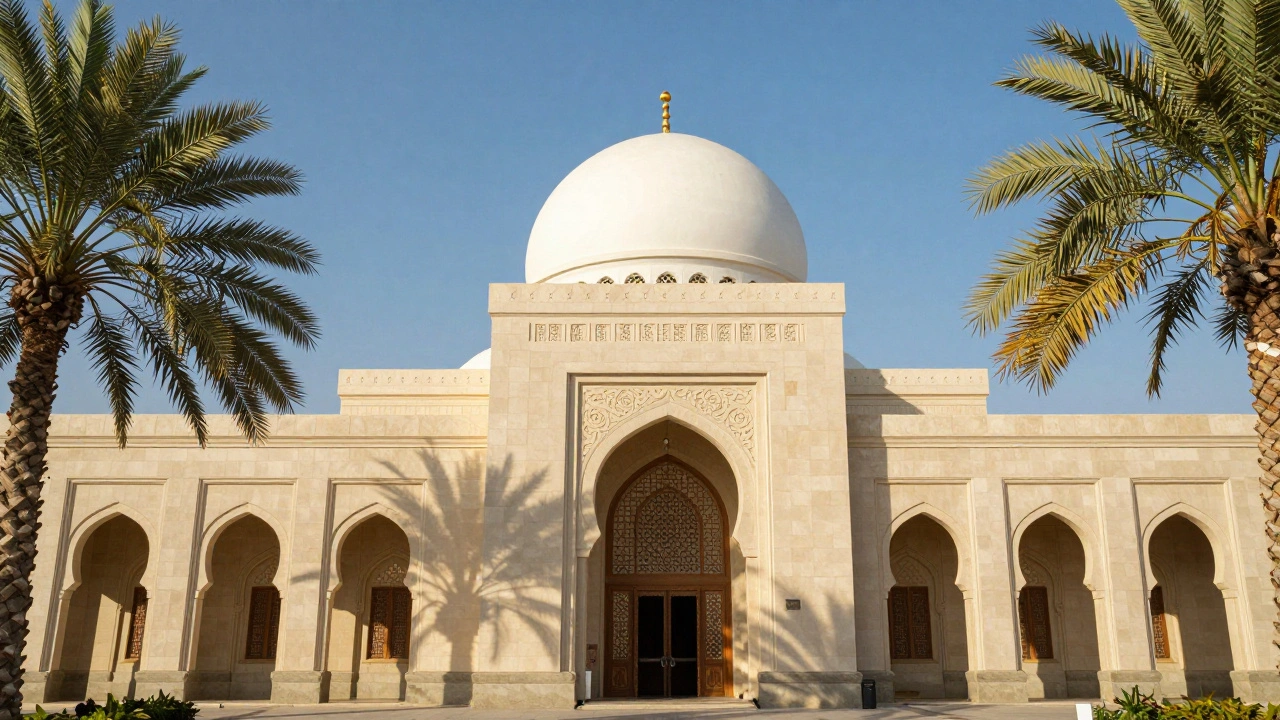
Picture yourself standing under the Dubai sun, looking up at that perfect white dome rising above the green trees of Jumeirah 1. It’s one of those images you just have to see in person to believe it. This isn’t just any building; Jumeirah Mosque is the first purpose-built mosque in Dubai to welcome tourists through the doors. You might wonder why this specific spot draws so much attention in a city full of skyscrapers. The answer lies in the invitation itself. In many parts of the world, mosques are private sanctuaries, not open to the curious public. Here, the philosophy is different. It’s about sharing faith and history, not keeping them behind walls.
If you’re planning a trip to Dubai or just exploring your new home, this is a stop you can’t miss. But before you walk through those gates, you need to know what to expect. We’ll talk about the booking process, the dress code quirks, and the surprising warmth of the staff who run the tours.
What Makes This Place Special?
You’ve probably seen photos of the Sheikh Zayed Grand Mosque in Abu Dhabi, and it is breathtaking. However, the Jumeirah Mosque holds a distinct place in history because of the Cultural Awareness Programme. Started decades ago, this initiative was designed specifically to bridge the gap between local Emirati traditions and visitors from around the globe. When you step inside, you aren’t just an observer; you become a student of the culture.
The architecture itself tells a story. Unlike the flashy modern designs popping up everywhere else, this structure leans heavily into classic Syrian influences. If you look closely at the wooden latticework and the stone facade, you’ll notice patterns reminiscent of historic buildings in Aleppo. The builders used natural limestone that gives the whole place a warm, creamy glow, especially when the light hits it late in the afternoon.
- Historical Significance: Constructed between 1974 and 1980, it stands as a symbol of the growth during Sheikh Rashid bin Saeed Al Maktoum’s leadership.
- Architectural Heritage: Features traditional Syrian styles rather than modern glass facades.
- Cultural Bridge: Dedicated to educating non-Muslims about Islamic rituals and values.
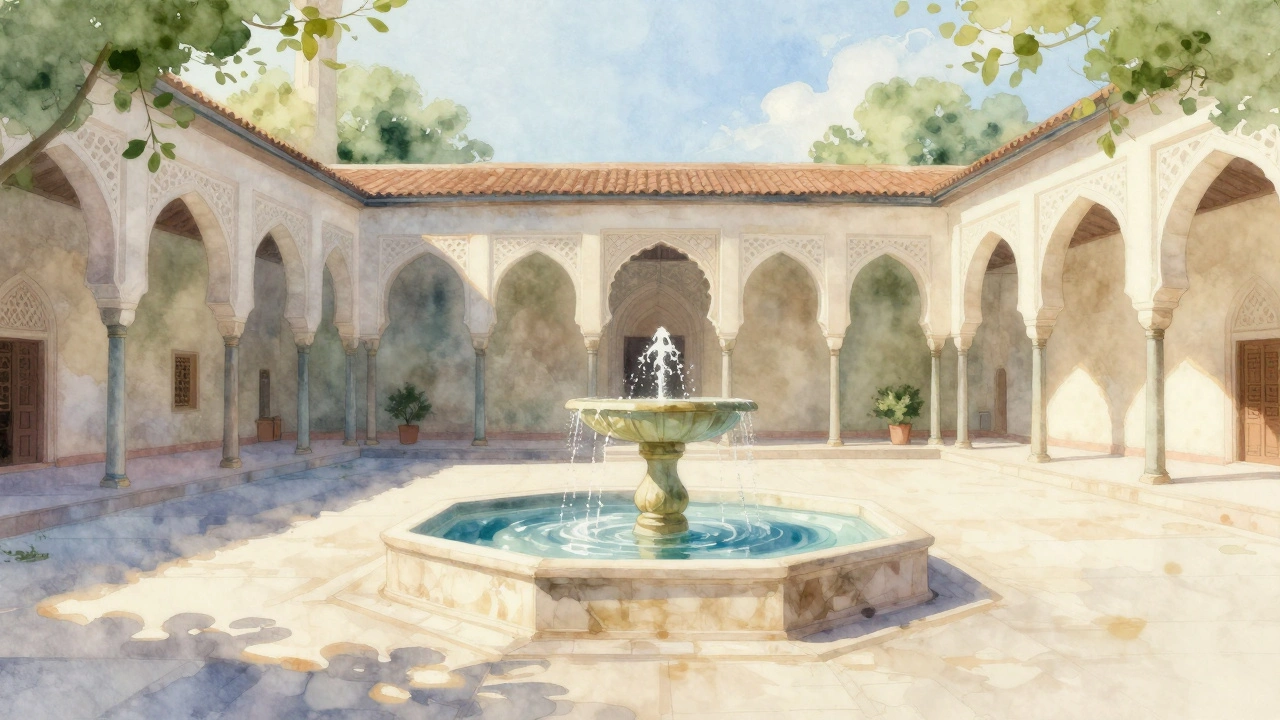
Walking through the courtyard, the air feels cooler and quieter. There’s a fountain near the entrance where you can pause for a moment. It’s easy to forget the traffic noise of Al Sufouh road just outside. This quiet zone is intentional. It prepares your mind for the educational tour you are about to start. Many visitors tell me they expected a lecture but found a conversation instead.
Understanding the Visitor Experience
So, what actually happens once you are inside? You won’t wander alone through the halls. Your experience revolves around a guided tour, usually lasting about 45 minutes to an hour. These guides are knowledgeable locals who speak multiple languages. Whether you speak English, German, French, or Chinese, there is likely a group starting soon that speaks your tongue.
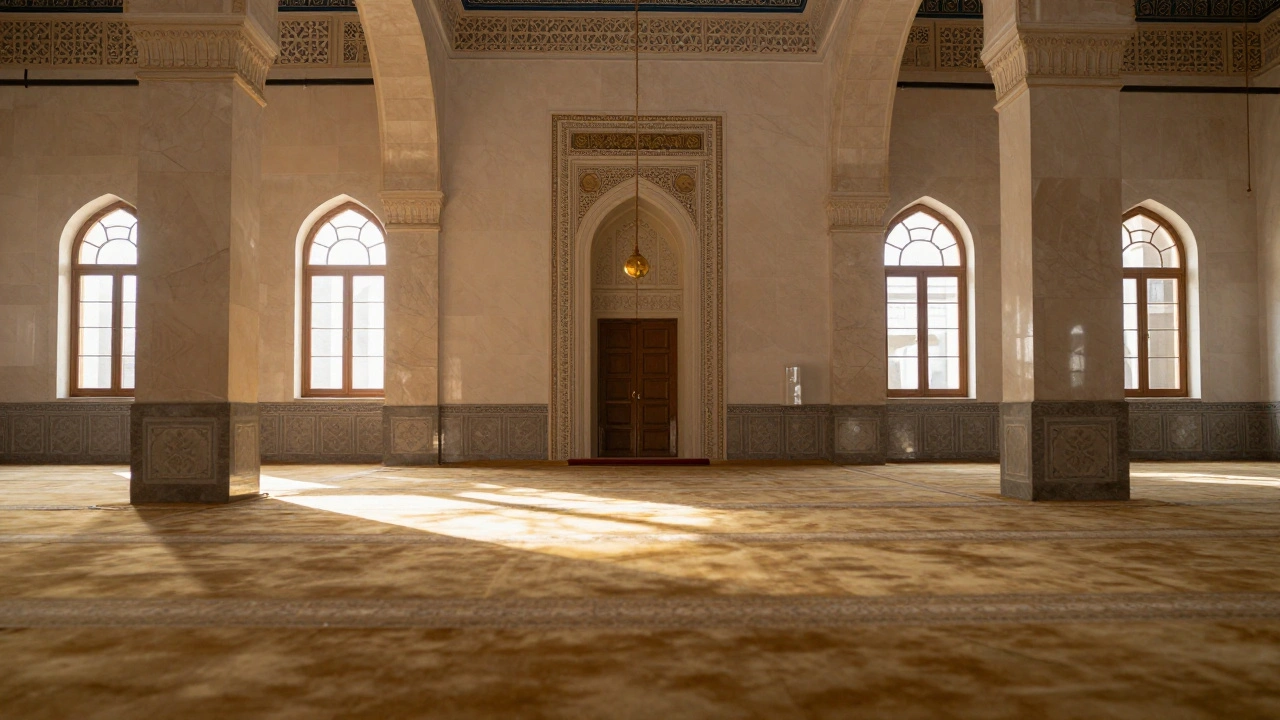
The tour takes you through the prayer hall, where you’ll see the prayer rugs laid out for daily congregations. They explain the significance of the Mihrab-the niche pointing toward Mecca-and the Minbar, the pulpit from which sermons are delivered. It isn’t just about looking at cool decor; it’s about understanding the function of every space. For example, did you know the floor is often kept empty to allow for rows of worshippers facing the same direction? That alignment creates a sense of equality among the congregation.
You will also hear stories about how the mosque supports the community. During Ramadan, the fasting month, the area transforms. The surrounding park fills with lanterns and families. Seeing that energy shift is something textbooks can’t teach you. However, regular visiting hours operate year-round, making it accessible whenever you’re free.
| Aspect | Details |
|---|---|
| Opening Days | Tuesday and Saturday only |
| Timing | Morning (Morning groups) & Afternoon sessions |
| Entry Fee | Free of charge (donation box available) |
| Dress Code | Modest clothing for men and women; scarves provided |
Practical Logistics: Getting There and Dressing Up
Planning a visit involves more than just showing up. One of the biggest surprises for newcomers is that this attraction operates strictly on two days a week. You typically cannot drop in randomly on a Wednesday. The standard operating days are Tuesday and Saturday. Within those days, there are scheduled slots. It is always wise to book your time slot online beforehand via the official tourism portal. This ensures you aren't turned away at the gate because a slot is full.
About the clothes-this is the most common question. You don't need to wear a costume, but you do need to cover up. For women, this means your arms should be covered from shoulder to wrist, and your hair needs a scarf. If you arrive in shorts or sleeveless tops, the venue provides loaner robes and headscarves at the front desk. For men, it's similar: no shorts, knees must be covered, and shirts should have sleeves. It’s less restrictive than some religious sites, but respect remains key.
Getting to the location is straightforward if you drive. The complex has its own parking lot right adjacent to the mosque grounds. You pay a small fee to park there, and it keeps you walking distance from the entrance. Public transport users might find the closest Metro station a bit of a hike away, though the tram network brings you closer to the neighborhood. Most taxi rides end up dropping you right at the door, which is convenient after a long day of sightseeing.
How This Compares to Other Religious Sites
You might be wondering if you should skip this one if you plan to visit the famous Sheikh Zayed Grand Mosque in Abu Dhabi. While both are stunning, they offer different vibes. The Sheikh Zayed site is massive, grand, and incredibly polished for large crowds. It feels like a monument. The Jumeirah Mosque, in contrast, feels intimate. It serves a local community while welcoming guests.
| Feature | Jumeirah Mosque | Sheikh Zayed Mosque |
|---|---|---|
| Location | Dubai (Al Sufouh) | Abu Dhabi (Corniche) |
| Vibe | Intimate, Community-focused | Grand, Monumental, Massive |
| Architecture | Syrian Style, Limestone | Moorish Style, Marble |
| Booking Requirement | Online pre-booking essential | No pre-booking usually required |
If you are short on time, prioritize based on your travel plans. Since Jumeirah is in Dubai, it saves you a drive across the border. You can fit it into a morning outing combined with a beach visit in Jumeirah Beach Residence later in the afternoon. Both sites are incredible, but neither makes the other unnecessary.
Hidden Gems and Seasonal Considerations
There are little details that often get missed. Keep your eyes peeled for the calligraphic art inside the inner chambers. Some of these pieces were hand-carved, taking artisans weeks to finish a single panel. Also, take a moment to read the plaques explaining the life of the Prophet Muhammad. The guides encourage questions, so don't hold back. The staff often enjoys discussing their faith openly and patiently.
Timing your visit matters too. Winter mornings (November to March) offer the perfect weather for walking the external paths. Summer visits are tricky because the heat makes outdoor photos painful for tourists. If you go in July or August, try to snag a morning slot early on. The indoor areas are air-conditioned, but the commute to the car or taxi isn't pleasant in peak heat.
During the holy month of Ramadan, the schedule shifts slightly. The mosque becomes even busier with locals preparing for Eid prayers, but tourist tours usually still happen. Be respectful of the fasting crowd; food or water visible in public areas should be minimized.
Frequently Asked Questions
Do I need to be Muslim to enter the Jumeirah Mosque?
No, you do not need to be Muslim. In fact, the facility was built specifically to welcome non-Muslim visitors to learn about Islamic culture and practices.
Is there an entry fee?
Admission is completely free. However, there is a donation box available if you wish to support the upkeep of the mosque and its programs.
Can I take photographs inside?
Photography is generally permitted within the main prayer hall, but please refrain from using flash and avoid photographing worshippers during prayer times.
What are the opening days for tourists?
Tourist visits are exclusively available on Tuesdays and Saturdays. The mosque remains closed to tourists during other days of the week.
Are headphones or audio guides provided?
Tours are conducted live by human guides speaking various languages. Self-guided audio equipment is not typically offered as part of the standard program.
Walking away from this place, you often feel lighter. It challenges preconceived notions and offers a real connection to the city you are visiting. Whether you are a lifelong believer or simply a traveler wanting to understand the UAE better, this visit fits that need perfectly. Just remember to book your slot, pack a light layer for the scarf, and get ready to listen. It's an experience that stays with you long after you've packed your bags.