Languages Spoken in Dubai: What You Need to Know
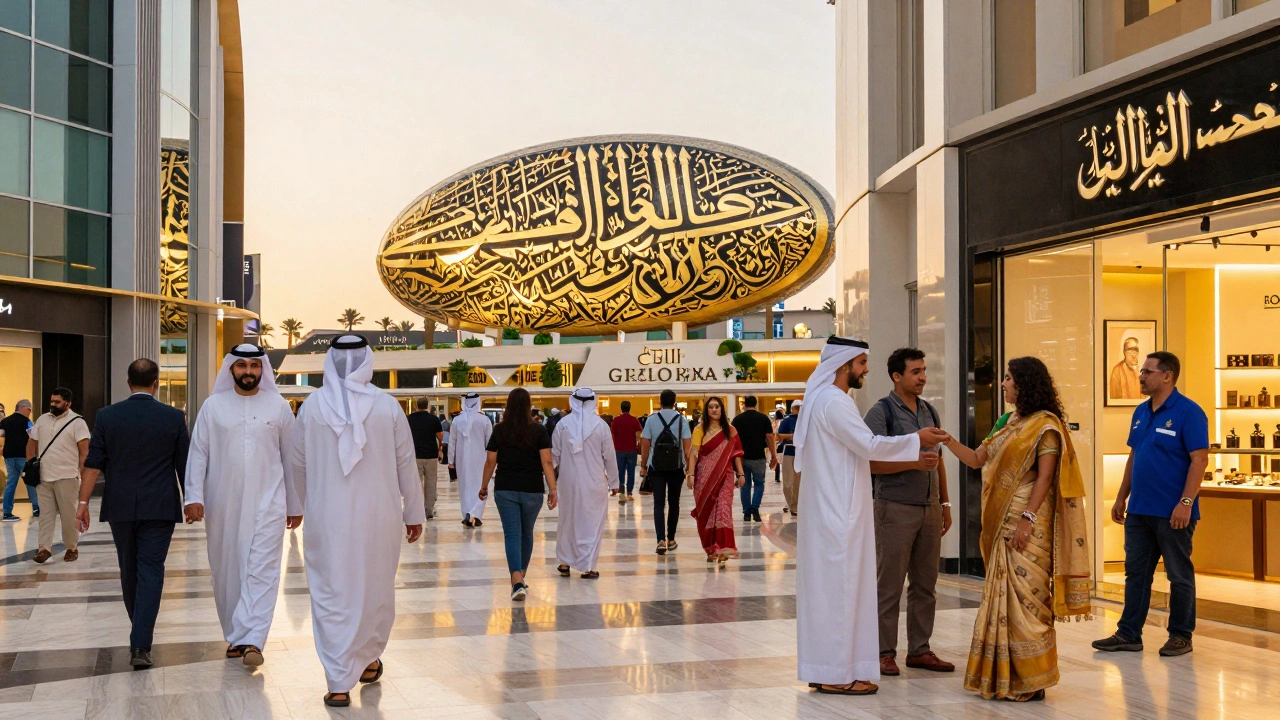
When you walk through Dubai’s malls, streets, or desert camps, you’re hearing more than just one language. The city doesn’t have a single official language in daily use—it runs on a mix of Arabic, the official language of the UAE and the heart of Emirati identity, English, the common business and public language used by over 80% of residents, and dozens of others brought by the people who live and work here. You’ll hear Hindi, Urdu, Malayalam, Tagalog, Farsi, and Mandarin in the markets, on the metro, and in office elevators. This isn’t just diversity—it’s the engine that keeps Dubai running.
Arabic is everywhere you look: on road signs, government forms, and TV news. But if you’re an expat or tourist, you’ll mostly interact in English. It’s the language of banks, hospitals, schools, and most retail stores. You can ask for directions, order food, or file a complaint in English and get a clear answer. That’s because nearly every service worker, from taxi drivers to hotel staff, speaks at least basic English. The city was built for global connection, and language is its glue. You won’t find a single place in Dubai where English doesn’t work—but you’ll miss out on real culture if you don’t notice how Arabic shapes daily life. From the way people greet each other with "Marhaba" to the rhythm of Friday prayers echoing through neighborhoods, Arabic isn’t just spoken here—it’s felt.
Behind the scenes, other languages hold their own ground. Indian workers in construction sites chat in Hindi or Tamil. Filipino nurses use Tagalog to comfort patients. Pakistani drivers swap stories in Urdu. These aren’t just background noises—they’re the threads that weave together the city’s social fabric. Even in luxury hotels, staff often speak multiple languages to serve guests from Russia, China, or the UK. The truth? Dubai doesn’t force you to learn Arabic to survive. But if you pick up a few phrases, you’ll get smiles, discounts, and real connections you won’t find in guidebooks. The city doesn’t just tolerate languages—it celebrates them. And that’s why you’ll find more than 200 nationalities living side by side, speaking their own tongues, yet still understanding each other.
What you’ll find below are real stories and practical guides from people who live this every day. From how to navigate Dubai with just English, to where to hear the purest Arabic dialects, to the hidden spots where South Asian workers gather to speak their mother tongues—you’ll see the city through the eyes of those who make it work. No fluff. Just what you need to know before you go, or while you’re here.