English in Dubai: How It Works for Expats, Tourists, and Locals
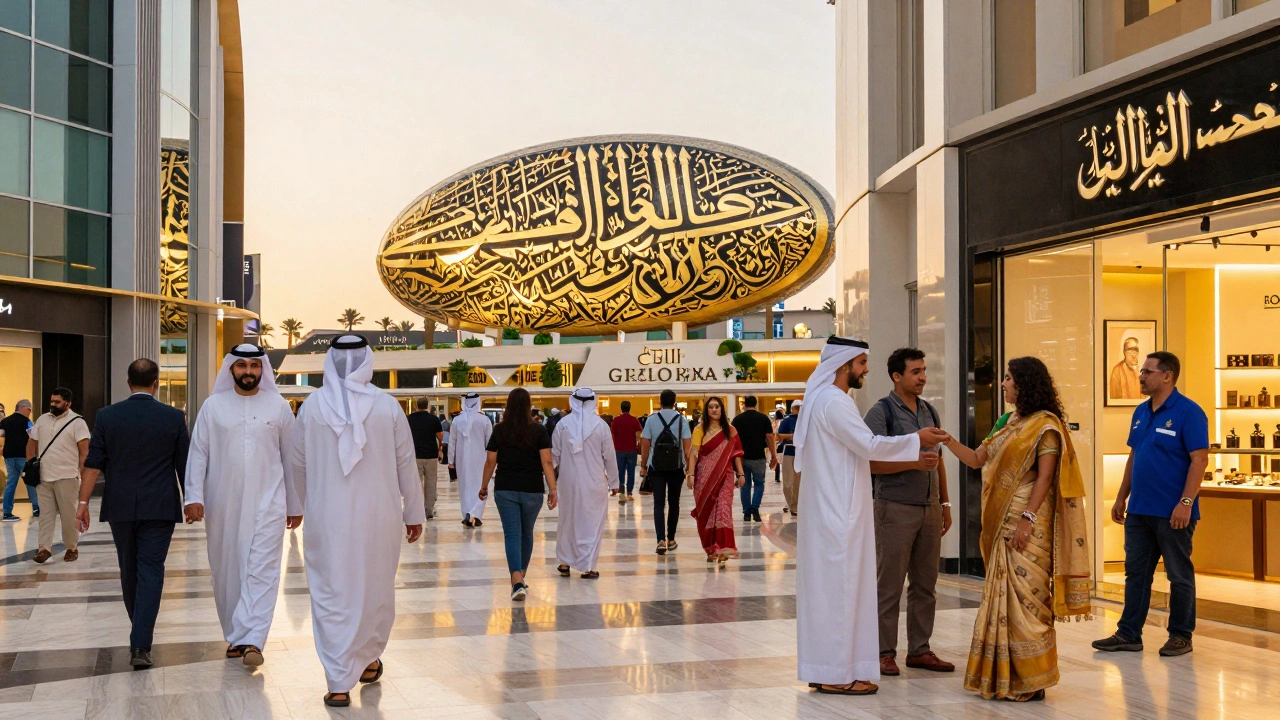
When you land in Dubai, you’ll hear English, the dominant language used in business, retail, and daily interaction across the city. Also known as the lingua franca of the UAE, it’s spoken by over 80% of residents—not because it’s official, but because it’s the only way so many nationalities can get by together. You don’t need to learn Arabic to survive here. You can buy groceries, book a hotel, hire a driver, or open a bank account—all in English. The city runs on it.
But English in Dubai isn’t the same as in London or New York. It’s mixed with Indian, Filipino, Pakistani, and Egyptian accents. You’ll hear "I am coming now" instead of "I’m on my way," or "Please do the needful" in emails. It’s not broken English—it’s Dubai English, a practical, evolving dialect shaped by the city’s global workforce. Locals who grew up here often switch between Arabic, English, and Hindi in one sentence. Tourists think it’s confusing. Residents think it’s normal.
It’s not just about speaking—it’s about access. Schools teach in English. Job ads list English as a requirement, not a bonus. Even street vendors and taxi drivers know enough to handle payments, directions, and small talk. If you’re moving here, you won’t need an interpreter for daily life. But if you want to connect deeper—with Emirati families, local markets, or government offices—learning a few Arabic phrases goes a long way. It’s not about replacing English; it’s about adding context.
And don’t assume Arabic is fading. It’s still the language of law, religion, and heritage. Signs in metro stations, official documents, and school textbooks are bilingual. But when you walk into a mall, order coffee, or ask for help at a hospital, English is the default. It’s the invisible glue holding Dubai’s 200+ nationalities together.
What you’ll find in the posts below are real stories from people living this daily. You’ll see how English shapes everything from real estate deals to café chats, from bank accounts to bakhoor purchases. You’ll learn where locals switch languages, how expats get by without Arabic, and why some of the best dining experiences happen because someone spoke English clearly. This isn’t about grammar rules or textbooks. It’s about what happens when a city decides to speak one language to survive—and thrives because of it.