Arabic in Dubai: Language, Culture, and Daily Life
When you hear Arabic in Dubai, the official language of the United Arab Emirates and the heart of Emirati identity. Also known as Gulf Arabic, it’s not just a language—it’s the rhythm of morning calls to prayer, the warmth of hospitality, and the quiet pride in heritage that runs through every corner of the city. You won’t hear Modern Standard Arabic on the metro or in the mall. You’ll hear the local dialect—faster, softer, full of expressions like inshallah and habibi—spoken by Emiratis, expats who’ve lived here a decade, and shopkeepers who’ve learned it to connect with customers.
Arabic in Dubai isn’t locked in classrooms or official documents. It’s in the bakhour, the scented wood chips burned to welcome guests—where the word ahlan wa sahlan is whispered as the smoke rises. It’s in the machboos, the national dish served on large platters, eaten with hands while conversation flows in Arabic. It’s even in the way a cashier at Lulu Hypermarket says shukran after you pay, or how a taxi driver asks ayna tureed?—where do you want to go?—with a smile. You don’t need to be fluent to notice it. You just need to pay attention.
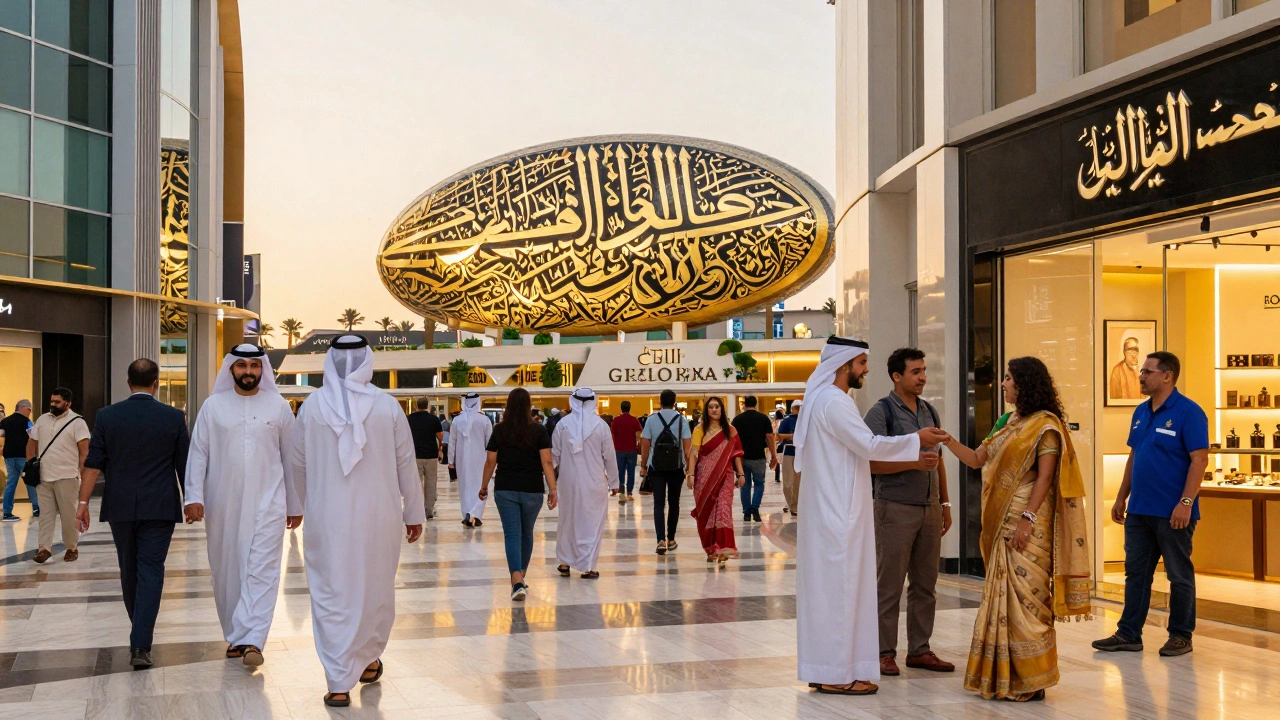
Many assume Dubai is all English and global brands. But Arabic is the quiet backbone. Street signs are bilingual. Government forms require Arabic. Kids in public schools learn it as their first language. Even in luxury hotels, staff are trained to greet guests with Arabic phrases before switching to English. This isn’t tourism theater—it’s daily reality. The language carries values: respect, patience, generosity. It’s why you’ll hear tafaddal (please, go ahead) more than excuse me in a crowded souk. It’s why a simple marhaba can open a door that English never could.
What you’ll find in these posts isn’t a language lesson. It’s a window into how Arabic lives here—not as a relic, but as a living, breathing part of everyday life. From the scent of oud in a home to the way Emirati families eat together, from the Arabic names on shop fronts to the unspoken rules of conversation, these stories show you the language behind the scenes. You’ll learn what phrases locals actually use, where to hear the real dialect, and how to respond in a way that feels respectful, not forced. No textbooks. No grammar drills. Just real moments where Arabic makes the difference.