
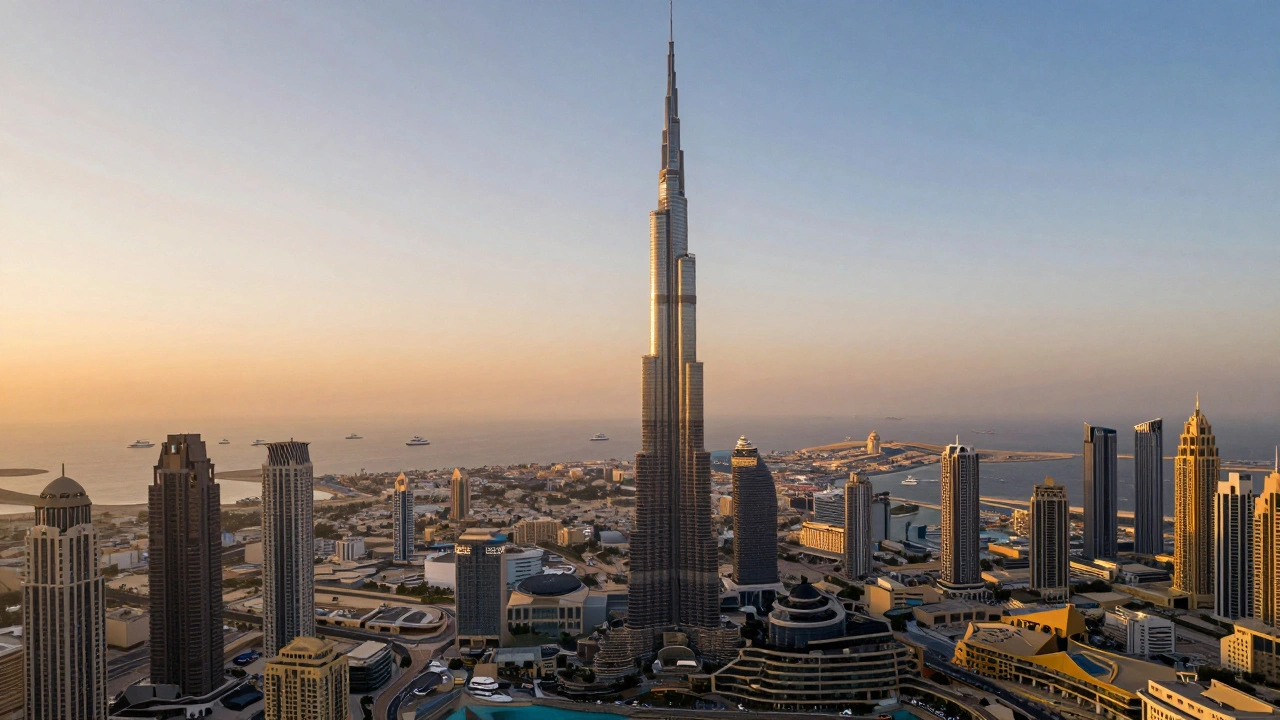
You’ve heard the whispers: trillionaire family in Dubai. Billionaires? Sure. But a trillionaire? That’s a number so big it’s almost fictional-like saying someone owns every building in Manhattan, plus the moon, and still has change left over. So who’s really behind the headlines? And why does everyone assume it’s one family in Dubai?
The short answer? There is no trillionaire family in Dubai. Not now. Not ever.
The Myth of the Trillionaire Family
Let’s cut through the noise. A trillion dollars is $1,000,000,000,000. That’s 1,000 times more than a billion. For context, the entire GDP of the United Arab Emirates in 2025 was around $480 billion. So even if you added up every dirham, every oil barrel, every luxury yacht, and every penthouse in Dubai, you still wouldn’t hit a trillion in personal wealth-not even close.
So where does this myth come from? It starts with the Al Maktoum family. They rule Dubai. They own the airport, the metro, the ports, the Dubai World trade group, and more than half the city’s prime real estate. Their wealth is staggering-but it’s not personal. It’s institutional. The family doesn’t cash out. They reinvest. They don’t live like rock stars; they run an empire.
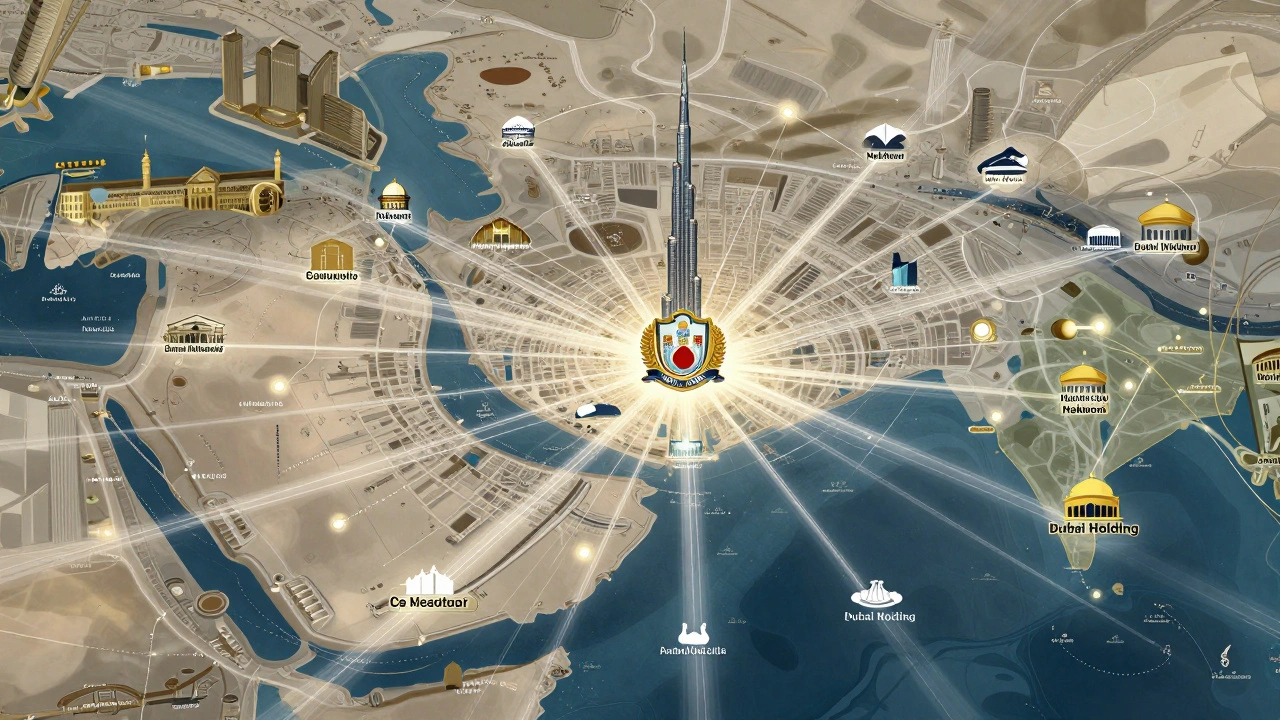
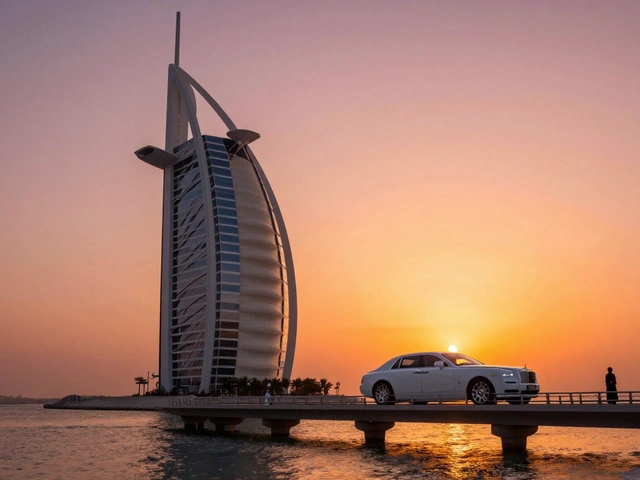
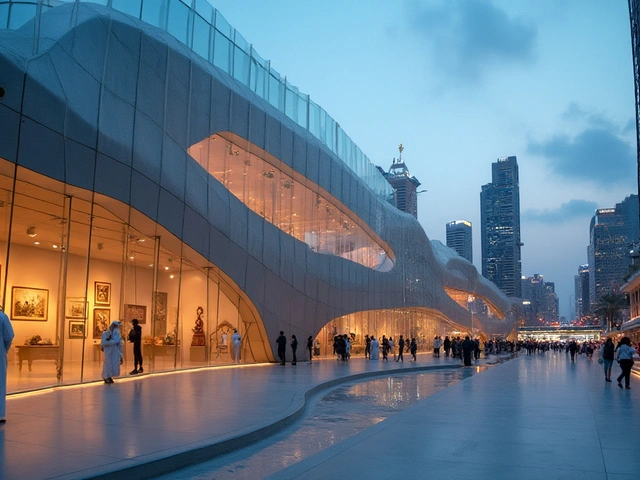
People see the Burj Khalifa, the Palm Jumeirah, the Dubai Mall, and assume one person owns it all. But those aren’t private assets. They’re state-backed projects, managed by public entities like Nakheel, Emaar, and Dubai Holding-all controlled by the ruling family, but legally separate from their personal fortunes.
Who Actually Owns Dubai’s Real Estate?
If you want to know who controls Dubai’s property market, you don’t look for a trillionaire. You look at the top real estate developers-and they’re all connected to the same family tree.
- Emaar Properties-founded by Mohamed Alabbar, but backed by Dubai’s royal family. Built the Burj Khalifa and Dubai Mall. Its shares are publicly traded, but the Al Maktoums hold significant influence.
- Nakheel-a government-owned company that created the Palm Islands and Dubai Water Canal. Directly funded by Dubai’s sovereign wealth fund, which is managed by the royal family.
- Dubai Holding-a conglomerate owned by Sheikh Mohammed bin Rashid Al Maktoum. Controls Dubai Internet City, Dubai Media City, and thousands of residential units.
- DAMAC Properties-a private developer, not royal-owned, but still one of the biggest names in luxury condos. Founded by Hussain Sajwani, who’s often called the “Dubai billionaire.”
- Sotheby’s International Realty Dubai-not a developer, but the top broker for ultra-high-end sales. They handle deals worth $100M+ regularly. Most buyers? Foreign investors, not locals.
None of these companies are owned by a single person with a trillion-dollar net worth. But together, they control over 70% of Dubai’s high-value real estate. That’s why the myth persists: the family doesn’t need to own it all personally. They own the system.
How Much Is the Al Maktoum Family Really Worth?
Estimates vary, but credible sources like Forbes and Bloomberg place the collective wealth of the Al Maktoum family between $100 billion and $180 billion. That’s still massive-enough to make them one of the top five richest royal families on Earth.
But here’s the catch: most of that wealth isn’t liquid. It’s tied up in land, infrastructure, and state assets. You can’t sell the Dubai Metro and turn it into cash. You can’t cash out the airport. The family doesn’t need to. They live off dividends, rents, and fees from businesses they control-not from selling off property.
Compare that to the Al Saud family in Saudi Arabia, whose wealth is estimated at $1.4 trillion-but again, that’s because they control the entire oil industry of a nation. Dubai doesn’t have oil. It built its wealth on trade, tourism, and real estate. That’s why its wealth is more concentrated, more visible, but far smaller in raw numbers.
Why Does Everyone Think There’s a Trillionaire in Dubai?
Because Dubai looks like a fantasy city. It’s built on spectacle. A man-made island shaped like a palm tree? A skyscraper taller than any other? A shopping mall with an indoor ski slope? Of course it feels like it’s owned by someone with infinite money.
Then there’s the media. Headlines scream, “Dubai’s Secret Billionaire Family Owns Everything!” They don’t say, “Dubai’s ruling family controls state-backed corporations that manage real estate development through public-private partnerships.” Too long. Too boring.
And let’s not forget social media. Influencers post videos of their $20 million villas on the Palm and tag them with #DubaiRiches. They don’t mention the lease terms, the developer fees, or that the property is technically owned by Nakheel and rented out for 99 years. The illusion sells.
Real Estate in Dubai: Who’s Actually Buying?
If the Al Maktoums aren’t cashing out, who’s buying all these luxury homes? The answer: foreign investors.
- Over 60% of Dubai’s luxury property sales in 2025 went to buyers from India, Russia, China, and the UK.
- Foreigners now own over 70% of properties in Downtown Dubai and Palm Jumeirah.
- Many of these buyers are not billionaires-they’re middle-class professionals who bought off-plan, paid in installments, and now rent out units for $8,000-$15,000 a month.
So while the Al Maktoums control the land, the money flooding into Dubai’s property market comes from outside. The family didn’t become rich by owning villas. They became rich by letting the world buy into their vision.
The Real Power Behind Dubai’s Wealth
The Al Maktoum family’s real asset isn’t property. It’s trust. Trust that Dubai will remain stable. Trust that the legal system will protect foreign investments. Trust that the city will keep growing.
They didn’t build a trillion-dollar fortune. They built a trillion-dollar opportunity.
Think of it like this: If you owned the only land in a city where everyone wants to live, you wouldn’t need to sell it. You’d just charge rent, collect fees, and let others build on it. That’s Dubai. And that’s why the myth of the trillionaire family sticks-it’s easier than understanding how a government turns vision into value.
What You Should Know If You’re Thinking of Investing
If you’re considering buying property in Dubai, here’s what matters:
- Don’t assume you’re buying from a billionaire. You’re buying from a state-backed developer.
- Check the developer’s track record. Emaar and Nakheel have decades of delivery. Newer firms? Look at their completion rates.
- Understand freehold vs. leasehold. Freehold means you own the property outright. Leasehold means you’re renting for 99 years. Most luxury units are freehold-but confirm it.
- Taxes? There are none. No income tax, no capital gains tax. But there are registration fees (4% of sale price), and service charges (around $2-$5 per sq. ft. yearly).
- Don’t believe the hype. A $5 million villa on the Palm isn’t a ticket to riches. Rental yields average 5-7%. It’s a lifestyle purchase, not a get-rich-quick scheme.
FAQ: Your Questions About Dubai’s Wealth Answered
Is there really a trillionaire family in Dubai?
No. There is no trillionaire family in Dubai-or anywhere else on Earth. The Al Maktoum family, who rule Dubai, are estimated to be worth between $100 billion and $180 billion collectively. That’s enormous, but it’s not a trillion. A trillion-dollar fortune would require owning more wealth than entire countries.
Who owns the Burj Khalifa?
The Burj Khalifa is owned by Emaar Properties, a publicly traded company. The Al Maktoum family holds significant influence over Emaar, but they don’t personally own the building. It’s managed like a corporation-with thousands of apartment owners, hotel operators, and retail tenants.
Are the Al Maktoums the richest family in the world?
No. The Al Saud family of Saudi Arabia is estimated to be worth over $1 trillion, largely because they control the world’s second-largest oil reserves. The Al Maktoums are among the top 5 richest royal families, but they’re not the richest. And neither are they trillionaires.
Can I buy property from the royal family?
Not directly. The Al Maktoum family doesn’t sell their personal assets. But you can buy from companies they control-like Emaar, Nakheel, or Dubai Holding. These are the developers behind most luxury projects. You’re buying from a state-linked corporation, not a private billionaire.
Why do people keep saying Dubai has trillionaires?
Because Dubai looks unreal. The city was built on ambition, not oil. When you see a man-made island, a 800-meter tower, or a shopping mall bigger than 50 football fields, it’s easy to assume one person paid for it all. But it was built by a government using foreign investment, long-term planning, and smart infrastructure. The myth sticks because the reality is more complicated-and less flashy.
Elle Daphne
January 27, 2026 AT 19:01This post literally changed how I see Dubai-no more fantasy billionaires, just smart, long-term nation-building. I used to think it was all oil money, but now I get it: it’s vision, not vaults. So cool.
Also, the part about foreign investors buying off-plan? That’s the real story. My cousin just bought a studio in Downtown Dubai for $450K and rents it out for $12K/month. She’s not rich-she’s just smart.
Love how the family lets others build on their land instead of hoarding it. That’s leadership.
Timothy Schreiber
January 28, 2026 AT 05:04There is no trillionaire. That’s it. End of story.
People confuse control with ownership. The Al Maktoums control the system. They don’t need to own every brick. That’s how you build a city that lasts.
Kelley Moody
January 29, 2026 AT 17:54So many people think wealth = flashy mansions and private jets. But real power? It’s in the lease agreements, the infrastructure contracts, the 99-year land rights.
The Al Maktoums didn’t build a palace. They built a platform. And now the whole world is paying rent to play on it.
That’s genius. Not greed. Genius.
Heather Blackmon
January 30, 2026 AT 22:14Ugh, another woke take on Middle Eastern wealth. Let’s be real-no Western family could pull this off. The UAE doesn’t need transparency or ‘fairness.’ They have sovereignty. And they’re winning.
Stop romanticizing their structure. It’s not ‘smart governance’-it’s autocratic efficiency. And honestly? I respect that. The West is too busy arguing about rent control to build anything.
Also, ‘trillionaire myth’? Please. The Saudis are worth over a trillion. You’re just ignoring that because it doesn’t fit your narrative.
Eva Stitnicka
January 31, 2026 AT 23:13The assertion that the Al Maktoum family’s wealth is between $100B and $180B is based on speculative asset valuations and opaque corporate structures. There is no audited balance sheet. No public disclosure. No independent verification.
Furthermore, conflating institutional control with personal net worth is a logical fallacy. Emaar Properties is a publicly traded entity with over 30% ownership held by institutional investors. To attribute its assets to the royal family as if they were sole proprietors is economically incoherent.
The myth persists because it serves a narrative: exotic, monolithic, untouchable wealth. But reality is messier. It’s corporate governance, sovereign funds, and legal structures disguised as royal mystique.
Also, the claim that Dubai lacks oil is misleading. The UAE as a whole produces 3 million barrels per day. Dubai’s wealth is derived from oil revenues channeled into diversification. The narrative of ‘non-oil wealth’ is a PR construct.
Finally, rental yields of 5–7%? That’s only true for stabilized assets in prime locations. New developments? Vacancy rates exceed 25%. The data is cherry-picked.
ANN KENNEFICK
February 2, 2026 AT 10:35OMG this is the most empowering take on Dubai I’ve ever read. You’re not just buying property-you’re buying into a dream that someone else built so you could live in it.
Think about it: Dubai didn’t wait for permission. It didn’t beg for loans. It said, ‘We’re gonna build a palm tree out of the ocean-and you’re welcome to live on it.’
And now, a teacher from Texas, a nurse from Poland, a coder from India-they all own a piece of that dream. That’s not just wealth. That’s magic.
Forget trillionaires. The real treasure? The fact that millions of ordinary people got to be part of something extraordinary.
And hey-if you’re thinking of investing? Do it. Not because you’ll get rich. But because you’ll get to live in a city that dared to be impossible.
Cody Deitz
February 3, 2026 AT 07:41Really appreciate how this breaks down the difference between control and ownership. I used to think the royal family was just sitting on piles of cash.
Now I see it: they’re the architects of an ecosystem. The Burj Khalifa isn’t theirs-it’s the city’s. And that’s why it works.
Also, the foreign investor angle is huge. Most people don’t realize Dubai’s economy is literally fueled by people like you and me buying apartments we’ll never live in. It’s a global real estate game, not a royal inheritance.
And yeah, the ‘trillionaire’ thing? Pure clickbait. But the truth? Even more fascinating.
Ronnie Chuang
February 3, 2026 AT 20:23lol who cares if they’re trillionaires or not. You think the US government owns every building in NYC? No. But they control the zoning, the taxes, the permits. Same thing here.
And stop acting like Dubai’s system is somehow ‘better’ than ours. They don’t have elections. They don’t have free speech. They just have money and power.
Also, ‘foreign investors own 70% of Palm Jumeirah’? Yeah, and most of them are Russian oligarchs and Chinese state-backed buyers. So don’t act like this is some ‘global dream’-it’s just another asset class for the elite.
And btw, ‘no income tax’? That’s just a tax haven. The real cost is hidden in the lease terms and service charges. You think you’re getting a deal? You’re not.