
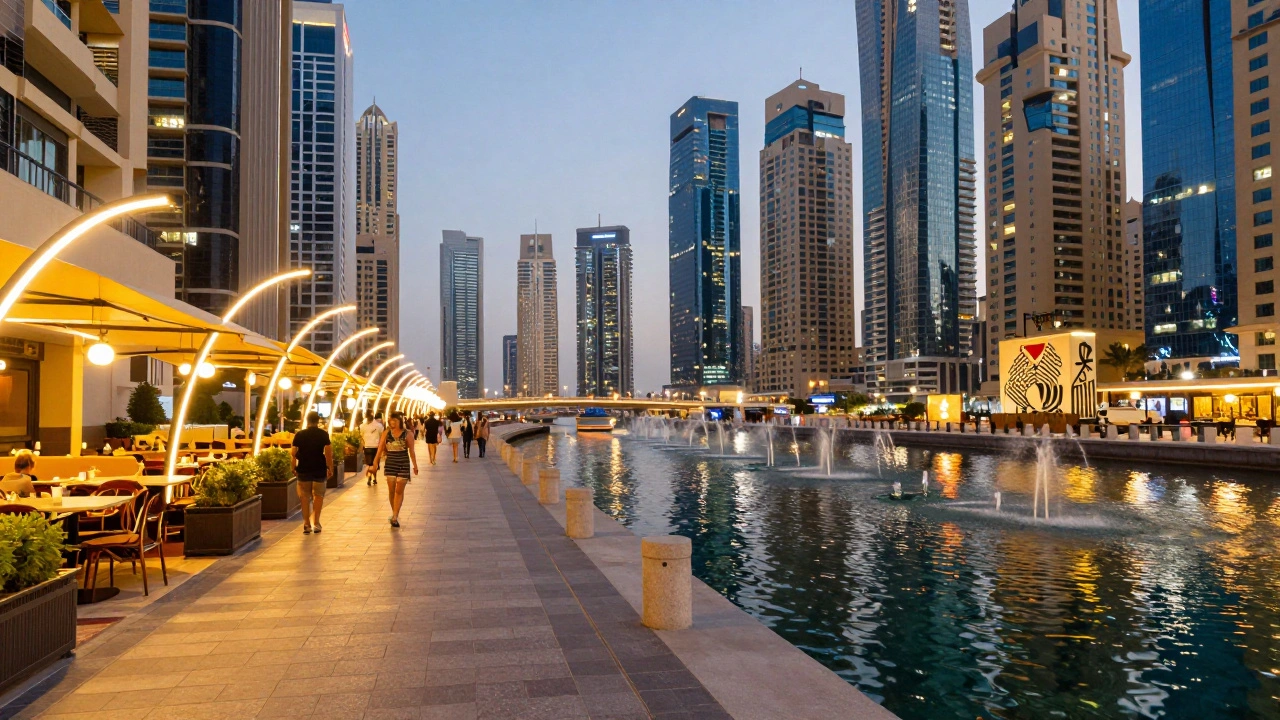
You’ve landed in Dubai. The skyline is dazzling, the heat is intense, and you’re wondering: where can I actually walk without needing a car or a ride-share just to get from point A to point B? The answer isn’t the whole city - but it’s not nowhere either. Dubai isn’t known for its walkability like Paris or Tokyo, but there are pockets where you can stroll, explore, and even forget you’re in a car-centric metropolis. And if you’re asking this question, you’re probably already thinking about skipping the taxi for a day. Good call.
Here’s the quick answer
The most walkable part of Dubai is Business Bay. It’s compact, lined with cafes, riverside paths, and connected to Downtown Dubai and the Dubai Canal. Other walkable zones include Downtown Dubai (around Burj Khalifa), Al Seef, and Jumeirah Beach Residence (JBR). These areas have wide sidewalks, shaded walkways, and enough attractions within a 10-15 minute stroll to make foot travel feel rewarding - not exhausting.
Why walkability in Dubai matters
Dubai’s reputation for luxury and convenience often hides a truth: most of the city was built for cars. Wide highways, massive malls, and sprawling residential compounds mean walking long distances can feel like a mission. But that’s changing - slowly. More people are choosing to walk not just to save money, but because it’s actually enjoyable in certain areas. You can feel the breeze off the canal, hear street musicians near the Burj, or stumble upon a hidden courtyard café tucked between glass towers. Walking turns a visit into an experience.
And let’s be real - if you’re spending hours in air-conditioned malls or hopping in Ubers, you’re missing out on the city’s texture. The way light hits the water at sunset in Business Bay. The smell of fresh Arabic coffee drifting from a tiny shop near Al Seef. The sound of your own footsteps on a paved path instead of the rumble of a car engine. That’s the Dubai most visitors never see.
Business Bay: The walkable heart
Business Bay isn’t just a business district - it’s a living, breathing urban zone designed for people, not just offices. Stretching from the Dubai Canal to Sheikh Zayed Road, this area has over 12 kilometers of continuous pedestrian pathways. You’ll find:
- Waterfront promenades with seating, fountains, and public art
- Shaded walkways lined with cafes, juice bars, and convenience stores
- Direct connections to Downtown Dubai via the pedestrian bridge over Sheikh Zayed Road
- Free public bikes and electric scooters at every major intersection
- Street lighting and security cameras that make evening walks feel safe
Start at the Dubai Canal Bridge and walk south toward the Etisalat Metro Station. You’ll pass restaurants, boutique hotels, and open plazas. No need for a map - just follow the crowds heading toward the water. At night, the entire area lights up with LED installations along the canal. It’s not just walkable - it’s Instagram-worthy.
Downtown Dubai: The classic stroll
If you’ve seen photos of the Burj Khalifa at night, you’ve seen Downtown Dubai. But most people only walk from the metro to the tower and back. That’s a shame. The real magic happens when you wander beyond the main drag.
From the Burj Khalifa, head west toward At The Top and then south along Khalid Bin Al Waleed Road. You’ll hit Souk Al Bahar - a traditional-style mall with open-air courtyards, water features, and live oud music. From there, turn left onto Dubai Mall Drive and walk toward the Dubai Opera. The path is wide, shaded, and lined with benches. You can do this entire loop in under 40 minutes and barely touch a car.
Pro tip: Go on a Friday evening. The area is quieter, the fountains are on, and the temperature drops just enough to make walking comfortable.
Al Seef: Where tradition meets foot traffic
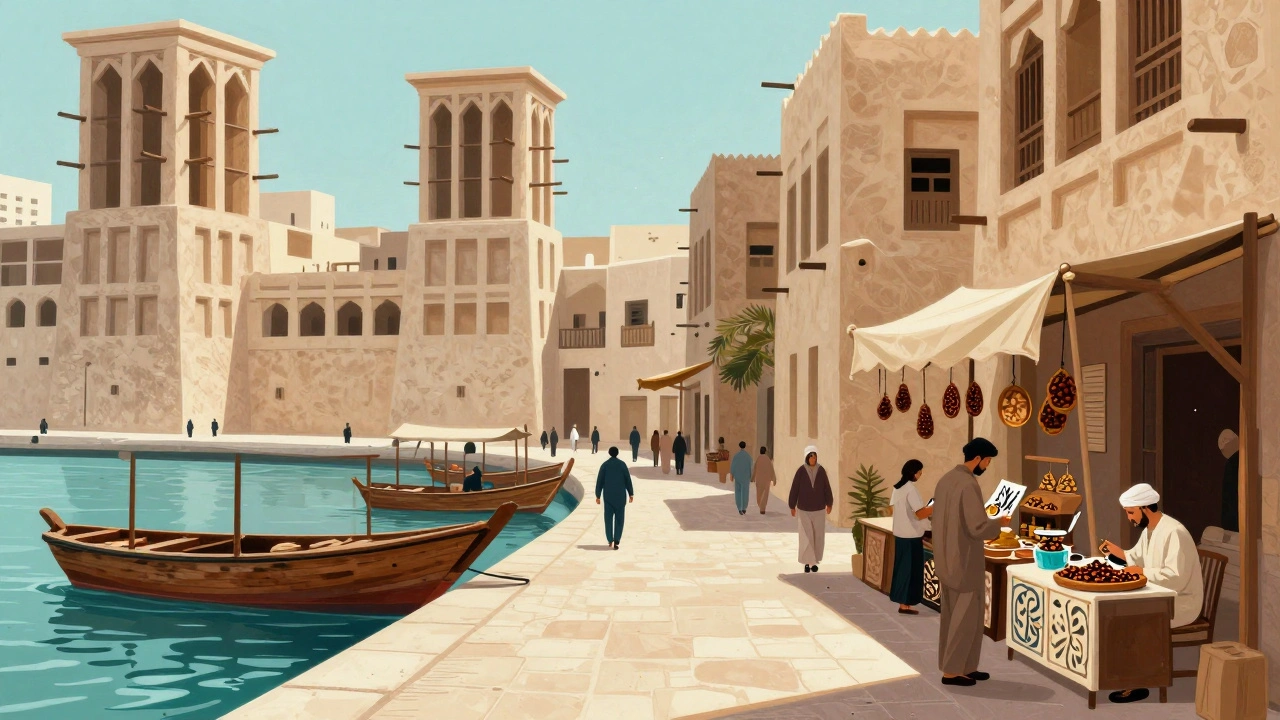
Forget the glass towers. Al Seef is Dubai’s answer to a historic waterfront district. Built to mimic the old Dubai Creek area, this place is all about narrow alleys, wooden wind towers, and open-air cafés with hammocks. It’s designed for walking. No cars allowed on the main promenade.
You can walk from the Al Seef Metro Station all the way to the Dubai Creek in 15 minutes. Along the way, you’ll pass:
- Handmade date shops with free samples
- Traditional Emirati homes turned into museums
- Boat rides that cost less than a coffee
- Local artists painting on canvas under shaded tents
This is the most culturally rich walking experience in Dubai. No crowds, no pressure, just slow, quiet exploration. Bring a hat - the sun here is unrelenting, even in winter.
Jumeirah Beach Residence (JBR): The beachside walk
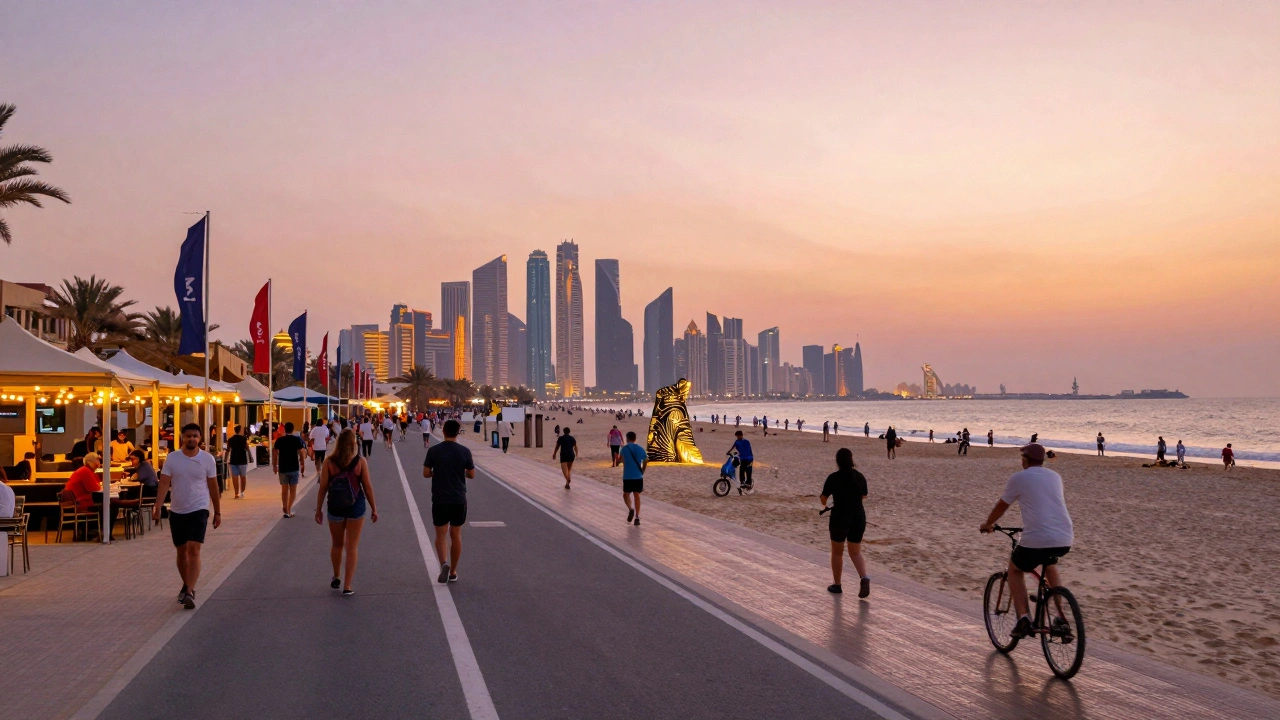
JBR is where Dubai’s coastal lifestyle comes alive. The JBR Walk is a 3-kilometer stretch of beachfront promenade lined with restaurants, ice cream stands, and outdoor yoga studios. It’s the most popular walking spot for locals and tourists alike.
Here’s what makes it special:
- Wide, smooth pavement with dedicated bike and scooter lanes
- Beach access every 200 meters
- Public art installations and shaded rest areas
- Live music on weekends
- Free public restrooms and water fountains
Start at the Bluewaters Island end and walk toward the Al Sufouh Road intersection. You’ll pass over 80 restaurants, from shawarma stands to high-end sushi bars. It’s not just a walk - it’s a food crawl waiting to happen.
Where Dubai isn’t walkable (and why)
Let’s be honest - most of Dubai isn’t built for walking. Areas like Dubai Hills, Arabian Ranches, or Discovery Gardens are designed for car ownership. Sidewalks are rare. Crosswalks are nonexistent. And the heat? It’s brutal for 8 months of the year.
Even the famous Dubai Mall isn’t a walking destination - it’s a destination you drive to. Once inside, you can walk for hours, but getting there? That’s a 10-minute Uber ride from most hotels.
Don’t waste your time trying to walk from Palm Jumeirah to the Mall of the Emirates. You’ll burn out before you get halfway. Stick to the zones where the city actually planned for pedestrians.
What to bring for a walk in Dubai
Even the best walkable areas in Dubai demand preparation. Here’s what you need:
- Water - at least one bottle per hour. The city has public fountains, but they’re not always reliable.
- Sunscreen - SPF 50+. The sun reflects off glass and water here like a mirror.
- Comfortable shoes - no sandals. The pavement gets hot enough to fry eggs in summer.
- A hat or umbrella - shade is limited outside of JBR and Al Seef.
- A power bank - you’ll want to take photos, check maps, and maybe even order a snack via app.
Pro tip: Download the Dubai Walks app (free, iOS and Android). It shows real-time shaded routes, public restrooms, and water refill stations.
Comparison: Walkable vs. Non-Walkable Areas in Dubai
| Area | Pedestrian Infrastructure | Shade Coverage | Public Amenities | Best Time to Walk |
|---|---|---|---|---|
| Business Bay | Excellent - wide, continuous paths | High - trees and awnings | Restrooms, water fountains, free bikes | 4 PM - 8 PM |
| Downtown Dubai | Very good - main routes well-maintained | Medium - some shade near buildings | Restrooms, seating, public art | 5 PM - 9 PM |
| Al Seef | Excellent - car-free zone | High - traditional architecture provides shade | Free water, benches, cultural exhibits | 9 AM - 4 PM |
| JBR Walk | Excellent - dedicated promenade | Medium - some shade from buildings | Restrooms, water fountains, free Wi-Fi | 4 PM - 11 PM |
| Dubai Hills | Poor - sidewalks rare | Low - mostly open roads | None | Not recommended |
Frequently Asked Questions
Is Business Bay really the most walkable part of Dubai?
Yes. Business Bay has the most continuous, well-designed pedestrian network in the city. It connects directly to Downtown Dubai and the Dubai Canal, with shaded paths, public restrooms, water fountains, and free mobility options like bikes and scooters. No other area matches its density of walkable infrastructure.
Can I walk from Dubai Mall to Burj Khalifa?
Yes - it’s about 500 meters, or a 6-minute walk. The path is wide, flat, and well-lit. You’ll pass through the Dubai Mall’s outdoor plaza, which has seating and shaded areas. It’s one of the easiest and most rewarding short walks in the city.
Is it safe to walk in Dubai at night?
In the walkable zones - Business Bay, Downtown, JBR, and Al Seef - yes, it’s very safe. These areas are well-lit, patrolled, and have high foot traffic even after dark. Avoid walking alone in areas like Dubai Marina after midnight or in desert-adjacent districts. Stick to the main pedestrian corridors.
Do I need to carry cash to walk around Dubai?
Not really. Most vendors, kiosks, and food stalls accept contactless payments. Apple Pay, Google Pay, and Visa/Mastercard work everywhere in walkable zones. You’ll only need cash for small souvenirs at Al Seef or if you want to tip a street performer.
What’s the best time of year to walk in Dubai?
November to March. Temperatures hover between 20°C and 28°C. The humidity drops, the breeze picks up, and the sun isn’t punishing. April and October are borderline - you’ll sweat, but it’s doable. Avoid May through September unless you’re walking early morning or late evening.
Ready to explore on foot?
You don’t need a tour guide, a rental car, or a fancy itinerary to see the real Dubai. Just put on your shoes, grab a bottle of water, and start walking. The city’s best moments aren’t in the luxury malls or the helicopter tours - they’re in the quiet corners, the shaded alleys, the unexpected views of the water from a bench you didn’t know existed. Business Bay, Downtown, Al Seef, JBR - these are your keys to walking Dubai like a local. Start here. Then wander.



Eamon Lane
February 13, 2026 AT 00:40Business Bay is legit the only place I walked without thinking about how much I wanted an Uber. The canal path at sunset? Pure magic. No cars, no noise, just water and lights. I did a 4-mile loop and didn't see a single taxi.
Also, the free bikes? Game changer. Grabbed one near Etisalat, rode to the bridge, walked back. Perfect afternoon.
Hazel Lopez
February 14, 2026 AT 13:06I went to JBR last weekend and just wandered. Didn't plan anything. Ended up at this tiny Emirati coffee spot I wouldn't have found if I'd been driving. The guy gave me free cardamom coffee just because I asked. That's the Dubai you miss if you only hit the malls.
Tina Reet
February 15, 2026 AT 17:01This article is dangerously naive. You're romanticizing a city built on migrant labor and extreme environmental exploitation. Walking in Business Bay? Sure, it's pretty. But who cleans those sidewalks? Who maintains those fountains? Who gets paid minimum wage to work 12-hour shifts under the sun so tourists can take selfies?
You're not exploring Dubai-you're consuming it. And you think that's ethical?
Melanie Luna
February 17, 2026 AT 14:14While I appreciate the effort in this guide, I must respectfully challenge the assertion that Business Bay is the 'most walkable' area. The metric of walkability must include accessibility, equity, and infrastructure durability-not just aesthetic appeal.
Al Seef, while charming, lacks ADA-compliant ramps. JBR’s restrooms are often out of service. And the so-called 'free scooters' are inconsistently distributed, creating a de facto mobility gap. A truly walkable city doesn’t just have paths-it has inclusion.
Beth Butler
February 18, 2026 AT 09:25This made me want to book a flight tomorrow. I’ve never been to Dubai but now I’m imagining myself walking along the canal with a bottle of water, listening to music, and just… being. Thank you for showing me the quiet beauty of it all.
Rachel Neiman
February 20, 2026 AT 01:15Just came back from Dubai and I’m obsessed with Al Seef. I walked there from the metro and didn’t even realize I’d been going for 45 minutes because I was too busy staring at the wind towers and trying not to cry at how beautiful it all was.
Also, the date samples? I took five. No regrets.
Laura Szabó
February 20, 2026 AT 05:52Thank you for writing this. I’ve been to Dubai twice and always felt like I was missing something. This made me realize I was rushing. Next time, I’m leaving the car. Just walking. Slowly.
Carl Grann
February 21, 2026 AT 02:13Ugh. You forgot to mention the heat index. 38°C with 70% humidity feels like 52°C. And no, sunscreen SPF 50 doesn’t help if you’re walking for 20 minutes. Your skin turns into a lobster. This whole thing reads like a tourism brochure written by someone who’s never actually been there in summer.
Colleen McGhan-Cox
February 21, 2026 AT 21:25Let’s not ignore the systemic urban design flaws here. The walkable zones are isolated enclaves-carefully curated for consumption, not community. The pedestrian infrastructure is performative, not participatory. It’s not walkability-it’s curated mobility for tourists who can afford to stay in 5-star hotels.
Real walkability requires mixed-income housing, equitable access to shade, and public transit integration. Business Bay is a theme park with sidewalks. Don’t mistake aesthetics for equity.
Kelvin Lee
February 23, 2026 AT 11:10If you’re going to walk in Dubai, you’re either rich or delusional. The entire city is designed to make you spend money. Even the 'free' water fountains? They’re near shops. You’re being guided, not exploring.