
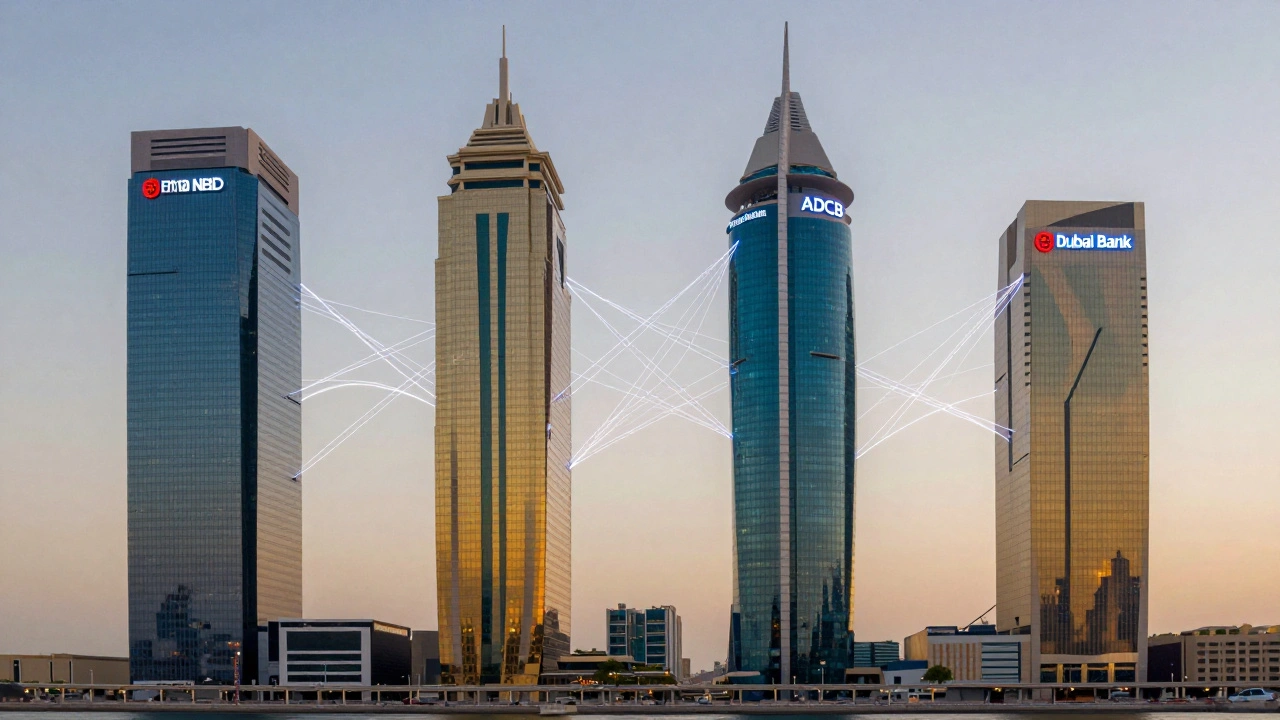
You’ve probably heard the phrase too big to fail-but what does it really mean when applied to banks in Dubai? And more importantly, which ones actually carry that weight in the UAE’s financial system? If you’re living here, working with banks, or even just keeping an eye on your savings, this isn’t just jargon. It’s about whether your money is truly safe.
In Dubai, the banking landscape isn’t just about shiny towers and luxury services. It’s a tightly regulated, highly concentrated system where a handful of institutions hold over 70% of the country’s total assets. When regulators say a bank is too big to fail, they don’t mean it’s perfect. They mean its collapse could drag down the entire economy. And in Dubai, that’s not speculation-it’s policy.
Who Are the Big 4 Banks in Dubai?
The term Big 4 in Dubai doesn’t refer to global accounting firms. Here, it’s all about banking powerhouses that dominate the market. These four institutions are:
- Emirates NBD - The largest bank in the UAE by assets, with over AED 600 billion in total assets as of 2025.
- First Abu Dhabi Bank (FAB) - Formed from the merger of First Gulf Bank and National Bank of Abu Dhabi, it’s the second-largest bank and holds nearly AED 550 billion in assets.
- Abu Dhabi Commercial Bank (ADCB) - Still a major player despite its recent merger with Union National Bank, ADCB controls over AED 400 billion in assets.
- Dubai Islamic Bank (DIB) - The world’s largest Islamic bank by assets, with over AED 380 billion in holdings and deep roots across the Gulf.
These four aren’t just big-they’re structural pillars. Together, they account for more than 75% of all banking assets in the UAE. If one of them stumbled, the ripple effect wouldn’t just hit customers. It would shake corporate loans, real estate financing, government contracts, and even currency stability.
Why Are They Considered Too Big to Fail?
Think of these banks like the four legs of a table holding up Dubai’s entire economy. Remove one, and the whole thing wobbles. Here’s why regulators treat them differently:
- Systemic reach: They don’t just serve individuals. They fund major infrastructure projects, handle government payroll, and back multinational corporations. Emirates NBD alone processes over 40% of all retail banking transactions in the UAE.
- Global exposure: These banks have branches in London, Singapore, New York, and Mumbai. A failure here could trigger panic abroad, especially in markets that rely on Gulf capital.
- Interconnectedness: Other banks, fintech startups, and even insurance firms depend on them for liquidity and settlement services. If Emirates NBD goes offline for a day, hundreds of smaller institutions freeze.
- Government backing: While not officially guaranteed, the UAE Central Bank has repeatedly stepped in during crises-like in 2008 and 2020-to prevent collapse. No bank has ever been allowed to fail since the modern system began.
There’s no official list that says “these four are too big to fail.” But every policy move, every bailout, every regulatory change since 2008 confirms it. The government doesn’t say it out loud-but it acts like it’s true.
What Happens If One of Them Fails?
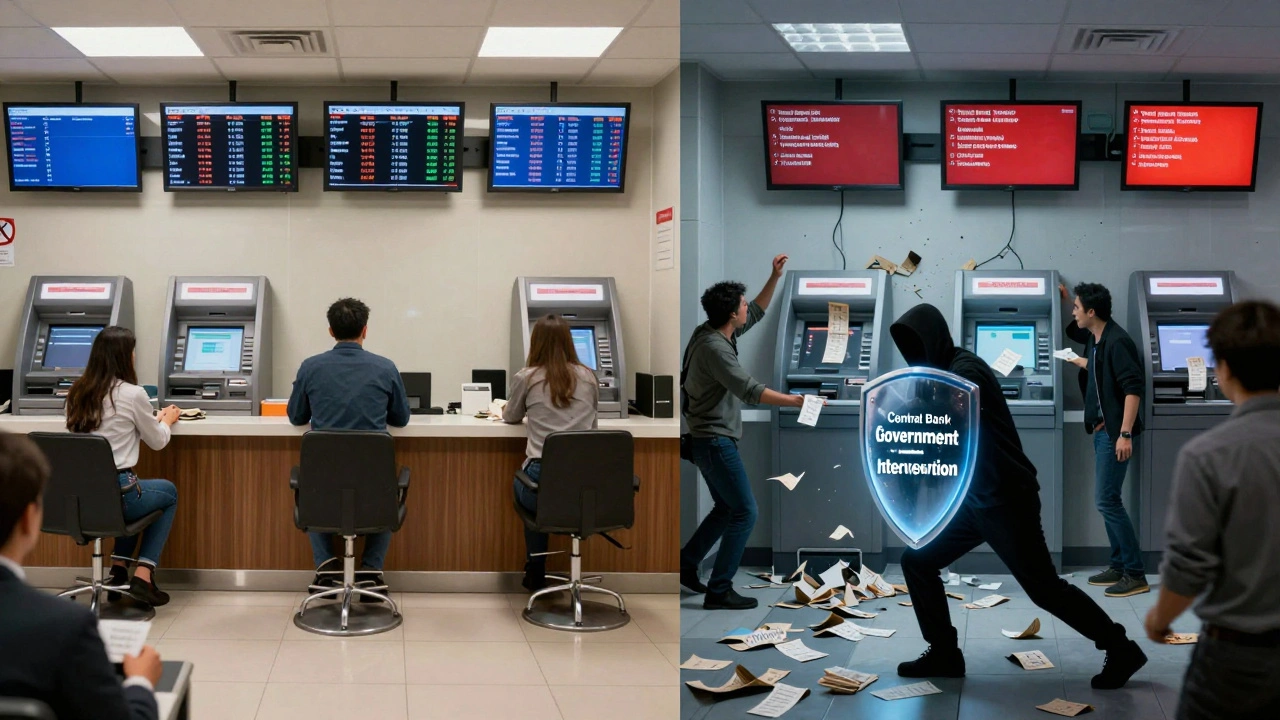
Let’s say Emirates NBD suddenly lost 30% of its capital overnight. What then?
You’d see:
- ATMs running dry: Cash withdrawals limited as liquidity dries up.
- Businesses frozen: Payroll systems halt. Suppliers stop shipping. Contracts get canceled.
- Property prices crash: Over 60% of home loans in Dubai are issued by these four banks. A credit crunch means no new mortgages-and a flood of foreclosures.
- Dirham devaluation risk: Foreign investors pull out. Currency reserves drop. The peg to the U.S. dollar comes under pressure.
This isn’t fantasy. In 2009, Dubai World’s debt default sent shockwaves through the entire banking system. Emirates NBD and FAB had to step in to stabilize markets. The government didn’t let them collapse. They couldn’t afford to.

Are These Banks Really Safe?
Safe? Yes-mostly. But not invincible.
Each of these banks has strong capital ratios, low non-performing loan rates (under 2% as of 2025), and robust risk controls. They’re audited by the UAE Central Bank and rated by Moody’s and S&P. But here’s the catch: their safety depends on one thing-government intervention.
Unlike in the U.S. or EU, where deposit insurance caps are clear (like $250,000 per account), Dubai offers no legal guarantee. Your savings are protected by trust, not law. If a bank fails, the government will likely step in-but there’s no promise.
That’s why smart residents don’t put all their money in one place. Even if you bank with Emirates NBD, you might keep emergency cash in a smaller, more agile institution-or even in gold or foreign currency.
Comparison: The Big 4 vs. Smaller Banks in Dubai
| Feature | Big 4 Banks | Smaller Banks (e.g., Mashreq, RAKBank, DIB’s rivals) |
|---|---|---|
| Total Assets | AED 1.9+ trillion combined | AED 300-500 billion combined |
| Branch Network | Over 600 branches across UAE | 100-200 branches |
| Customer Base | 10+ million retail customers | 1-3 million customers |
| Government Backing | Implicit-de facto guarantee | None-fully market-driven |
| Deposit Insurance | No legal protection | No legal protection |
| Liquidity Access | Direct access to Central Bank facilities | Limited or no direct access |
| Systemic Risk | High-if they fail, economy collapses | Low-failure affects only their customers |
Smaller banks are more agile. They offer better customer service, lower fees, and sometimes higher interest rates. But they don’t carry the same weight. If you’re looking for stability, the Big 4 are your anchor. If you’re looking for innovation or personalized service, smaller players might be better.
What Should You Do?
Here’s what you can do right now to protect yourself:
- Don’t put all your money in one bank. Even if it’s Emirates NBD. Spread your savings across two institutions.
- Know your deposit limits. There’s no deposit insurance. If you have over AED 500,000 in one account, you’re taking real risk.
- Monitor financial news. Watch for changes in the Central Bank’s capital requirements or credit ratings. A downgrade is a red flag.
- Consider alternatives. Gold, foreign currency accounts, or even regulated fintech savings platforms can act as buffers.
It’s not about distrust. It’s about smart risk management. The Big 4 are stable-but stability isn’t the same as safety.
Frequently Asked Questions
Are deposits in Dubai banks insured like in the U.S.?
No. Unlike the U.S. FDIC, which insures up to $250,000 per account, Dubai has no legal deposit insurance scheme. Your money is protected only by the bank’s solvency and the government’s willingness to step in during a crisis. There’s no guarantee.
Can a bank in Dubai actually fail?
Technically, yes-but it’s extremely unlikely for the Big 4. The UAE Central Bank has intervened in every major crisis since 2008 to prevent collapse. Smaller banks have failed before (like Bayt Al Mal in 2016), but the Big 4 are treated as too critical to let go. Their failure would trigger a national economic emergency.
Is Dubai Islamic Bank (DIB) really part of the Big 4?
Yes. Despite its Islamic banking model, DIB is the largest Islamic bank in the world by assets and ranks fourth in total UAE banking assets. It’s deeply integrated into the national financial system, with branches across the country and partnerships with government entities. It’s not just a niche player-it’s a core institution.
Why does the government not officially say these banks are too big to fail?
Because saying it out loud could encourage reckless behavior. If people believe the government will always bail out banks, they might take bigger risks-like putting all their savings into one institution. By staying quiet, regulators keep pressure on banks to stay disciplined, while still having the option to act if disaster strikes.
Should I move my money away from the Big 4?
Not unless you’re looking for higher returns or better service. The Big 4 are still the safest option in Dubai. But don’t keep all your money in one place. Splitting your savings between two banks-even if both are Big 4-is the smartest move. Diversification isn’t about distrust. It’s about control.






Kacey Graham
March 3, 2026 AT 12:50Melissa Gainor
March 5, 2026 AT 10:23demond cyber
March 5, 2026 AT 10:52Rajesh r
March 6, 2026 AT 21:11kimberly r.
March 7, 2026 AT 04:16Eva Stitnicka
March 7, 2026 AT 21:38