
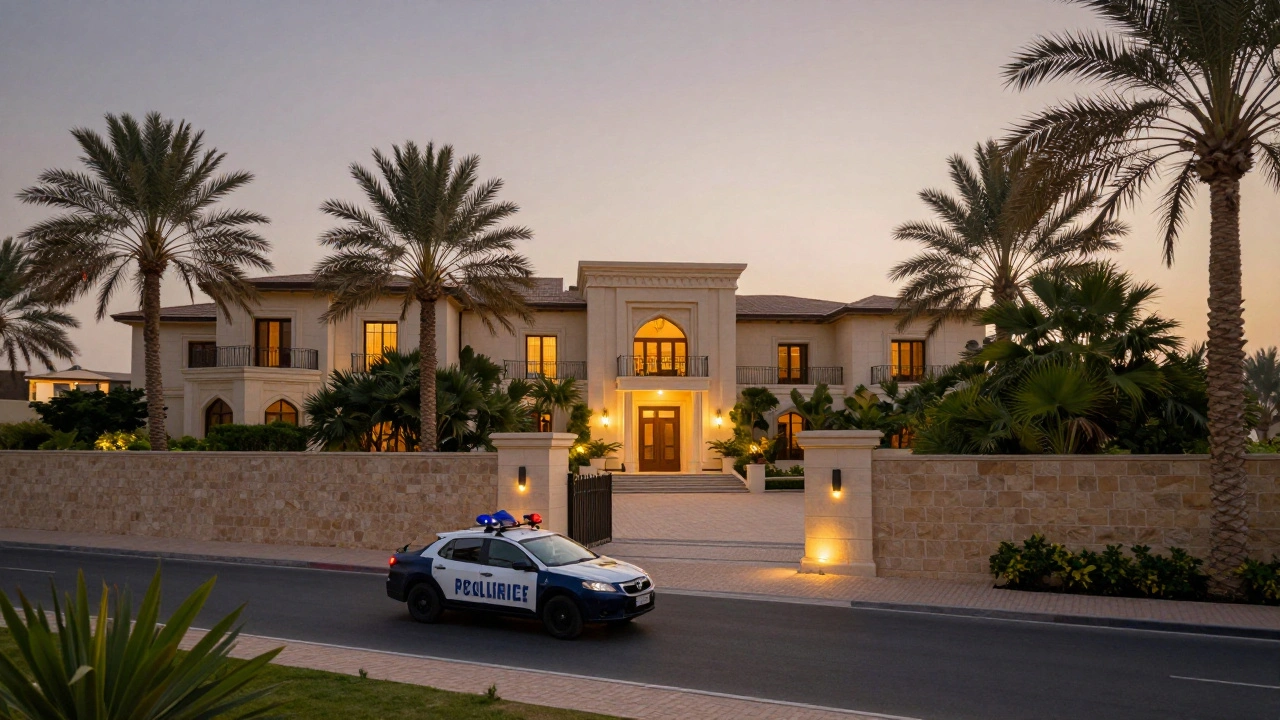
Ever wonder where the ultra-rich actually live in Dubai? Not in the Burj Khalifa lobby. Not in the Dubai Mall food court. Not even in those Instagram-famous villas with infinity pools you see in ads. The real answer is quieter, more exclusive, and far more interesting.
If you’re wondering where most billionaires call home in Dubai, the short answer is: Dubai Hills Estate, Palm Jumeirah, and Emirates Hills. These aren’t just fancy addresses-they’re gated, private, and designed for people who don’t just want privacy, they demand it.
Why These Neighborhoods? It’s Not Just the Price Tag
People assume billionaires pick Dubai because it’s tax-free. That’s true-but it’s not why they live where they do. The real draw? Control. Privacy. Security. And space.
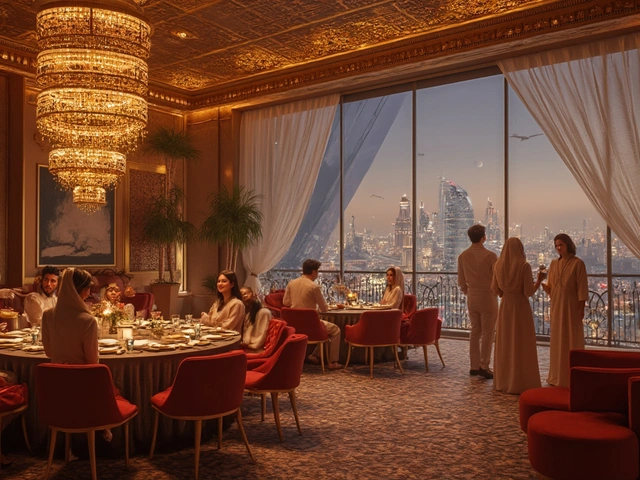
Imagine this: You fly in on your private jet. You don’t want to wait in line at customs. You don’t want to pass through traffic on Sheikh Zayed Road. You don’t want neighbors peering over fences or paparazzi lurking near the pool. That’s why the ultra-rich don’t live in Downtown Dubai. They live where the roads are wider than most city blocks, where security is handled by private teams, not municipal cops, and where the only noise is the ocean or the wind through palm trees.
Dubai Hills Estate, for example, isn’t just a community. It’s a self-contained world. There’s a golf course designed by Ernie Els, a private hospital, international schools, and a shopping district that feels like a European boutique town. But the real draw? The homes. Think 15,000-square-foot villas with underground garages for 8 cars, private elevators, and gardens bigger than most Manhattan apartments.
Emirates Hills: The OG Billionaire Zone
If you want to know where Dubai’s original elite settled, look no further than Emirates Hills. It launched in 2003, right when Dubai was starting to attract serious global wealth. Back then, it was just desert. Now? It’s the most concentrated cluster of billionaires in the UAE.
Why? Because it was built for them. Every villa here is custom-designed. No two are the same. Some have indoor tennis courts. Others have private cinemas with 4K projectors and leather recliners that adjust to your body heat. One home I heard about has a climate-controlled wine cellar with 12,000 bottles-each labeled with the owner’s initials.
And the security? It’s next-level. Private patrols. Facial recognition at every gate. No delivery drivers allowed past the outer perimeter. Even the gardeners are vetted through three background checks. This isn’t luxury-it’s fortress living.
Palm Jumeirah: The Island That Floats Above the Rest
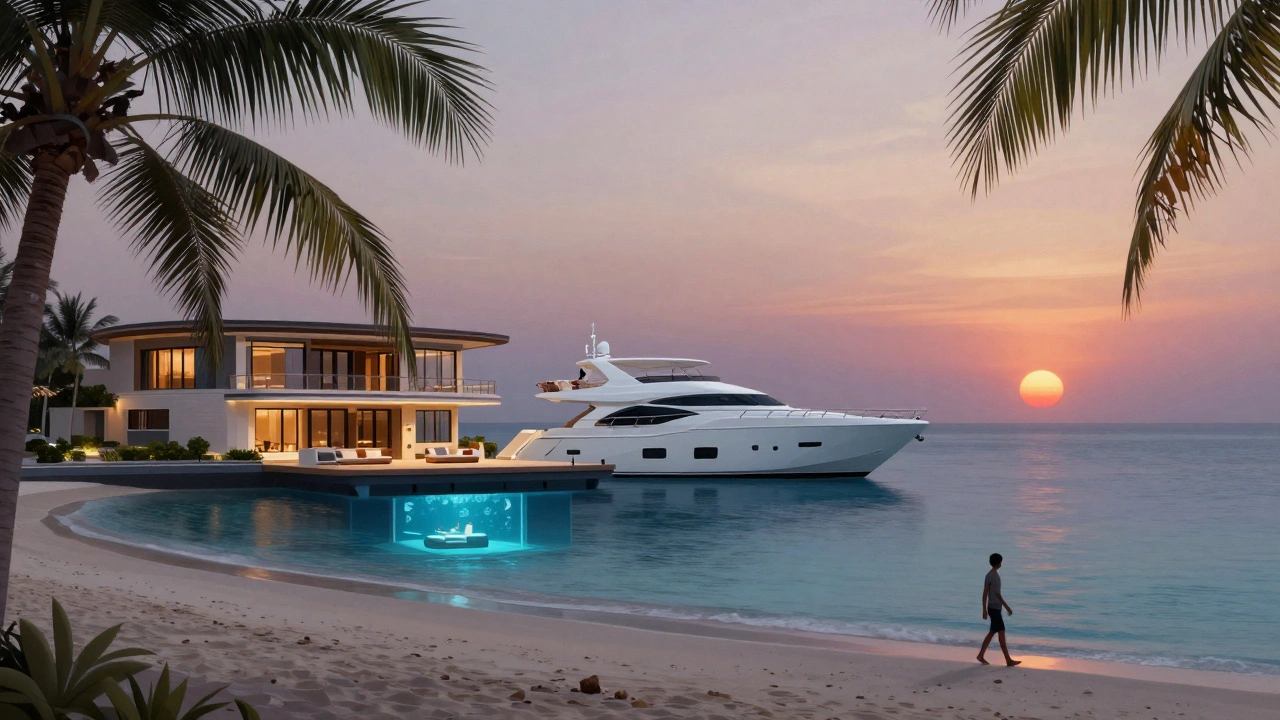
Palm Jumeirah is the most recognizable name, thanks to its palm-tree shape visible from space. But most people don’t realize: the real wealth isn’t on the trunk. It’s on the fronds-the outer arms where the villas are spaced 200 meters apart, each with its own private beach.
Here, billionaires don’t just want a view of the ocean. They want ownership of it. Some homes have underwater lounges. Others have floating docks for yachts that are longer than most city buses. One owner I spoke to (off-record) said he bought his plot because it had direct access to a coral reef. He didn’t want to share it with tourists. So he built a private dive center and hired marine biologists to monitor the ecosystem.
The Palm isn’t just expensive-it’s rare. There are only 1,200 villas on the fronds. And nearly half are owned by families from Saudi Arabia, Russia, and India. Many use them as seasonal homes, staying only during winter. But when they’re here? The entire neighborhood shuts down. Roads are closed. Drones patrol. Even the seagulls seem to know better than to fly too close.
Who’s Really Living There? Not Who You Think
Most assume billionaires in Dubai are tech founders or oil magnates. That’s partly true-but the biggest group? Family offices.
These aren’t flashy entrepreneurs. They’re heirs to multi-generational wealth. Think: a family that’s owned textile mills in Mumbai since 1890, or a Saudi royal family branch that manages $20 billion in private assets. They don’t need to advertise. They don’t tweet. They just buy.
That’s why you’ll find homes in Dubai Hills with no signs, no gates, no nameplates. The address is listed under a trust. The owner? A shell company registered in the British Virgin Islands. They don’t want attention. They want stability.
And here’s the kicker: many of them aren’t even in Dubai year-round. They use the city as a secure, tax-free hub. They fly in for 3 months, send their kids to the American Community School, then vanish until next winter. The house? Maintained by a team of 12 staff. It’s not a home. It’s a luxury asset.
What You Won’t See: The Hidden Infrastructure
Behind every billionaire home in Dubai is a hidden network of services most people never think about.
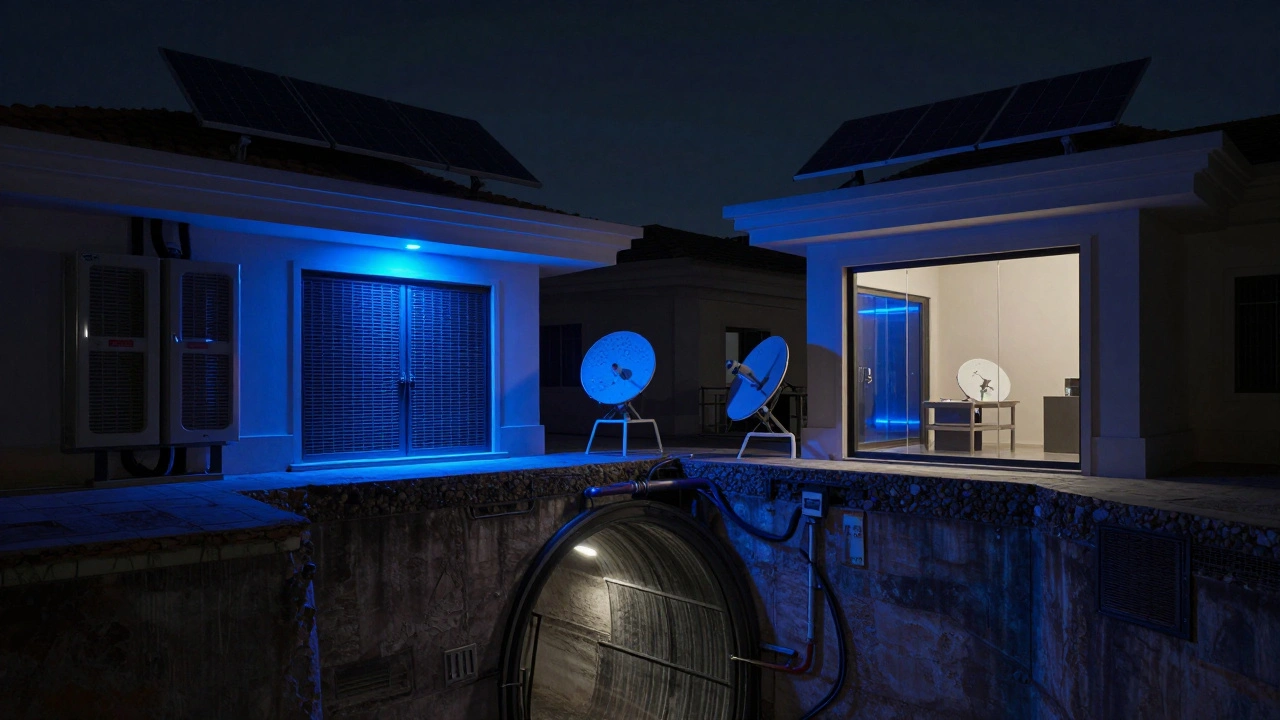
- Private power grids: Some villas have their own solar farms and backup generators that run 24/7.
- Water desalination units: In places like Palm Jumeirah, homes filter their own seawater because the municipal supply isn’t pure enough for their pools.
- Underground tunnels: I’ve heard rumors of secret tunnels connecting homes in Emirates Hills for discreet movement during high-profile events.
- Custom air filtration: Dust from the desert? No problem. These homes have multi-stage HEPA systems that cost more than a luxury SUV.
There’s even a company in Dubai that specializes in building underground panic rooms with bulletproof glass, satellite phones, and enough food for 6 months. You won’t find ads for it. You’ll only hear about it if you know someone who knows someone.
Why Not Other Areas? The Real Estate Divide
You might think: Why not Jumeirah Beach Residence? Or Arabian Ranches? Or even Downtown Dubai?
Because those places are for millionaires. Not billionaires.
There’s a clear hierarchy:
- Millionaires: Live in JBR, Arabian Ranches, or Discovery Gardens. Nice homes. Good schools. Solid security.
- Ultra-High-Net-Worth Individuals: Live in Dubai Hills, Emirates Hills, Palm Jumeirah. Private access. Custom builds. Zero public visibility.
- Global Elites: Own multiple properties across Dubai, London, and Monaco. Dubai is just one node in their global portfolio.
The difference? Privacy. The ultra-rich don’t want to be seen. They want to be safe. And in Dubai, that means living where the streets don’t have names, the houses don’t have numbers, and the only thing visible from the road is a 10-foot wall.
What’s Next? The New Frontier
There’s a new area gaining traction: Dubai Creek Harbour. It’s not as established, but it’s attracting attention. Why? Because it’s being built with a new rule: no high-rises. Only low-density villas with direct water access.
It’s like Emirates Hills, but with canals instead of golf courses. Early buyers? Mostly Chinese and Russian families looking for alternatives to Singapore. The first villas sold for over $30 million-without even being finished.
And then there’s the rumored project: Al Qudra Oasis. A desert sanctuary 40 minutes from the city, with underground homes, solar-powered domes, and zero internet access. Yes, you read that right. No Wi-Fi. No cameras. Just silence.
Some billionaires are already buying plots there. Not because they want luxury. But because they want to disappear.
Final Thought: It’s Not About the Money. It’s About Control
Most people think billionaires live in Dubai because it’s glamorous. But the truth? They live here because it’s the only place on Earth where you can buy absolute control.
You can own your own island. You can ban the public from your beach. You can hire your own security team. You can build a home with no windows facing the street. You can make your own rules.
And in a world where everything is tracked, monitored, and shared, that’s the ultimate luxury.
Do billionaires in Dubai pay property tax?
No. Dubai has no property tax, inheritance tax, or capital gains tax. This is one of the main reasons ultra-rich individuals from over 150 countries choose Dubai as their base. Even if you own multiple homes, you pay zero tax on them. The only fees are a small registration charge (around 4% of the purchase price) and annual service charges for maintenance in gated communities.
Can foreigners buy property in these elite neighborhoods?
Yes. Foreigners can buy freehold property in designated areas like Dubai Hills Estate, Palm Jumeirah, and Emirates Hills. These are the only zones in Dubai where non-UAE nationals can own land outright. In other areas, foreigners can only lease property. But in these elite zones, you own the land, the house, and the rights to pass it to heirs-no restrictions.
How much does a home in Emirates Hills cost?
Prices start at around $8 million for a standard villa. But most homes sell for $15-$35 million. Custom-built mansions with private pools, cinemas, and underground garages can hit $70 million or more. The most expensive home ever sold in Emirates Hills went for $110 million in 2024.
Are these neighborhoods safe?
Extremely. Each neighborhood has private security forces, 24/7 surveillance, facial recognition gates, and no public access. Police don’t patrol these areas-private teams do. Crime rates in these zones are near zero. There are no reported burglaries in Emirates Hills in the last 5 years. That’s why billionaires trust them.
Do billionaires live in Dubai year-round?
Not usually. Most use Dubai as a seasonal base-typically November to March, when the weather is perfect. Many have homes in London, Monaco, or the Swiss Alps and only stay in Dubai for 3-6 months. Their properties are maintained by full-time staff who manage everything from gardening to security to private chefs.
Steve Wilson
March 5, 2026 AT 17:05Man, I always thought the Burj Khalifa was where the rich lived, but this makes so much sense. Dubai Hills Estate sounds like a gated paradise. I’d love to see one of those 15,000 sq ft villas with the underground garage for 8 cars. No wonder people don’t want to be seen.
William Sogus
March 7, 2026 AT 06:03lol i bet all these 'billionaire homes' are just money laundering fronts for russian oligarchs and saudi princes. and dont even get me started on the 'private desalination units' - sounds like a scam to justify insane prices. also, 'no wifi in al qudra oasis'? yeah right. that's just a front for a black site. #conspiracy #deepstate
Jessica Horcher
March 7, 2026 AT 16:53This is such a well-researched breakdown. I love how you highlighted the shift from flashy wealth to quiet control. The family offices point is critical - most people don’t realize the ultra-rich aren’t trying to be influencers. They’re preserving legacy. Also, the underground tunnels rumor? I’ve heard whispers from architects in Dubai who worked on those projects. They’re real. And the air filtration systems? I’ve seen specs - some cost over $2 million. It’s not luxury. It’s survival.
Kayla Hochard
March 8, 2026 AT 07:11Oh wow, so the rich just buy entire islands and ban normal people from the beach? How cute. And we’re supposed to be impressed? Meanwhile, my rent went up 30% and I can’t afford a parking spot in my own city. This isn’t luxury - it’s a middle finger to humanity. Also, 'no property tax'? Yeah, because the rest of the world pays for Dubai’s glitter. #fairshare
Andre Estrela
March 9, 2026 AT 01:19OMG I can't even imagine... like imagine having your own private beach... and a dive center... and marine biologists... 🤯🌊🐠 and then the underground panic room?? 😱💀 like... who needs that?? but also... i kinda want one?? 🤭 #luxurygoals #billionairevibes
Kelsey Stratton
March 9, 2026 AT 06:57Sean Marcus
March 10, 2026 AT 04:38so like... the rich just live in mansions with no windows facing the street? lol. i guess that's one way to avoid your neighbors. also why is there a whole section on 'hidden infrastructure'? are we supposed to be impressed by solar farms? bro it's a house. not a space station.
prajesh varma
March 11, 2026 AT 03:55Bro, in India we call this 'hiding in plain sight'. You think these billionaires are chillin' in Dubai? Nah. They're using it as a tax-free ATM while their kids go to private schools in London and their wives shop in Paris. And those '12-person staff teams'? Half of them are ex-RAW agents. Real talk - this ain't luxury. It's a global game of chess. And we're just pawns watching from outside the fence.