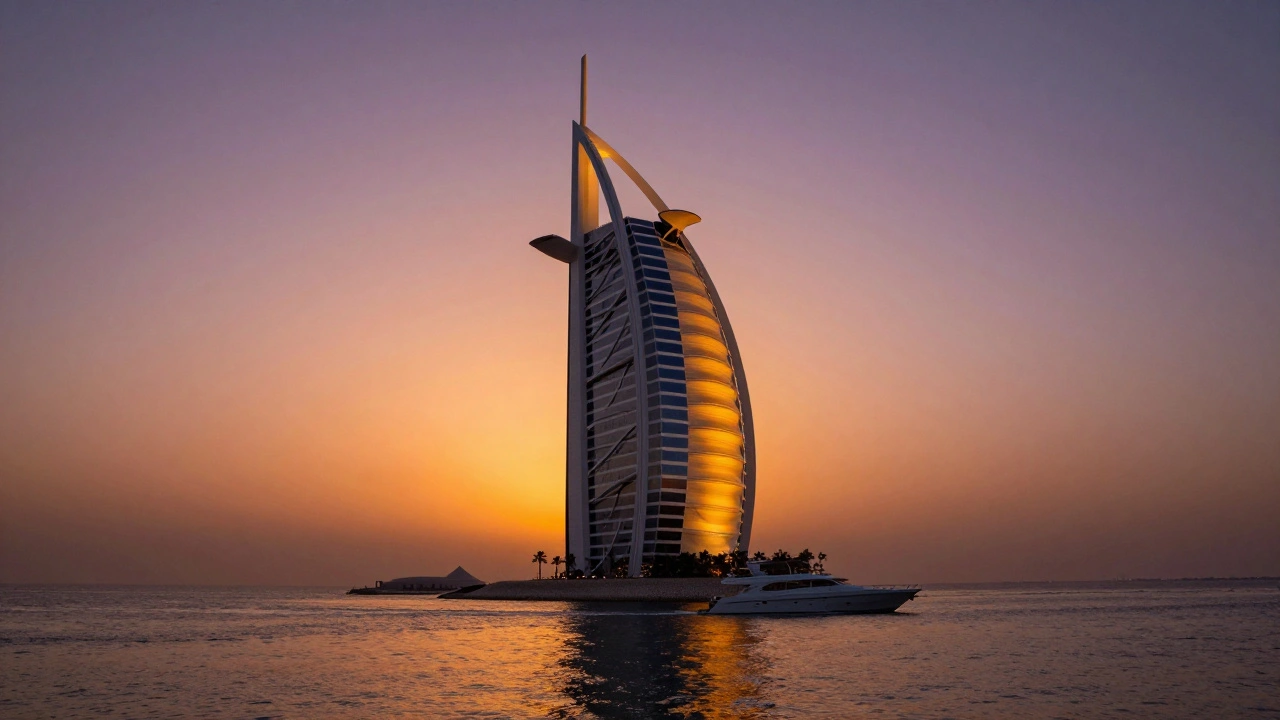
You’ve heard it everywhere: Burj Al Arab is the world’s only 7-star hotel. But here’s the twist-no official body ever gave it that rating. Not the Michelin Guide. Not the UAE government. Not even the hotel chain itself. So why does everyone still call it 7-star? And if it’s not official, what makes it worth the hype?
Let’s cut through the noise. If you’re planning a trip to Dubai and wondering whether this glass-and-steel sail-shaped tower is worth the $2,000+ per night, you’re not alone. People come here for the photos, the prestige, the sheer audacity of it all. But behind the gold leaf and helicopter transfers is a real hotel-with real service, real rooms, and real reasons why it still holds the crown as the most iconic luxury stay on Earth.
The Only 7-Star Hotel in the World? Not Exactly
The term "7-star" was never an official classification. It was coined in 1999 by a British journalist who, after staying at Burj Al Arab, wrote that it was "so far beyond 5-star, it deserves its own category." The phrase stuck like glitter on a desert wind. Travel magazines picked it up. Tour operators ran with it. And suddenly, Burj Al Arab wasn’t just a hotel-it became a myth.
Here’s the truth: the hotel is officially rated as a 5-star property by the UAE’s Department of Tourism and Commerce Marketing. But here’s the catch-no other hotel on the planet matches what Burj Al Arab delivers. Not in scale, not in service, not in the sheer theatricality of the experience. So while it’s not legally 7-star, it’s the only one that makes you feel like you’ve stepped into a fantasy written by someone who’s never heard the word "budget."
What Makes Burj Al Arab So Different?
Imagine arriving by private boat, not a car. The lobby? A 180-meter atrium with a chandelier that looks like a cascading waterfall of crystal. Your room? A 170-square-meter suite with a butler who knows your coffee order before you do. And yes, every suite has a private elevator that opens directly into your living space.
Forget minibars. You get a personal concierge who books your helicopter tour to the Palm Jumeirah, arranges a private falcon encounter at dawn, and even has your favorite book waiting on the nightstand-because they checked your reading habits before you landed.
The hotel has 202 suites, all on the 27th floor and above. No standard rooms. No budget options. No compromises. Even the bathrooms come with gold-plated fixtures and a view of the Arabian Gulf that makes you forget you’re inside a building.
Why People Still Talk About It in 2026
There are more luxurious hotels now. The Armani Hotel in Burj Khalifa. The Atlantis The Royal, opening in 2025 with its own private island. But none of them have the same cultural footprint.
Burj Al Arab is the poster child of Dubai’s rise. It was built in 1999, when Dubai was still figuring out how to compete with Paris, New York, or Tokyo. It didn’t just announce Dubai’s arrival-it screamed it. The building is visible from space in satellite images. It’s been featured in over 100 movies and TV shows, from Mission: Impossible to The Amazing Race.
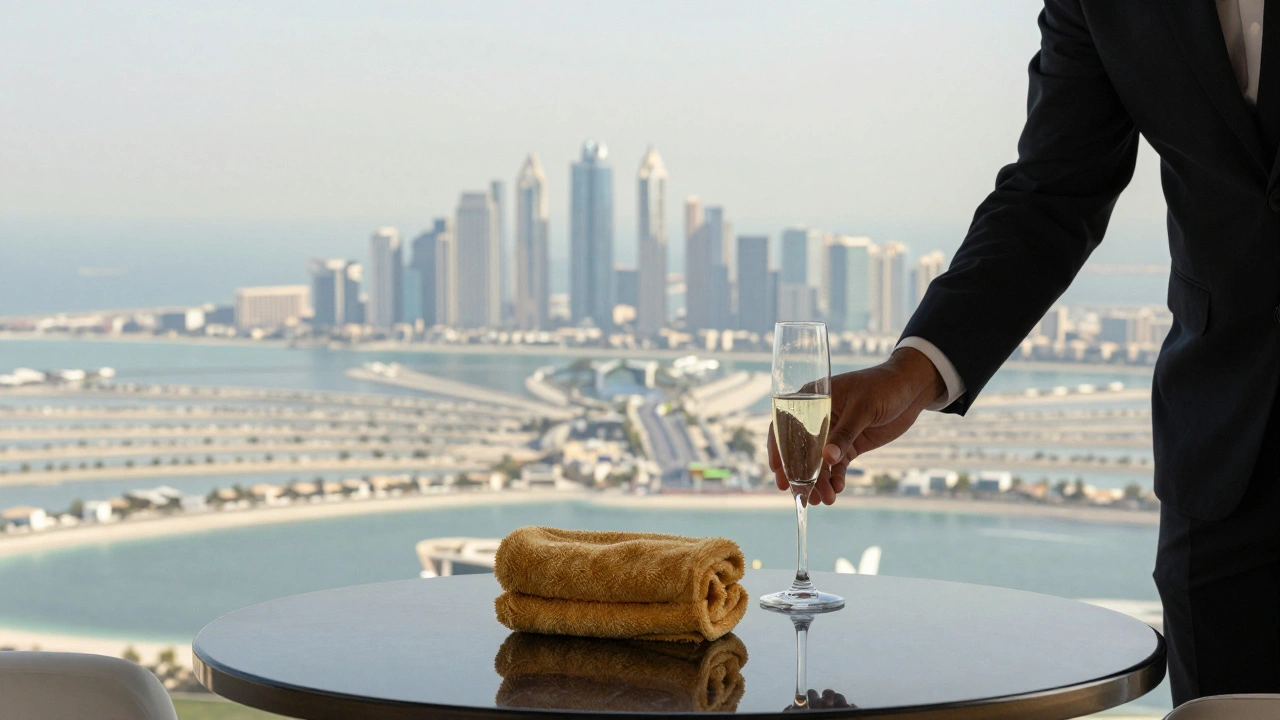
And here’s what most visitors don’t realize: you don’t need to stay here to experience it. The hotel’s Al Mahara restaurant serves seafood in a glass-walled aquarium. The Skyview Bar lets you sip champagne 200 meters above sea level. Even the pool deck, with its private cabanas and butlers serving chilled towels, feels like a secret club you’ve stumbled into.
What You’ll Actually Get for Your Money
Staying at Burj Al Arab isn’t about sleeping in a fancy room. It’s about being treated like royalty for 24 hours straight. Here’s what’s included:
- Private chauffeur in a Rolls-Royce or Mercedes S-Class
- 24/7 personal butler (yes, they pack your bags, too)
- Complimentary spa access at the Talise Spa
- Private beach with cabanas and butlers
- Two complimentary bottles of champagne per stay
- Access to the hotel’s private yacht for sunset cruises
- Personalized in-room dining with a chef who prepares meals based on your dietary preferences
Even the towels are heated. And yes, they change them three times a day.

Is It Worth the Price?
Standard suites start at $2,000 per night. The Royal Suite? That’s $28,000 a night-and it’s booked solid for the next six months. Is it worth it? That depends on what you’re looking for.
If you want a quiet getaway with a good Wi-Fi connection and a decent breakfast? Go to a 5-star hotel in Downtown Dubai. You’ll save $2,000 and still get great service.
If you want to say you’ve stayed in the most talked-about hotel on Earth? If you want to feel like the main character in a luxury film? If you want to impress someone-or yourself-then yes. It’s worth every dirham.
Alternatives That Come Close
Let’s be real: Burj Al Arab is unique, but it’s not the only place in Dubai that delivers ultra-luxury. Here are three that rival it in different ways:
| Feature | Burj Al Arab | Atlantis The Royal | Armani Hotel Dubai |
|---|---|---|---|
| Star Rating | Officially 5-star (marketed as 7-star) | 5-star | 5-star |
| Iconic Architecture | Yes-sail-shaped, visible from space | Yes-dramatic towers with private island | Yes-sleek, minimalist, designed by Giorgio Armani |
| Private Butlers | Yes, for every guest | Yes, in suites | Yes, in suites |
| Private Beach | Yes | Yes | No-located in Downtown |
| Helicopter Transfers | Yes | Yes | No |
| Price Range (per night) | $2,000-$28,000 | $1,800-$25,000 | $1,500-$20,000 |
Atlantis The Royal is newer, flashier, and has water parks and marine exhibits. Armani is quieter, more elegant, and better for business travelers. But neither has the same mystique. Burj Al Arab doesn’t just offer luxury-it offers legend.
How to Visit Without Staying Overnight
You don’t need to spend $2,000 to experience Burj Al Arab. Here’s how locals do it:
- Book afternoon tea at the Skyview Bar-$120 per person, includes panoramic views and champagne.
- Dine at Al Mahara, the underwater seafood restaurant. Reservations are required, but lunch is less than $150 per person.
- Take a guided tour ($50 per person) that walks you through the lobby, atrium, and suites-no overnight stay needed.
- Visit the hotel’s beach club (open to non-guests on weekdays for $75 entry).
Pro tip: Go on a weekday. Weekends are packed with tourists and Instagram influencers. Weekdays feel like you’ve found a hidden palace.
What to Expect During Your Visit
Even if you’re just popping in for tea, the experience is designed to overwhelm you-pleasantly. You’ll be greeted by staff in traditional Emirati dress. Your phone will be taken away (yes, really) so you can’t take photos of the staff. Instead, you’ll be given a professional photo of yourself with the hotel as your backdrop-free of charge.
There’s no check-in desk. No lines. No waiting. You’re escorted directly to your table or lounge. The music? Live oud players. The scent? A custom blend of oud, saffron, and desert rose, piped through the ventilation system.
It’s not just a hotel. It’s a sensory performance.
FAQ: Your Questions About Burj Al Arab Answered
Is Burj Al Arab really the only 7-star hotel in the world?
Technically, no. There’s no official 7-star rating system. The term was created by a journalist in 1999 and became a marketing phenomenon. Burj Al Arab is officially a 5-star hotel, but it’s the only one that delivers a level of service, scale, and spectacle no other hotel matches-so it’s widely called the world’s only 7-star hotel.
Can anyone visit Burj Al Arab without staying there?
Yes. You can book afternoon tea at Skyview Bar, dine at Al Mahara or Al Iwan, take a guided tour, or visit the beach club. You don’t need a room key to experience the luxury-it’s designed to be shared.
How much does it cost to stay at Burj Al Arab?
Standard suites start at $2,000 per night. The Royal Suite costs $28,000 per night and includes a private cinema, butler service, and a personal chef. Prices vary by season, with peak rates during Dubai Shopping Festival and New Year’s Eve.
Is Burj Al Arab worth the money?
If you’re looking for a quiet, budget-friendly stay, no. But if you want to experience the pinnacle of luxury hospitality, the answer is yes. It’s not just a hotel-it’s a cultural landmark. For many, it’s a once-in-a-lifetime experience worth every dirham.
What’s the best time to visit Burj Al Arab?
November to March is ideal-cooler weather, fewer crowds. For the best photos, go at sunset. The building glows golden as the sun sets over the Arabian Gulf. Avoid weekends if you want a more relaxed experience.
Final Thought: It’s Not About the Stars
Burj Al Arab doesn’t need a 7-star rating to be legendary. It earned its place by refusing to follow the rules. No other hotel dares to treat a guest like a monarch. No other building in Dubai looks like it belongs in a sci-fi movie. And no other place makes you feel like you’ve stepped into a dream you didn’t know you wanted.
So whether you stay for one night, sip tea for an hour, or just walk past it on the way to the beach-you’ll leave knowing one thing: this isn’t just a hotel. It’s the symbol of a city that refused to settle for ordinary.