
You’ve seen the skyline. You’ve shopped till you dropped in the Mall of the Emirates. You’ve sipped Arabic coffee under the desert stars. But have you ever asked: what is the national dish of Dubai? It’s not just about food-it’s about identity, history, and the quiet pride of a culture that turned desert survival into a feast.
Let’s cut through the noise. No, it’s not shawarma. No, it’s not sushi. And no, it’s not the fancy lobster thermidor you saw on Instagram at a rooftop restaurant in Downtown Dubai. The real answer? Machboos.
What Exactly Is Machboos?
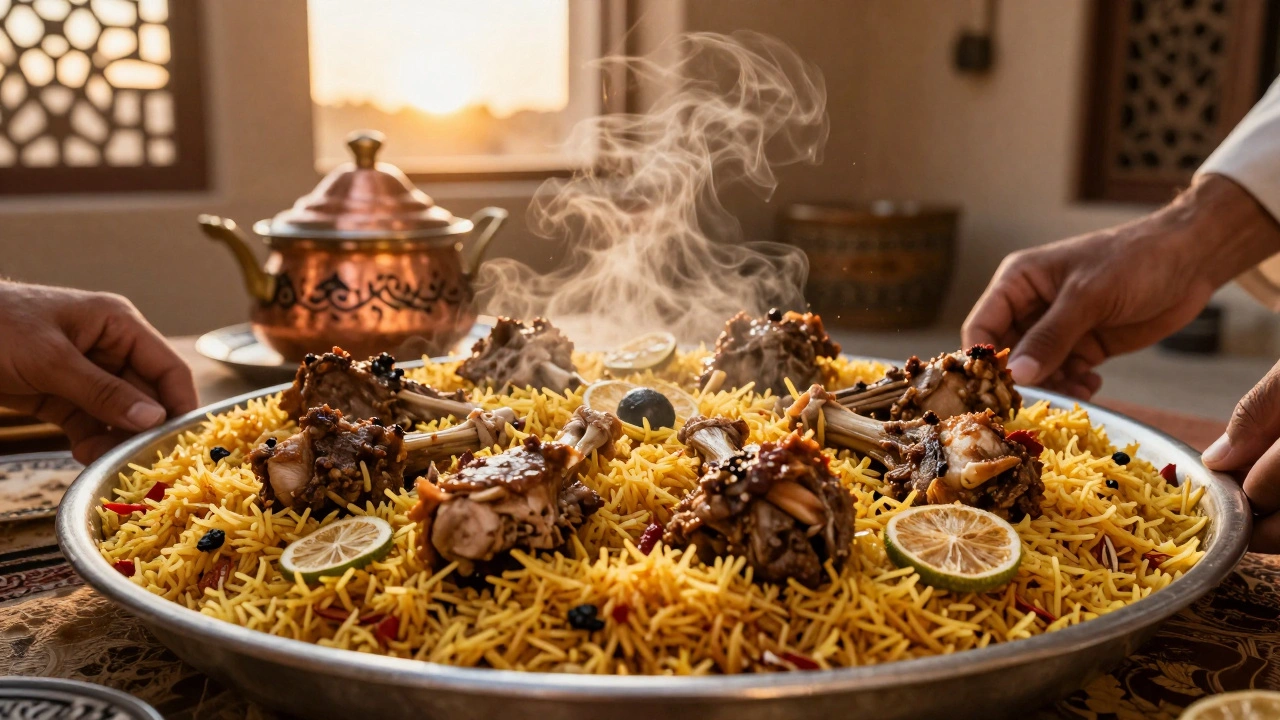
Machboos (also spelled machbous, kabsa, or machbous) is a spiced rice dish with meat-usually chicken, lamb, or fish-slow-cooked until the grains are fluffy, the meat falls off the bone, and the whole thing smells like a warm desert breeze mixed with cardamom, cinnamon, and dried lime.
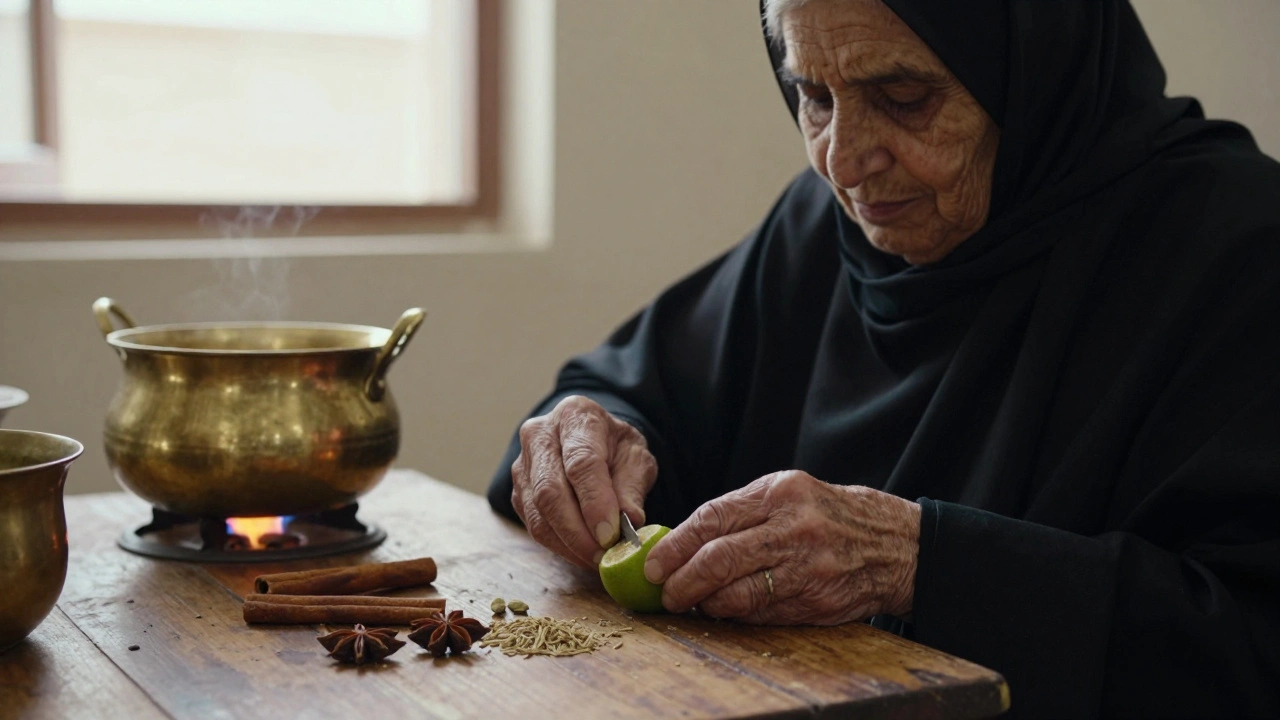
Think of it as the Emirati version of biryani, but with its own soul. The rice isn’t just cooked-it’s infused. Whole spices are toasted in oil before the rice goes in. Dried limes (loomi) are pierced and dropped into the pot, giving it that unmistakable tangy depth. Onions, garlic, and tomatoes build the base. And the meat? It’s never rushed. It simmers until it’s tender enough to pull apart with a spoon.
This isn’t a dish you eat once a year for Eid. This is what families make on a Tuesday night. It’s what grandmas argue over how to make best. It’s what you smell when you walk into a home in Al Ain or Bur Dubai-and you just know you’re in the right place.
Why Machboos Is More Than Just Food
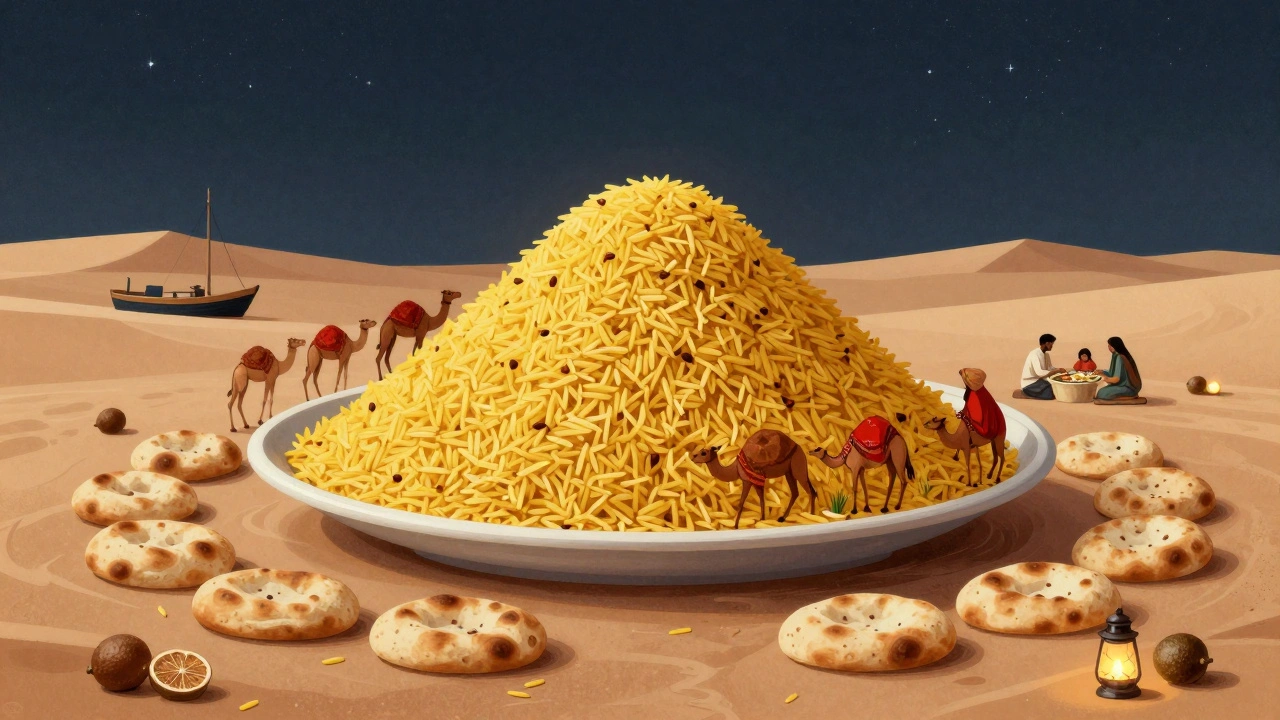
Before oil, Dubai was a fishing and pearl-diving community. People lived off what the land and sea gave them. Dates, goat meat, fish, barley. Spices came through trade routes from India and Persia. Machboos was born from necessity and ingenuity.
It was a way to stretch scarce meat over a large family. A handful of lamb could feed ten people if you loaded up the rice with spices. It was portable-packed in cloth and carried on long desert journeys. It was celebratory-served on large communal platters, eaten with hands, shared without plates.
Today, machboos is still served that way. At weddings. At funerals. At the end of Ramadan. At the opening of a new shop. It’s the dish that says, “We’re here. We’re together. We’ve survived.”
Other Emirati Dishes You’ll See Around Dubai
While machboos is the official national dish, Dubai’s food scene is layered. You’ll find other traditional meals that hold their own:
- Khubz - Flat, chewy bread baked in a sand oven. Used to scoop up everything. No fork needed.
- Harees - A porridge-like dish made from wheat and meat, slow-cooked for hours. Often eaten during Ramadan.
- Luqaimat - Sweet, golden dumplings drizzled with date syrup. Think of them as Emirati doughnuts. Best eaten warm, right out of the fryer.
- Tharid - Bread soaked in meat broth, topped with vegetables. Simple. Comforting. Ancient.
- Camel meat dishes - Yes, camel. Tender, lean, and surprisingly delicious. Often served as kebabs or in stews.
These aren’t side dishes. They’re pillars. And together, they form the backbone of Emirati cuisine.
Where to Eat Authentic Machboos in Dubai
Forget the tourist traps in Burj Khalifa’s mall. If you want real machboos, you need to go where locals go.
- Al Fanar Restaurant & Café - A chain, but the original branch in Al Quoz nails it. Their chicken machboos comes with a side of pickled lemon and fresh mint yogurt. No frills. Just flavor.
- Al Ustad Special Kabab - In Deira. Tiny space. Long lines. Worth every minute. Their lamb machboos is cooked with dried lime and saffron. The rice? Perfectly separate, never sticky.
- Al Sabkha Restaurant - Near the creek. A family-run spot since 1985. They serve machboos with camel meat on Fridays. Yes, really.
- Home kitchens - The best machboos you’ll ever taste? Probably at someone’s house. Ask a local if they’ll invite you over for dinner. Most will say yes.
Pro tip: If you see a restaurant with a large brass pot on the counter, and the smell hits you before you even step inside-that’s your spot.
How Machboos Is Served (And How to Eat It)
There’s a ritual. It’s not just about taste-it’s about respect.
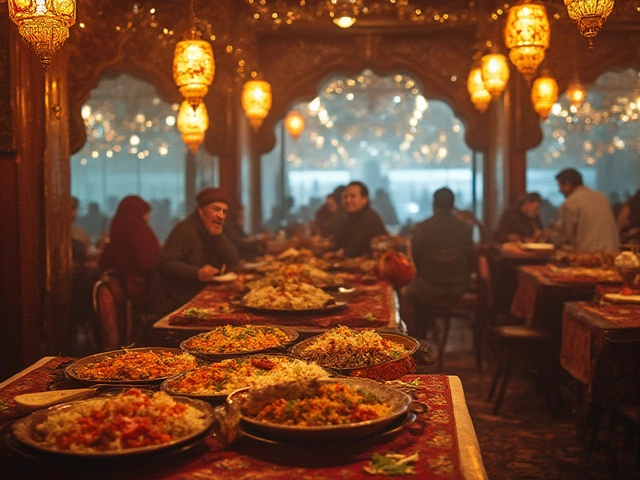
The dish comes on a large, round platter. The meat sits in the center, piled high. The rice fans out around it like a golden halo. On the side: a bowl of yogurt with cucumber and mint, a bowl of pickled lemons, and sometimes a small dish of date syrup for dipping.
You eat with your right hand. No utensils. You mix a bit of rice with meat, press it gently into a ball with your fingers, and pop it in. It’s messy. It’s joyful. It’s how it’s meant to be eaten.
And here’s something most tourists don’t know: you never start eating until the eldest person at the table does. It’s not just politeness. It’s tradition.
What You’ll Pay for Machboos in Dubai
At a local spot? You’re looking at 25 to 45 AED for a generous portion. That’s about $7-$12 USD. At a high-end Emirati restaurant? Maybe 80-120 AED. But you’re paying for ambiance, not authenticity.
Compare that to a burger at a chain in Dubai Mall-120 AED-and you’ll realize how much value you’re getting. You’re not just buying a meal. You’re buying a piece of history.
Machboos vs. Other Gulf Dishes
People often confuse machboos with Saudi kabsa or Kuwaiti machboos. They’re cousins, not twins.
| Dish | Origin | Key Spice | Rice Type | Meat Preference |
|---|---|---|---|---|
| Machboos (Dubai) | UAE | Dried lime (loomi) | Long-grain basmati | Chicken, lamb, camel |
| Kabsa (Saudi) | Saudi Arabia | Black lime, cloves | Medium-grain rice | Lamb, chicken |
| Maqluba (Palestine) | Palestine | Cumin, allspice | Short-grain rice | Chicken, eggplant |
| Biryani (India/Pakistan) | South Asia | Saffron, rosewater | Basmati | Chicken, goat |
Machboos stands out because of the dried lime. No other Gulf dish uses it this way. That sour, smoky note? That’s Dubai on a plate.
What to Order If You’re New to Emirati Food
First-timer? Here’s your game plan:
- Start with luqaimat as a snack. Sweet. Crispy. Add date syrup.
- Order machboos with chicken. It’s milder than lamb.
- Ask for khubz on the side. Use it to mop up the juices.
- Finish with Arabic coffee-lightly spiced, served in small cups. Don’t drink it all at once. Sip slowly.
And if someone offers you a date? Take it. It’s not just a snack. It’s a welcome.
Frequently Asked Questions
Is machboos the same as kabsa?
They’re very similar, but not the same. Machboos, from the UAE, uses dried lime (loomi) as its signature spice, giving it a tangy, smoky flavor. Kabsa, from Saudi Arabia, leans more on black lime and cloves. The rice in machboos is usually fluffier and less sticky. Think of them as siblings with different tastes.
Can I find vegan machboos in Dubai?
Traditional machboos uses meat, but many restaurants now offer a vegan version called "machboos nabit." It swaps meat for chickpeas, eggplant, or mushrooms, and keeps the same spice blend. It’s not the same, but it’s still delicious-and a great way to experience the flavors if you’re plant-based.
Why is dried lime used in machboos?
Dried lime, or loomi, was used centuries ago to preserve flavor during long desert journeys. It adds a deep, citrusy sourness that balances the richness of the meat and rice. It’s not just a spice-it’s a survival tool turned flavor icon.
Is camel meat really eaten in Dubai?
Yes, and it’s prized for being lean and flavorful. Camel meat is often used in machboos during special occasions. It’s not common in everyday meals, but if you’re adventurous, try it. Many locals say it tastes like a mix between beef and venison-rich but not gamey.
Where can I learn to cook machboos?
Several cooking schools in Dubai offer Emirati cuisine classes. Try the Dubai Culinary Tours or Al Khaleej Cooking School in Jumeirah. You’ll learn how to toast the spices, use dried lime correctly, and even how to shape rice with your hands. Most classes end with a meal-and sometimes a date.
Final Thought: Eat Like a Local
Dubai doesn’t just serve food. It serves stories. Machboos isn’t just a dish you order. It’s a moment you step into. The smell of cumin in the air. The sound of hands clapping as the platter arrives. The quiet pride in someone’s voice when they say, “This is how my grandmother made it.”
So next time you’re in Dubai, skip the fancy restaurant with the view. Find the place with the brass pot. Sit on the floor. Eat with your hands. And taste the desert. Taste the sea. Taste a culture that turned survival into something beautiful.


Lauren de Bruyn
December 1, 2025 AT 20:30Wait, so you're telling me the UAE didn't just copy kabsa from Saudi Arabia and slap a dried lime on it to call it their own? Classic cultural appropriation. And don't even get me started on how they're monetizing 'authenticity' now. This whole 'national dish' thing is just PR for tourism. Also, the grammar in this article is atrocious - 'fluffy' rice? That's not even a real culinary term. Fix your adjectives.
akash gupta
December 3, 2025 AT 14:17Bro, machboos ain't just rice and meat - it's a whole vibe. The loomi isn't just for tang, it's for soul. In Mumbai, we use dried mango powder for sourness, but UAE? They use desert citrus like it's alchemy. And the way they toast whole spices in ghee before adding rice? That's the difference between a dish and a ritual. You ain't eating - you're participating in a 500-year-old trade route. No forks. Just fingers. And respect.
Albert Sarvis
December 5, 2025 AT 07:58This is the kind of content that reminds me why culture matters. You didn’t just write about food - you wrote about resilience. About how a people turned scarcity into celebration, isolation into identity. This isn’t a recipe. This is a love letter to survival. Thank you for honoring the hands that cooked before the cameras arrived. Keep telling these stories. The world needs them.
becky cavan
December 6, 2025 AT 18:20Machboos is the heart of Emirati cuisine. Simple. Powerful. Real.
Try it with camel meat. You’ll never look at beef the same way.
Joel Barrionuevo
December 7, 2025 AT 17:56I think what’s beautiful here isn’t just the dish - it’s how food becomes memory. That moment when the eldest person starts eating? That’s not etiquette. That’s lineage. That’s the quiet understanding that this meal has outlived empires, droughts, oil booms, and global trends. You don’t eat machboos to fill your stomach. You eat it to remember who you are - even if you’re a tourist with a phone and a hunger for meaning.
Devin Payne
December 8, 2025 AT 15:28Let’s be real - this article is a glorified travel blog with a side of linguistic laziness. ‘Fluffy rice’? ‘Warm desert breeze mixed with cardamom’? That’s not descriptive - it’s pretentious fluff. And calling machboos the ‘national dish’ implies a homogeneity that doesn’t exist. There are 100+ nationalities in Dubai. This is cultural reductionism dressed up as authenticity. Also, the table comparison is misleading - kabsa and machboos are practically identical. Stop pretending there’s some mystical difference just because of dried lime. It’s a garnish, not a revolution.