
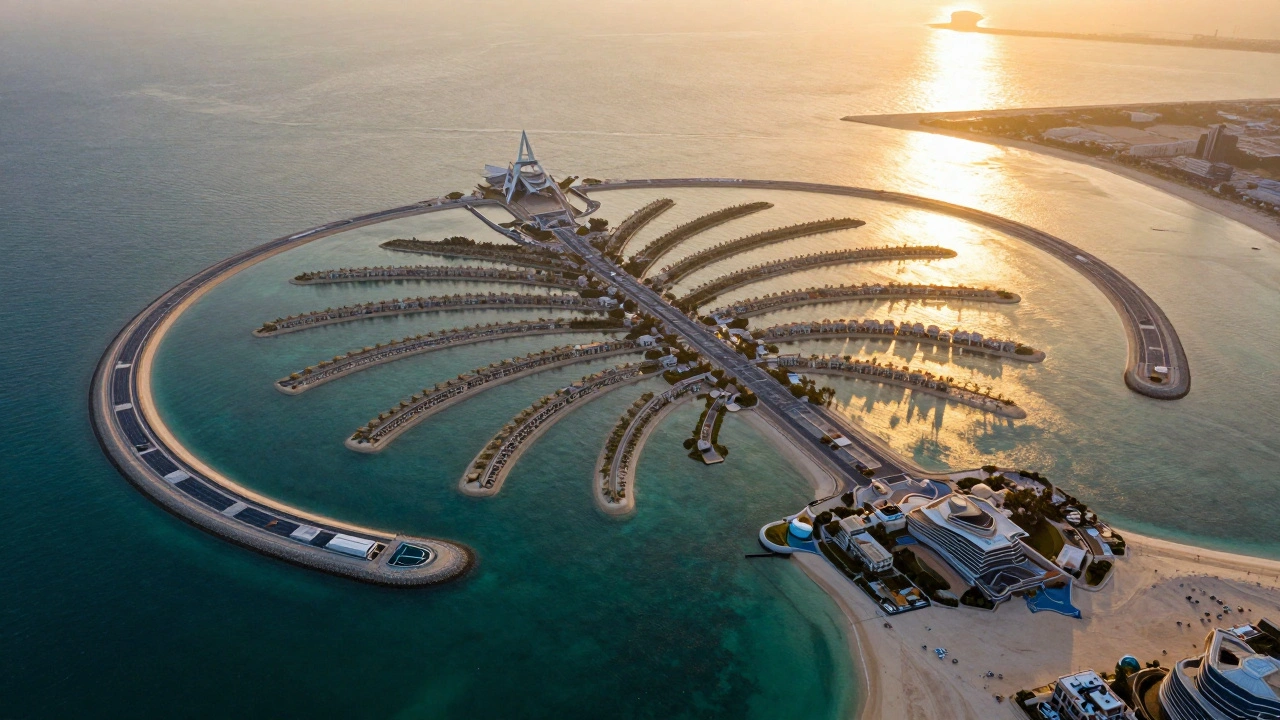
You’ve seen the photos. The palm tree shape stretching into the Persian Gulf, lined with luxury villas, five-star hotels, and private beaches. But have you ever wondered how a desert city turned a stretch of shallow sea into one of the most ambitious engineering projects on Earth? Palm Jumeirah didn’t just appear overnight. It was dreamed up, debated, dredged, and built against all odds-and it’s still changing today.
How It All Started: A Bold Idea in the Desert
In the early 2000s, Dubai wasn’t just growing-it was reimagining itself. With oil reserves slowing and global competition heating up, leaders needed something unforgettable. Enter Sheikh Mohammed bin Rashid Al Maktoum: a vision to turn the coastline into a global tourism magnet. The idea? Build an artificial island in the shape of a palm tree. Not just any island. One so large, you could see it from space.
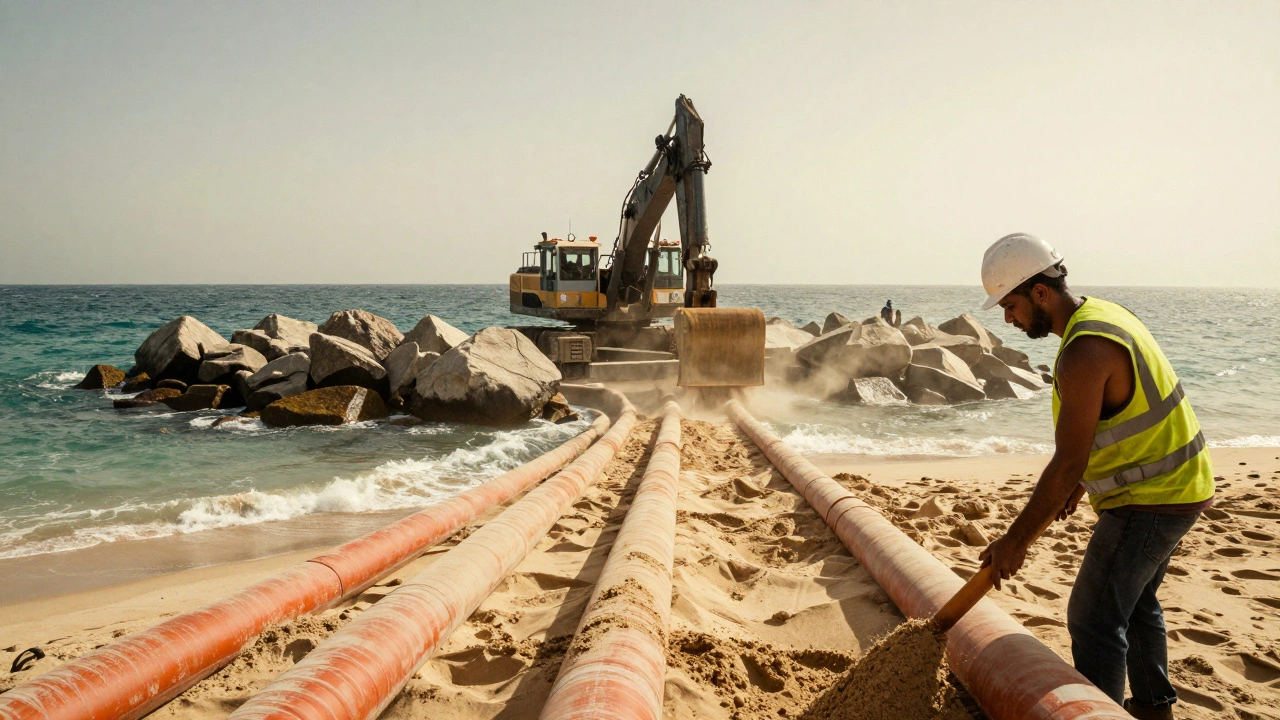
At first, critics laughed. ‘You can’t build on sand in the ocean,’ they said. ‘The currents will wash it away.’ But Dubai didn’t listen. Instead, they hired Dutch dredging company Van Oord and got to work. Over 94 million cubic meters of sand were blasted from the seabed and pumped through pipelines. Another 12 million cubic meters of rock were dumped to form a protective breakwater. The result? A 56-kilometer-long trunk and 17 fronds, each lined with luxury homes.
It wasn’t just about looks. The design had a purpose: maximize shoreline. By shaping the island like a palm, Dubai created over 100 kilometers of private beachfront-more than any natural island of its size could offer.
The Build: Engineering Against Nature
Building Palm Jumeirah was like assembling a 3D puzzle in the middle of the sea. Workers had to fight unpredictable tides, high salinity, and desert heat that hit 50°C. The sand wasn’t just scooped up-it had to be carefully graded. Too fine, and it would erode. Too coarse, and it wouldn’t compact right. They used GPS-guided dredgers to lay sand with millimeter precision, creating a base that could support skyscrapers and hotels.
The breakwater, shaped like a crescent, was even more complex. It wasn’t just a wall of rocks. Each boulder weighed up to 30 tons and had to be placed perfectly to absorb wave energy without shifting. Engineers monitored the structure for years after completion, watching for signs of erosion. Today, it’s still holding strong-no major damage in nearly two decades.
And then came the infrastructure. Roads, power lines, water pipes-all had to be laid under the sand, in saltwater conditions, without disrupting the island’s shape. They used fiber-optic cables buried in trenches and built a sewage system that could handle over 100,000 residents. It was a logistical nightmare. And they did it in under five years.
Palm Jumeirah Today: More Than Just a Landmark
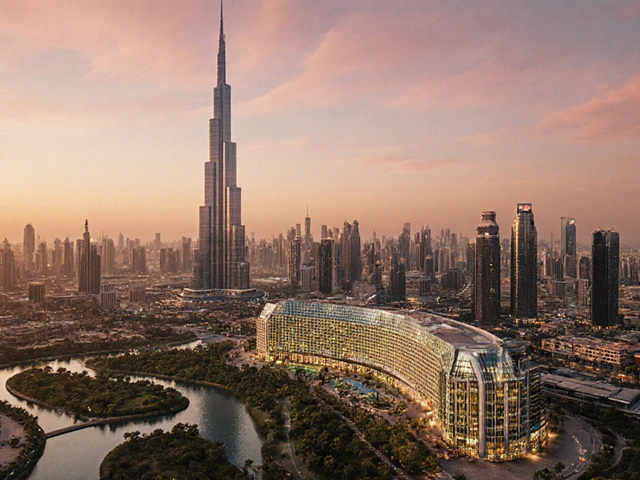
Today, Palm Jumeirah is home to over 50,000 people and 200+ businesses. It’s not just a tourist postcard-it’s a living, breathing community. Families live here. Kids go to school on the island. Doctors, chefs, and hotel managers commute daily. The Atlantis, The Palm opened in 2008 and still draws over 3 million visitors a year. The Monorail, launched in 2009, connects the island to the mainland every 10 minutes, carrying 10,000 riders daily.
But it’s the private side that’s most striking. Over 4,000 villas and apartments line the fronds, each with direct beach access. Some owners have private pools, rooftop gardens, and even their own jetties. The island has its own emergency services, schools, and even a dedicated police station. It’s not a theme park-it’s a real city, built on water.
And the economy? Palm Jumeirah generates an estimated $3 billion annually in tourism and real estate alone. Property values here are among the highest in Dubai. A three-bedroom villa on the frond can sell for over $10 million. Even studio apartments on the trunk command $800,000. The island isn’t just a symbol-it’s a financial engine.
What’s Next? The Future of Palm Jumeirah
So, what happens next? The island isn’t done evolving. In 2024, the Dubai government launched the ‘Palm Jumeirah Masterplan 2030.’ The goal? Make it smarter, greener, and more connected.
First, sustainability. Solar panels are being installed on all new buildings. The island’s water desalination plant is being upgraded to cut energy use by 40%. Waste recycling is now mandatory for all residents. By 2027, 70% of the island’s power will come from renewable sources.
Second, tech integration. Every streetlight now has sensors that adjust brightness based on foot traffic. Parking spots use AI to guide drivers to open spaces. The Monorail is getting driverless trains by 2026. And soon, residents will be able to control their home’s temperature, security, and lighting through a single app.
Third, expansion. The ‘Palm Jebel Ali’ project-originally planned as a second palm island-was shelved in 2008. But now, Dubai is reviving the idea. A new phase called ‘Palm Jumeirah West’ will add 500 new luxury residences and a public boardwalk stretching 3 kilometers. It’s not another island. It’s an extension-a natural next step.
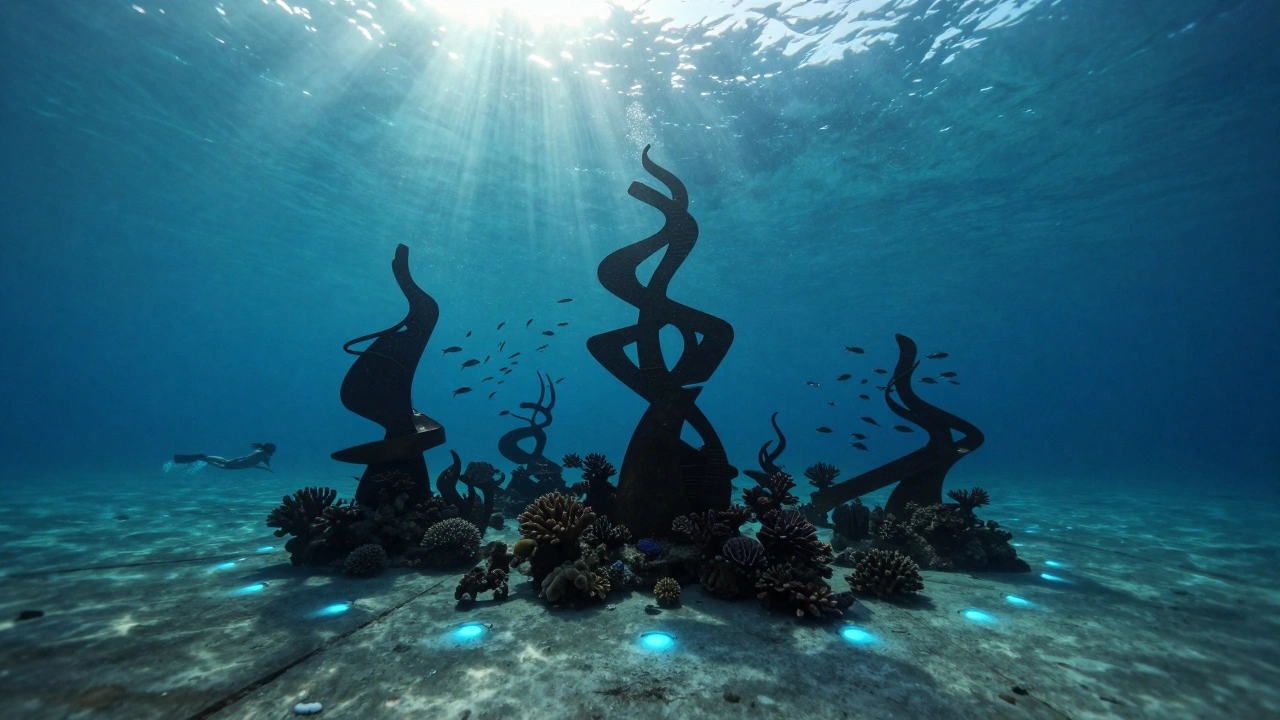
And then there’s the underwater world. In 2025, Dubai opened the world’s first underwater art gallery on the island’s western reef. Over 30 sculptures, designed by international artists, sit 10 meters below the surface. Divers and snorkelers can swim through them. It’s not just art-it’s a coral restoration project. The sculptures are made from pH-neutral concrete to encourage marine life to settle.
Why It Matters: More Than Just a Tourist Spot
Palm Jumeirah isn’t just about luxury homes and fancy hotels. It’s proof that human ingenuity can reshape nature-not to dominate it, but to coexist with it. The island has become a model for coastal development worldwide. Singapore, China, and even the U.S. have sent teams to study its design.
It also changed how Dubai sees itself. Before Palm Jumeirah, the city was known for oil and trade. After? It became a place where impossible things happen. It showed the world that ambition, when paired with science, can create something lasting.
And for locals? It’s a point of pride. Walk down the boardwalk at sunset, and you’ll see Emirati families having picnics, Indian chefs running food stalls, and Russian tourists taking selfies with the Atlantis. It’s not just an island. It’s a melting pot. A symbol of what Dubai can be when it dares to dream.
What to See and Do on Palm Jumeirah Today
If you’re visiting, here’s what you shouldn’t miss:
- The View from The Pointe: This waterfront promenade offers the best panoramic shots of the palm. Go at golden hour-when the sun hits the water just right, the whole island glows.
- Atlantis Aquaventure: One of the world’s largest water parks. Don’t just ride the slides-try the Shark Reef snorkel tour. You’ll swim with 65,000 fish.
- The Palm Monorail: Ride it from Nakheel Mall to Atlantis. It’s cheap, fast, and gives you aerial views you can’t get anywhere else.
- The Underwater Art Gallery: Book a guided snorkel tour. The sculptures are lit at night. It’s like diving into a silent museum.
- The Beach Clubs: Try Nikki Beach or Jumeirah Beach Hotel’s private stretch. Both offer loungers, cocktails, and live music without the crowds.
Common Myths About Palm Jumeirah
Let’s clear up a few misconceptions:
- Myth: The island is sinking. False. Independent surveys by the Dubai Municipality show no measurable subsidence since 2012. The breakwater works exactly as designed.
- Myth: It’s all empty luxury. Wrong. Over 90% of homes are occupied. The island has schools, clinics, and even a public library.
- Myth: Only the rich live here. Not true. While luxury villas dominate headlines, there are over 2,000 mid-range apartments rented by teachers, nurses, and entrepreneurs.
FAQ: Your Questions About Palm Jumeirah Answered
How long did it take to build Palm Jumeirah?
Construction began in 2001 and was officially completed in 2006. But the final touches-roads, utilities, landscaping-took until 2008. So, about seven years total.
Can you walk the entire length of Palm Jumeirah?
Yes, but not all at once. The trunk and the crescent are fully walkable. The fronds? Only the outer edges have sidewalks. Most fronds are residential, so you can’t walk through private driveways. But you can stroll the entire 5-kilometer boardwalk along the crescent beach.
Is Palm Jumeirah worth visiting if I’m not staying there?
Absolutely. You don’t need a hotel room to enjoy it. The beaches, the view from The Pointe, the Monorail ride, and the underwater art gallery are all open to the public. Many tourists spend half a day here just exploring.
How do you get to Palm Jumeirah?
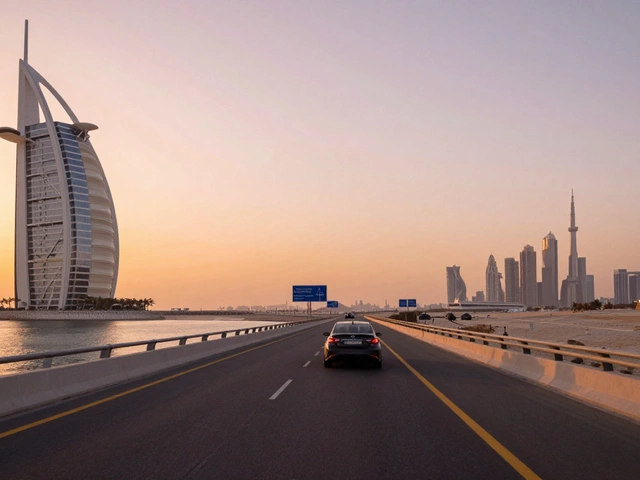
Three ways: by car via the Palm Jumeirah Bridge (from Sheikh Zayed Road), by the Palm Monorail (from Nakheel Mall Station), or by water taxi from Dubai Marina. The Monorail is the easiest if you’re not driving.
Are there any free things to do on Palm Jumeirah?
Yes. Walk the crescent beach, take photos at The Pointe, visit the public park near Atlantis, or watch the sunset from the boardwalk. The underwater art gallery requires a tour fee, but the view from the surface is free.
Final Thought: A Living Monument
Palm Jumeirah isn’t just a tourist attraction. It’s a story. A story of a city that looked at a map and said, ‘What if?’ It’s a story of engineers, laborers, and planners who worked under the sun, in saltwater, for years to make something beautiful. And it’s a story that’s still being written-with new trees growing, new tech being added, and new people calling it home.
Next time you see a photo of Palm Jumeirah, don’t just see a shape. See the sand. The sweat. The science. The dream. It’s not magic. It’s made. And that’s what makes it unforgettable.
Jenna Carlson
January 26, 2026 AT 14:49OMG this island is literally insane like how did they even do this?? I mean sand in the ocean?? 🤯 Dubai just said nah and built a whole palm tree 💪🌴
Mike Healy
January 27, 2026 AT 21:40They didn't build it... they just moved the sand. The real story? The CIA and NASA have been monitoring this since 2003. This isn't tourism-it's a cover for underground military bases. You think those fronds are just for villas? Nah. They're hiding something bigger. Ask yourself: why no drone footage from above at night? 🕵️♂️
Ajay Kumar
January 28, 2026 AT 22:06Actually, the sand used was carefully selected from deeper seabed layers to avoid erosion-fine particles would’ve washed away. The Dutch team used GPS-guided dredgers with sub-centimeter accuracy. Also, the breakwater’s rock placement was modeled using wave dynamics simulations. It’s not just ‘pumping sand’-it’s precision engineering. Respect to the teams who pulled this off.
Caleb Avery
January 28, 2026 AT 23:49Look, I love Dubai, but this is just American engineering on steroids. We could’ve done this faster, cheaper, and better. We’ve built entire cities in the desert before-remember Las Vegas? This is just a fancy beach toy. Also, why is everyone acting like this is the first artificial island? We’ve been doing this since the 1960s! 🇺🇸💪
Matt Winkeljohn
January 30, 2026 AT 19:57Bro this is next-level innovation!!! 🚀 The underwater art gallery? 10/10. Solar-powered everything? YES. AI parking? YES. This is the future of urban design. Dubai didn’t just build an island-they built a living lab for the 21st century. 🤖🌴 #FutureIsNow
Melissa Bracewell
January 31, 2026 AT 23:17I love how this isn’t just for the rich. I read that teachers and nurses live here too. That’s what makes it real. It’s not a fantasy-it’s a home for people. And the coral sculptures? That’s healing the ocean while making beauty. That’s the kind of progress we need more of.
So many places build for show. This one built for people.
Thank you for sharing this.
Toni Plourde
February 2, 2026 AT 00:28While the engineering feats are undeniably impressive, one must acknowledge the environmental cost. The dredging disrupted benthic ecosystems, and the breakwater altered natural sediment transport patterns along the coast. Long-term ecological monitoring remains sparse in public records. Aesthetic ambition should not eclipse ecological accountability.
Jen Allchin
February 2, 2026 AT 14:17I’ve been to Palm Jumeirah. I saw the same woman at The Pointe every day for three weeks. She never smiled. I think she’s a spy. Or maybe she’s been replaced by a robot. I asked her if she liked the sunset. She just stared. Then she left. I checked the security footage later. The camera glitched when she walked by. Coincidence? I don’t think so. I need to know who she is. Can someone help me find her? Please? I’m so worried.
Lorna Jamieson
February 2, 2026 AT 18:49Ugh, I mean… it’s cute and all, but it’s just a giant sand sculpture 🤷♀️✨ I’ve seen way more elegant architecture in Paris… and honestly, the Monorail? So 2010. The real luxury is being *unseen*-like, I’d rather be at a private island in the Maldives with zero tourists and a butler who knows my coffee order. 🥂 #Overrated #StillCuteTho