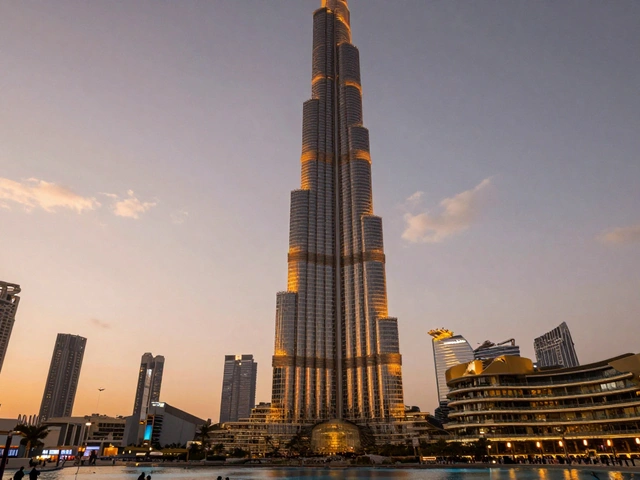
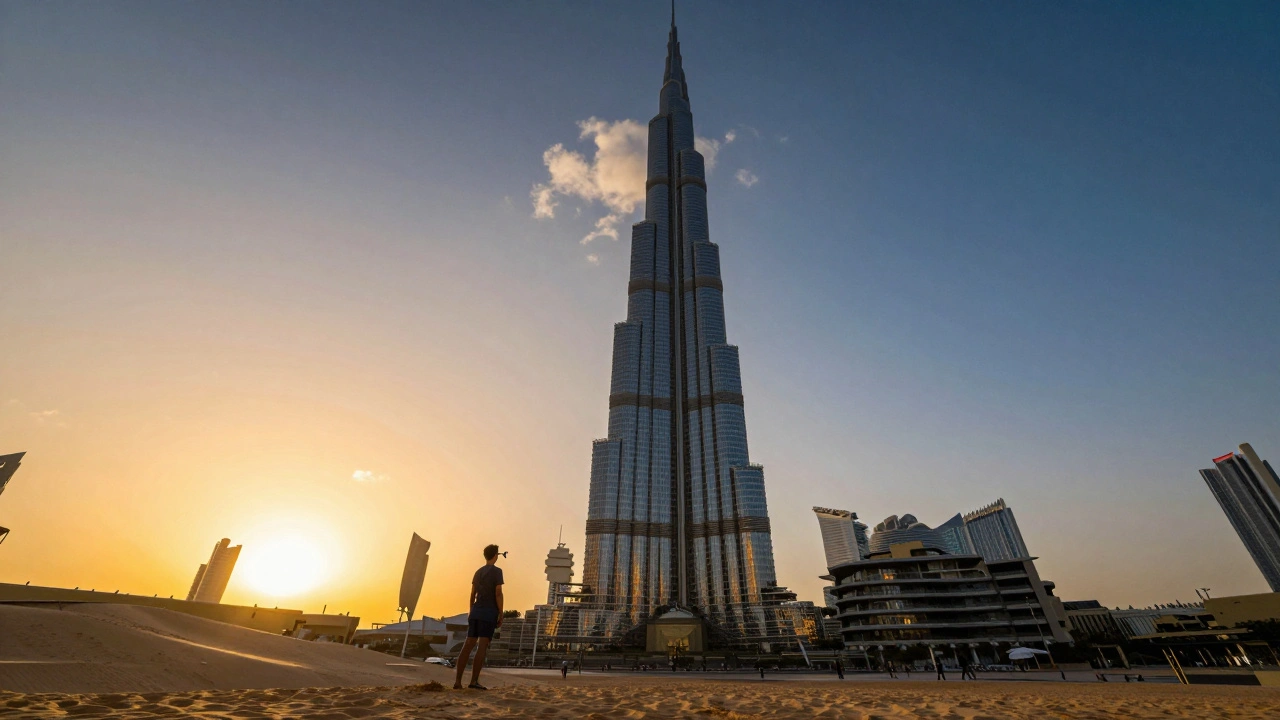
You’ve seen it in photos. You’ve seen it from a distance, glittering under the desert sun. But have you ever stood at the bottom of the Burj Khalifa and truly felt how impossible it looks? It’s not just a building. It’s a challenge-built to defy gravity, weather, and human limits. And here in Dubai, it’s not just a tourist spot. It’s part of the city’s heartbeat.
When you look up at the Burj Khalifa, you’re staring at 828 meters of steel, glass, and sheer will. That’s taller than the Empire State Building by more than twice. It’s so tall, clouds sometimes gather around its upper floors. And yes, the wind up there? It’s strong enough to make a person feel like they’re on a moving platform. This isn’t just architecture. It’s a statement.
What Makes the Burj Khalifa a Challenge?
Building the world’s tallest structure wasn’t about vanity. It was about solving problems no one had solved before. How do you pump concrete 600 meters up? How do you keep a building from swaying like a tree in a storm? How do you cool a tower that’s exposed to 50°C heat for half the year?
Let’s start with the foundation. The Burj Khalifa sits on a 3.7-meter-thick concrete slab, anchored by 192 steel-reinforced piles driven 50 meters into the ground. That’s deeper than most skyscrapers go. Why? Because the soil here isn’t rock-it’s sand and clay. If you didn’t anchor it deep enough, the whole thing could sink. Engineers didn’t just build up. They built down, hard.
Then came the concrete. Standard pumps can’t push concrete higher than 200 meters. So they invented a new system: a dual-pipe pressure pump that pushed concrete up one pipe and sucked air back down the other. This kept the pressure steady. They poured over 330,000 cubic meters of concrete. That’s enough to build 165 Olympic swimming pools.
And the wind? The tower’s shape isn’t random. It’s a Y-shaped plan that tapers as it rises, like a desert flower. This design cuts wind forces by 30%. At 500 meters, wind speeds hit 180 km/h. Without this shape, the building would sway dangerously. Now? It moves less than 1.5 meters at the top during the strongest storms. That’s less than a smartphone’s thickness.
Life Inside the Burj Khalifa
It’s not just a monument. It’s a living, breathing city. There are 163 floors. Over 35,000 people work here daily. 900 apartments house residents who pay up to $10,000 a month for a view. The observation decks-on floors 124, 125, and 148-are packed every day. You can stand in the open-air deck on 148, feel the wind, and look down at cars that look like ants.
The elevators? They’re the fastest in the world. They hit 64 km/h-faster than most city buses. They travel 504 meters in under a minute. And they don’t just go up. They go sideways. The building has sky lobbies on floors 43, 76, and 108. You switch elevators there. It’s like a train station in the sky.
And cooling? The building uses 100,000 square meters of reflective glass to bounce off sunlight. It has a condensate collection system that captures moisture from the air and uses it to water the landscape outside. In a city with almost no rain, that’s genius.
Why It Matters Beyond Height
People talk about height. But the real win? It proved that extreme engineering can work in extreme environments. Before the Burj Khalifa, no one thought you could build this tall in a desert with shifting sands and brutal heat. Now, cities from Shanghai to Jeddah are using its design as a blueprint.
It also changed Dubai. Before 2010, people thought of Dubai as oil and luxury malls. After the Burj Khalifa, it became a symbol of ambition. It showed the world that small nations can lead in innovation. It’s not just a building. It’s proof that human creativity can outmatch nature’s limits.
What You’ll See When You Visit
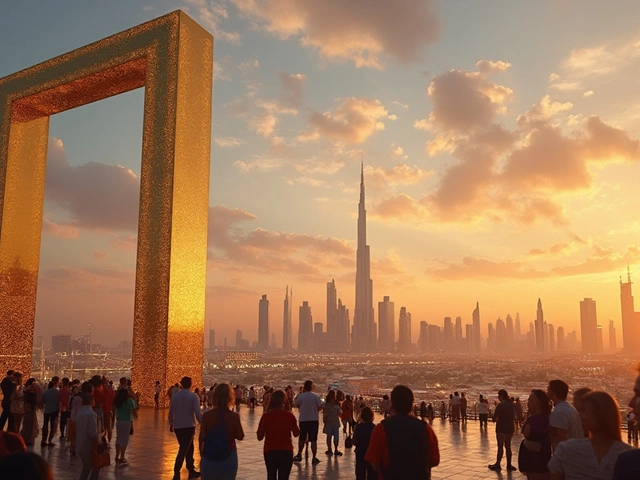
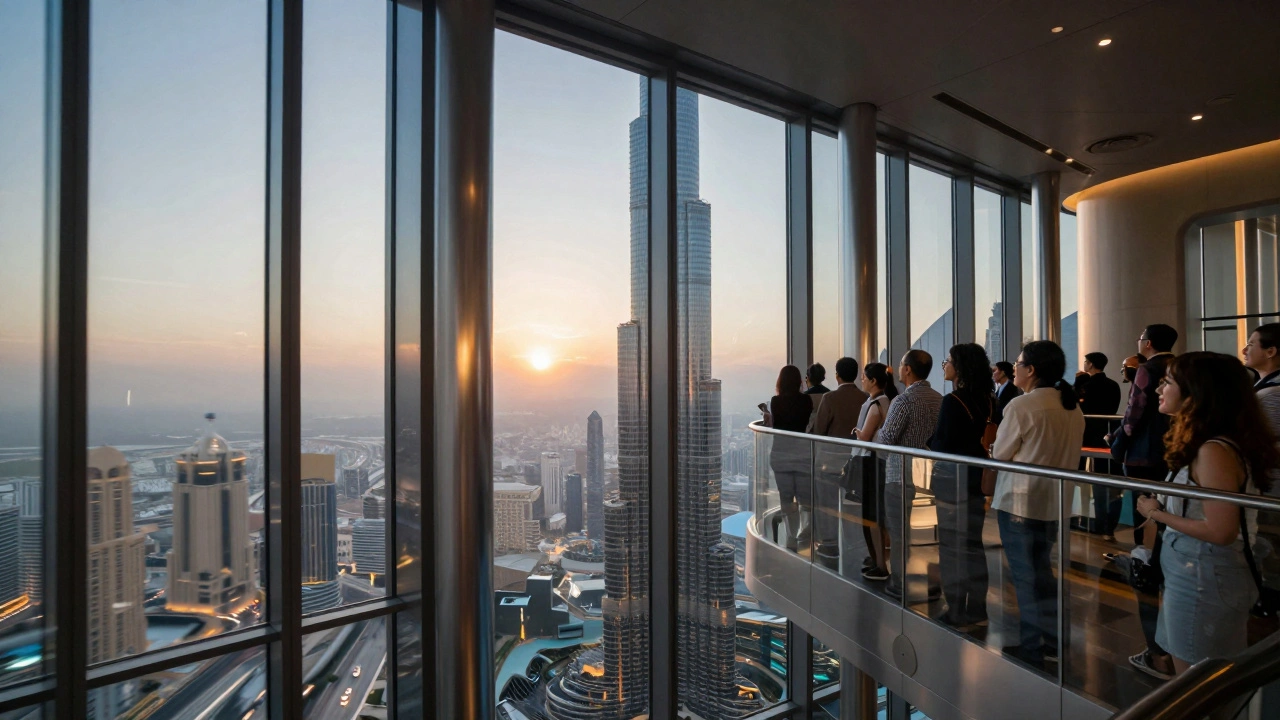
Most tourists go to the At the Top observation deck on floor 124. But here’s what most don’t tell you: go at sunset. The light changes from gold to pink to deep blue in under an hour. The desert turns orange. The city lights flicker on like stars falling to earth. It’s quiet up there. You’ll hear your own breath.
If you’re feeling brave, skip the glass and head to the outdoor deck on floor 148. No railing. Just open air. You’ll feel the wind tug at your clothes. It’s not scary-it’s exhilarating. And if you’ve got the budget, the At the Top Sky experience on floor 148 includes a champagne toast with a view that stretches 95 kilometers.
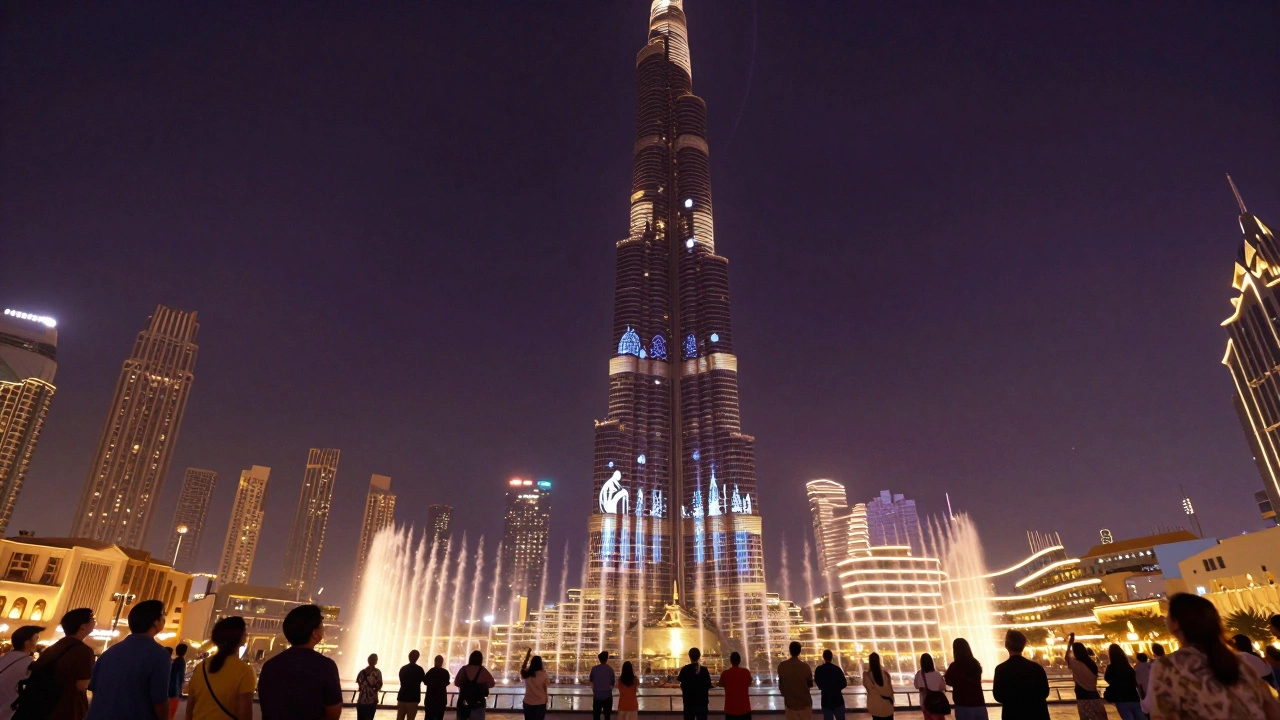
Don’t miss the Burj Khalifa’s light show. Every Friday night, the building becomes a canvas. Projections dance across its surface-Arabic calligraphy, fireworks, even scenes from Emirati history. It lasts 15 minutes. And yes, people gather on the Dubai Fountain promenade just to watch it.
How to Visit: Practical Tips
- Buy tickets online-it’s 20% cheaper than at the door. Skip the line. You’ll thank yourself.
- Go on a weekday-weekends are packed. Tuesday and Wednesday are quietest.
- Bring a light jacket-even in March, it’s 10°C cooler at the top.
- Use the Burj Khalifa metro station-it’s connected directly to the Dubai Mall. Walk 5 minutes. No taxi needed.
- Check the weather-if there’s a sandstorm, the observation decks close. Always verify before you go.
Burj Khalifa vs. Other Skyscrapers
| Building | Height (m) | Year Completed | Location | Key Feature |
|---|---|---|---|---|
| Burj Khalifa | 828 | 2010 | Dubai, UAE | Fastest elevators, Y-shaped design |
| Merdeka 118 | 678 | 2023 | Kuala Lumpur, Malaysia | Tallest building in Southeast Asia |
| Shanghai Tower | 632 | 2015 | Shanghai, China | Twisting design reduces wind load |
| Abraj Al-Bait Clock Tower | 601 | 2012 | Mecca, Saudi Arabia | World’s largest clock face |
| One World Trade Center | 541 | 2013 | New York, USA | Symbolic height of 1,776 feet |
Notice something? The Burj Khalifa isn’t just taller. It’s smarter. Its design handles heat, wind, and human traffic better than any other. And it’s been standing for over 14 years. No other skyscraper in the top 5 has been tested by time like this one.
Frequently Asked Questions
Is the Burj Khalifa the tallest building in the world in 2026?
Yes. As of 2026, the Burj Khalifa remains the tallest building in the world at 828 meters. While Merdeka 118 in Kuala Lumpur reached 678 meters in 2023, it’s still over 150 meters shorter. No other building under construction is expected to surpass it before 2030.
Can you see the Burj Khalifa from far away?
Absolutely. From the top of Jebel Ali Hill, about 40 kilometers away, you can still spot its silhouette on a clear day. From the desert highway heading north from Abu Dhabi, it’s visible for over 80 kilometers. That’s how much it dominates the skyline.
How long does it take to clean the Burj Khalifa?
Cleaning the entire exterior takes 3 to 4 months. A team of 36 window cleaners works in shifts, using suspended platforms that move vertically and horizontally. Each panel is cleaned with purified water and no chemicals-because the desert sand sticks harder than you think.
Are there apartments in the Burj Khalifa?
Yes. Floors 19 to 108 contain 900 residential units. They range from studios to penthouses. The top floors are private residences. Some owners have lived there since 2010. One resident told me, "I wake up to the sunrise over the desert. No one else in the world can say that."
What’s the best time to visit the observation deck?
Sunset is unbeatable. The light turns the desert gold, and the city lights come on slowly. If you want fewer crowds, go on a Tuesday morning. The air is clearest then. Avoid Fridays and Saturdays-those are peak tourist days.
Final Thought: Why This Building Stays With You
You don’t just visit the Burj Khalifa. You remember it. Not because it’s tall. But because it makes you feel small-in the best way. It reminds you that humans can build things that last longer than empires. That we can turn impossible ideas into stone and steel.
When you leave, you won’t just have photos. You’ll have a quiet sense of wonder. And maybe, just maybe, you’ll look up at your own city’s skyline differently. Because if Dubai could do this, what’s stopping you from dreaming bigger?